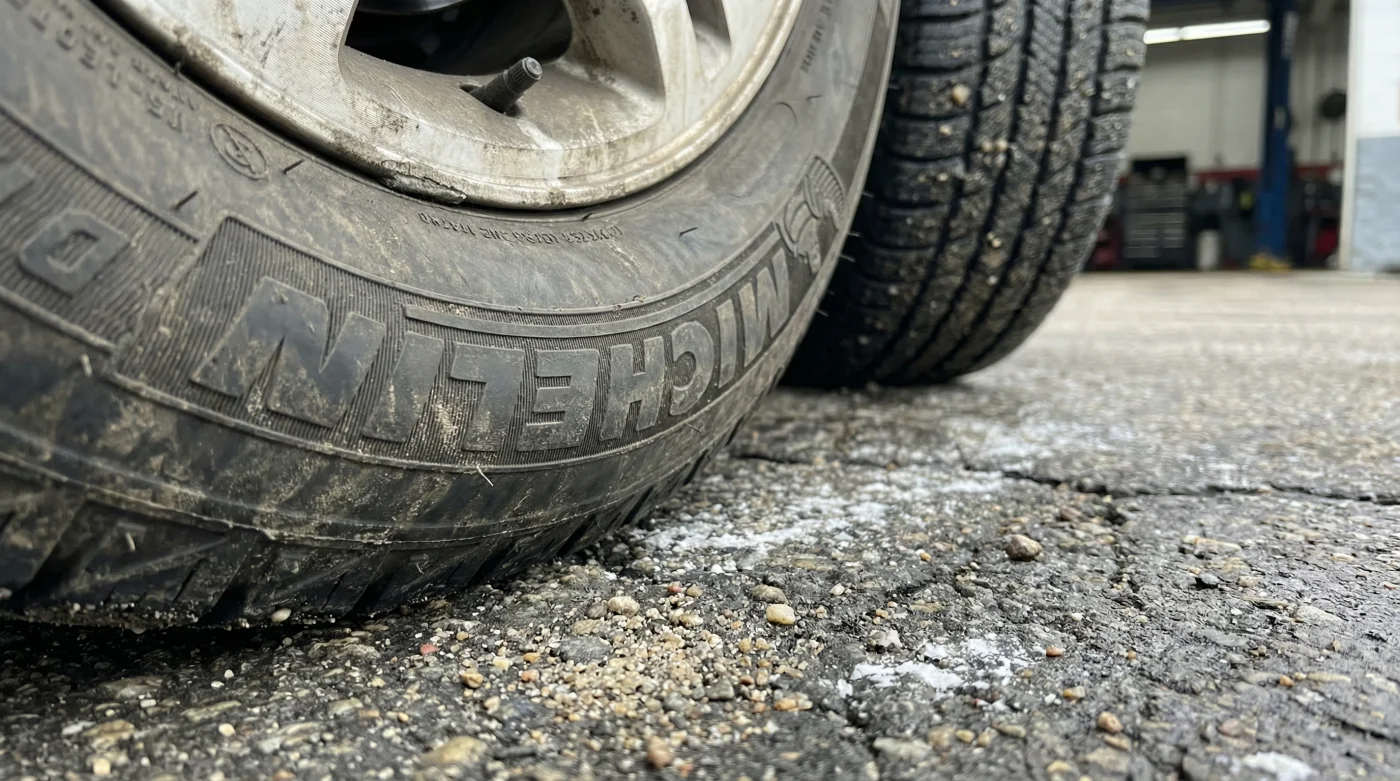
You know the smell of a neighborhood garage on a Tuesday morning. It is a thick blend of oxidized oil, stale coffee, and the sharp tang of curing rubber. You sit on a cracked vinyl chair listening to the rhythmic, high-pitched squeal of an impact wrench, feeling pretty good about your morning. You just dropped over a thousand dollars on a fresh set of Michelin Defender tires. You tell yourself it is a smart move. They come with an eighty-thousand-mile warranty. You figure you are covered for the next five years of school drop-offs and interstate road trips. But as the mechanic hands you a generic receipt with a scribbled “rotate and balance,” you are entirely unaware that you just voided your premium safety net.
The Fine Print and the Phantom Balance
You assume tire maintenance is straightforward. You drive, the treads wear down, you move the front tires to the back, and the cycle continues. It feels like flipping a mattress. But rubber interacting with asphalt at seventy miles per hour is a delicate, violent relationship. When you buy premium tires, the manufacturer expects a very specific standard of care.
There is a quiet clause buried in the warranty booklet that almost no one reads until it is too late. The assumption is that any corner shop’s standard rotation and spin-balance will keep you in the manufacturer’s good graces. The reality is far more rigid. Michelin requires certified, documented load-balancing—often best obtained at a certified dealership or an authorized high-tier shop—to actually honor that expensive tread-life credit.
I learned this the hard way standing next to Marcus, a master suspension technician with grease permanently etched into his cuticles. He was holding a rejected claim form for a customer whose Michelin Defenders had worn down to the wear bars at forty thousand miles. “People think all balances are created equal,” Marcus told me, tapping a heavily stamped service manual.
“A basic spin balance just looks for heavy spots on the rim,” he continued. “But a road-force balance, the kind with certified documentation? That measures how the tire handles the actual weight of the car pushing down on it.” He shook his head. “Without the paper trail proving the shop used calibrated, certified equipment to measure that load, the manufacturer treats your claim like you spent the last two years neglecting your alignment.”
| Driver Profile | Specific Benefit of Certified Balancing |
|---|---|
| High-Mileage Commuters | Prevents highway-speed vibrations and irregular, premature shoulder wear. |
| Family SUV Owners | Maximizes the 80,000-mile safety net, ensuring heavy vehicle weight does not warp the tire structure. |
| Second-Hand Buyers | Identifying these service records proves the previous owner maintained the warranty validity. |
Securing the Paper Trail
So, how do you navigate this without feeling taken advantage of? It starts with changing how you talk to your service advisor. You are no longer asking for a simple rotation. You are requesting a warranty-compliant road-force balance. This means the machine physically presses a roller against the tire as it spins, simulating the weight of your vehicle on the pavement.
More importantly, you need the documentation to prove it happened. A handwritten note on carbon paper will not save you when you try to claim a pro-rated replacement three years from now. You need the actual printout from the balancing machine, or a highly detailed invoice listing the exact calibration codes and the term “road-force balance.”
- Honda Accord EX models secretly conceal premium touring suspension hardware factory-direct.
- Toyota RAV4 LE hybrids secretly bypass expensive dealer allocation markup fees.
- Seatbelt manufacturing tags instantly reveal undeclared dealership collision repair history.
- Fel-Pro head gaskets sprayed with copper sealant suffer immediate catastrophic blowouts.
- Dex-Cool Coolant Mixed With Universal Antifreeze Creates Instant Engine Sludge
| Technical Metric | Standard Spin Balance | Certified Road-Force Balance |
|---|---|---|
| Measurement Method | Static weight distribution only. | Simulates vehicle load up to 1,400 lbs against the tread. |
| Documentation Provided | Generic invoice line item. | Machine printout with exact runout specifications. |
| Warranty Compliance | High risk of claim rejection. | Guarantees manufacturer paperwork compliance. |
To make sure you never leave the dealership vulnerable, you have to audit your own paperwork before you hand over your credit card. Do not feel embarrassed to stand at the counter and read the invoice line by line.
| Service Element | What to Look For (Pass) | What to Avoid (Fail) |
|---|---|---|
| Invoice Language | “Road-Force Balance,” “Hunter Engineering Printout Attached” | “Rotate & Balance,” “Standard Wheel Service” |
| Measurement Proof | Attached machine printout showing radial runout in ounces. | Hand-written notes or vague mileage entries without data. |
| Facility Status | Authorized Michelin Dealer or verified ASE-Certified Shop. | Unverified quick-lube stations without advanced alignment racks. |
The Rhythm of the Road
Taking the extra ten minutes to ask the right questions at the service desk changes the entire trajectory of your car’s lifespan. It is easy to view maintenance as a frustrating chore, a tax on your free time. But when you start treating your vehicle’s footprint with this level of precision, you notice the benefits far beyond a preserved warranty.
A properly load-balanced tire completely transforms your daily commute. The steering wheel stops humming in your hands when you hit sixty-five on the highway. Your suspension components—the struts, the tie rods, the wheel bearings—stop absorbing the micro-vibrations of an imperfectly seated tire. You are not just preserving a piece of paper; you are preserving the structural integrity of the machine that carries your family.
When you finally do reach the end of those treads, and you present your pristine stack of certified invoices to the dealer, there is a profound sense of satisfaction. You played the game correctly. You respected the mechanics of the road, and the manufacturer has no choice but to respect your investment.
“The asphalt never lies, and a machine printout is the only language a tire manufacturer truly understands when it comes time to pay out a claim.”
Frequently Asked Questions
Q: Does rotating my tires at a local chain store automatically void my warranty?
A: Not inherently, but if they fail to perform a certified road-force balance and document it properly, you will lack the evidence Michelin requires if you need to file a premature wear claim.Q: How much more does a road-force balance cost compared to a regular balance?
A: It typically costs twenty to forty dollars more per service, but it secures an eighty-thousand-mile warranty that is worth hundreds of dollars in pro-rated replacement value.Q: Can I get my tires road-force balanced after realizing my shop did not do it?
A: Yes. You can take your vehicle to an authorized dealer to have it done correctly, establishing a proper paper trail from that mileage onward.Q: Do I need to keep physical copies of my tire receipts?
A: Absolutely. While some shops keep digital records, having the physical printout with the machine’s runout data in your glovebox guarantees you have the proof if the shop changes ownership or software.Q: How often should I request this specific type of balancing?
A: You should request it every time you rotate your tires, which is typically every five thousand to seven thousand miles, depending on your vehicle’s specific maintenance schedule.