You stand on the blistering asphalt of the dealership lot, breathing in the overwhelming scent of citrus detailer and aerosol tire shine. Before you sits a pristine, ten-year-old sedan. The midday sun catches the metallic flake in the hood, casting a flawless reflection. The salesman hands you a clean vehicle history report, tapping the crisp white paper with a manicured finger. It shows zero accidents. No structural damage. A perfect bill of health. But as you walk around the glittering sheet metal, a lingering doubt tugs at your gut.
The Paper Shield Illusion
We are conditioned to trust the paperwork. A clean vehicle history report feels like a protective shield, a guarantee that the car you are buying has lived a charmed life. But here is the uncomfortable truth about the used car market: the vehicle’s skin holds the real memory, while the paperwork only records what was officially reported. If a previous owner side-swiped a concrete pillar and paid a shady neighborhood garage cash to fix it, that history report remains spotless.
Think of the vehicle’s body panels as an archaeological site. What you see on the surface is just the topsoil. Beneath the clearcoat and the base color lies the truth of the car’s past. A vehicle heavily packed with plastic body filler—commonly known as Bondo—breathes through a mask. It might look straight today, but that thick layer of filler will eventually crack, trap moisture, and shed paint in agonizing sheets. You need a way to see through the paint.
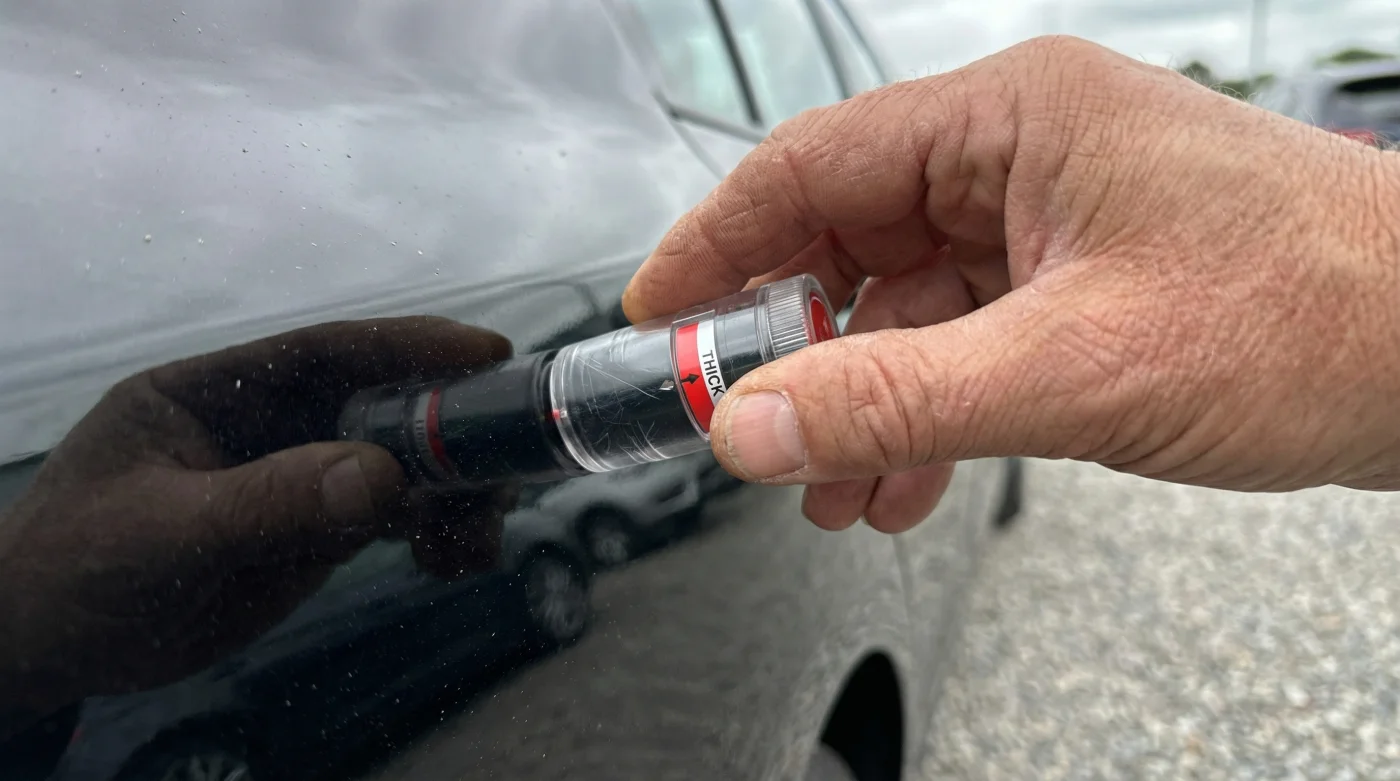
I learned this lesson from a gravel-voiced auto body veteran named Sal. We were standing in his dusty shop in Ohio, surrounded by the sharp smell of evaporating solvents. Sal pulled a small, pen-sized tool from his breast pocket and walked up to a seemingly perfect quarter panel. He touched the tip of the pen to the paint and pulled away. A tiny spring stretched, and with a weak, muffled slide, the magnet let go. “Paper lies,” Sal muttered, tapping the metal. “But magnets do not care about the paperwork. If there is a mountain of plastic filler under here, the magnet cannot feel the steel.”
| Who You Are | Why You Need This Hack |
|---|---|
| The Budget Commuter | You cannot afford a catastrophic rust-out or failing paint six months after draining your savings. |
| The First-Time Buyer | You lack the trained eye to spot minor ripples or color-matching errors in a shaded parking lot. |
| The Enthusiast Hunter | You are looking for clean, original-paint chassis to build upon, requiring raw, uncompromised metal. |
Listening to the Pull
You do not need an expensive digital coating thickness gauge to protect yourself. A twenty-dollar magnetic paint gauge pen is your best defense against lot-rot disguises. These analog tools feature a small magnet on a calibrated spring, enclosed in a clear tube marked with colored zones. When you touch the tip to a steel body panel and slowly pull away, the spring stretches. The point where the magnet finally breaks its grip tells you exactly how much material sits between the tool and the bare metal.
Using it requires a mindful, physical rhythm. You start at the roof, touching the pen to the metal and pulling straight back. You will feel a strong, reassuring resistance, followed by a sharp, audible snap when the magnet releases. This is your baseline. Factory paint is incredibly thin—often thinner than a sticky note. The magnet loves thin paint.
- Honda Accord EX models secretly conceal premium touring suspension hardware factory-direct.
- Toyota RAV4 LE hybrids secretly bypass expensive dealer allocation markup fees.
- Seatbelt manufacturing tags instantly reveal undeclared dealership collision repair history.
- Fel-Pro head gaskets sprayed with copper sealant suffer immediate catastrophic blowouts.
- Dex-Cool Coolant Mixed With Universal Antifreeze Creates Instant Engine Sludge
| Paint Condition | Magnetic Pull Strength | Gauge Reading (Typical) |
|---|---|---|
| Original Factory Paint | Strong, sharp snap upon release. | Green Zone (4-6 mils) |
| Standard Repaint | Moderate pull, slightly softer release. | Yellow Zone (7-10 mils) |
| Heavy Body Filler | Weak to nonexistent pull. Slides off easily. | Red Zone (15+ mils) |
It is important to remember that this trick only works on magnetic steel panels. Many modern cars use aluminum hoods or plastic bumpers. If the magnet does not stick to the center of the hood at all, do not panic. Tap the panel with your knuckle. If it rings hollow and light, it is aluminum. If it sounds dull, it is plastic. Focus your magnetic sweep on the core structure: the rear quarters, the door shells, and the pillars framing the windshield.
| What to Look For (Green Flags) | What to Avoid (Red Flags) |
|---|---|
| Consistent release tension across all four doors. | Sudden dead spots on an otherwise magnetic panel. |
| A crisp, audible snap when the magnet breaks contact. | A muddy, sliding feeling as you pull the gauge away. |
| Slightly thicker readings around the lower rocker panels (factory chip guard). | Inconsistent readings transitioning from the door to the rear quarter. |
The Truth Beneath the Clearcoat
Buying a used vehicle is an exercise in managing risk. Dealerships and private sellers alike spend hundreds of dollars on professional detailing to make you fall in love with the reflection. They want you distracted by the shiny wheels, the vacuumed carpets, and the comforting stack of printed reports. But a car is a mechanical, physical object that moves through a hostile world. It picks up scars. It takes hits. Some are properly repaired with welded steel, while others are hastily covered with cheap putty just to get the car off the lot.
By bringing a simple magnetic gauge into your inspection routine, you take the power back. You stop relying on the word of a salesman or a database that only knows what it is told. You start communicating directly with the metal itself. This tiny, inexpensive tool gives you the confidence to walk away from a rolling disaster, or the leverage to negotiate a price that reflects the vehicle’s true condition. You are no longer buying an illusion; you are purchasing reality.
“The paperwork tells you what the insurance company paid for, but a magnet tells you what the body shop actually did.”
Inspection Toolkit FAQ
Does a magnetic gauge scratch the paint?
No. The tip of the magnet is typically housed in a smooth plastic or rubber ring designed to sit flush against the clearcoat without causing abrasions.What if the car has a clean title but the gauge shows heavy filler?
Walk away or negotiate heavily. A clean title simply means the car was never legally declared a total loss. It does not mean it avoided a major, unreported collision.Why are some parts of the car completely non-magnetic?
Automakers frequently use aluminum for hoods and liftgates to save weight, and polyurethane plastic for front and rear bumper covers. The gauge will not work on these materials.Are digital paint thickness gauges better than the pen style?
Digital gauges offer precise numerical readings in microns, which is great for professional detailers checking clearcoat thickness. But for spotting massive chunks of hidden body filler, the analog pen is faster, cheaper, and just as effective.How thick is acceptable for a simple scratch repair?
A standard respray over a minor scratch will show a slight increase in thickness, usually landing in the yellow zone of an analog pen. It is the red zone—indicating extreme thickness—that points to structural cover-ups.