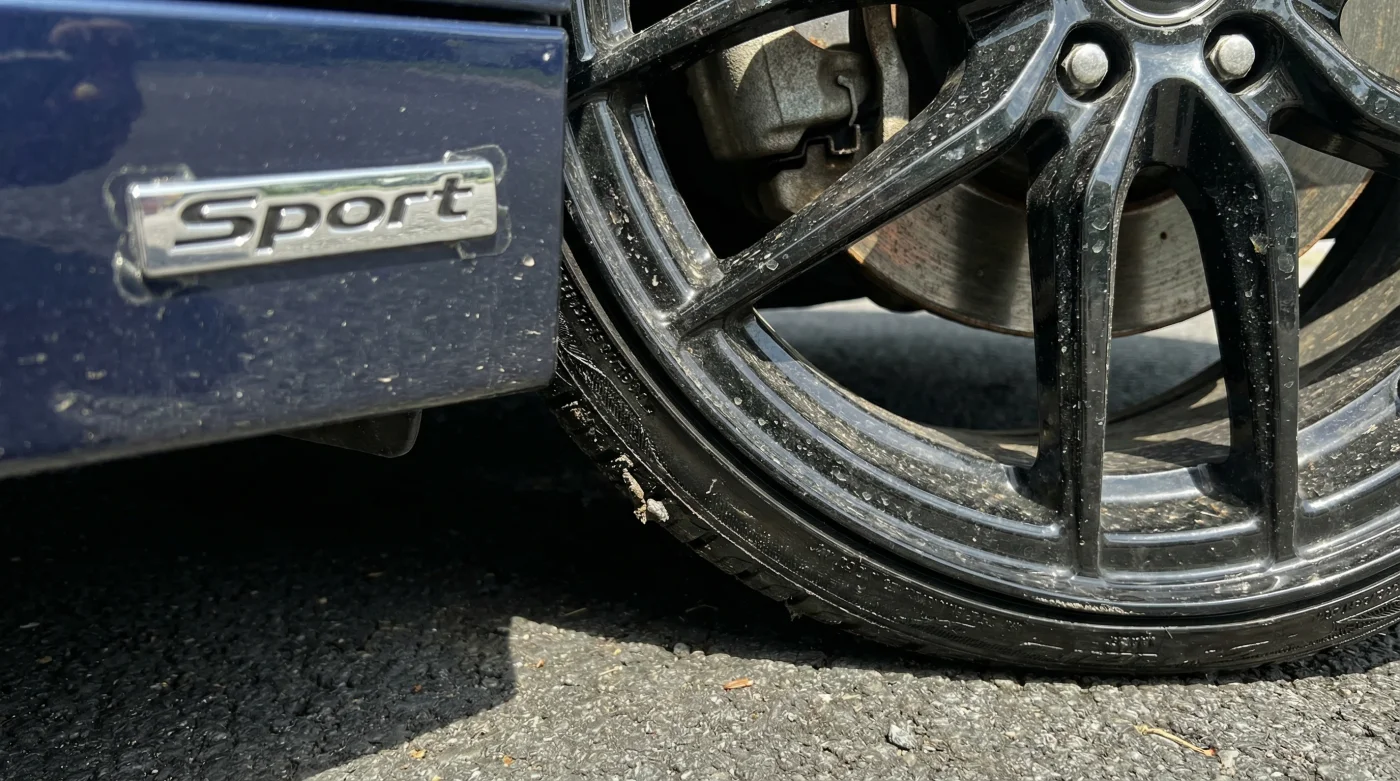
You step into the chilled, overly bright showroom, and the scent hits you immediately. It is that sharp, intoxicating blend of synthetic carpet cleaner, fresh tire dressing, and high-gloss floor wax. Right in the center sits a Honda Civic Sport. Its darkened chrome and gloss-black 18-inch alloy wheels crouch low under the fluorescent lights, looking aggressive and ready to pounce. You open the heavy door, slide into the bolstered seats, and grip the leather-wrapped steering wheel. In your mind, you are already feeling the anticipated bite of tighter cornering and a peppier throttle off the line. It is a beautiful machine.
But as you sit down at the salesperson’s desk to look over the financing paperwork, seduced by the gleaming badge on the trunk lid, you are quietly paying a premium for a remarkably clever illusion. The automotive industry is built on selling feelings, and you are about to finance a feeling that vanishes the moment you look beneath the sheet metal.
The Illusion of Velocity
We have been trained by decades of car marketing to believe that a specific word stamped on the back of a vehicle dictates its mechanical soul. The word ‘Sport’ carries an implicit, heavy promise. You naturally assume it means stiffer springs, a recalibrated throttle response, thicker sway bars, or perhaps a slight bump in horsepower to help you merge onto the highway with a bit more authority. Instead, what you are experiencing is the theatrical costume of speed.
Think of it as buying a high-end running shoe that features the exact same foam sole and arch support as the entry-level walking sneaker, just wrapped in flashy, aerodynamic neon fabric. You feel faster because you look faster in the storefront reflection. But the friction against the pavement, the energy transfer, and the physical effort required remain entirely unchanged.
Elena, an independent Honda specialist operating out of a three-bay garage in central Ohio, sees this misconception daily. Last week, she had a standard Civic LX and a Civic Sport hoisted on adjacent lifts for routine maintenance. The smell of warm gear oil hung in the air as she walked between the two vehicles, tapping a heavy wrench against the cast-iron lower control arms.
“Look at this,” she pointed to the undercarriage, illuminating the steel with her drop light. “It is the exact same skeleton. Same naturally aspirated two-liter engine block. Same continuously variable transmission. Same suspension geometry.” She wiped a smear of grease from her forearm. “People finance an extra sixteen hundred to two thousand dollars over five years, thinking they bought a canyon-carver. In reality, they just financed a set of black painted rims and a chrome exhaust tip.”
| Buyer Profile | Ideal Civic Trim | The Real Benefit |
|---|---|---|
| The Daily Commuter | LX (Base) | Keeps monthly payments low; significantly cheaper 16-inch replacement tires. |
| The Aesthetic Seeker | Sport | Gets a factory-warrantied custom look without visiting an aftermarket body shop. |
| The True Enthusiast | Si or Type R | Pays for actual mechanical upgrades: turbocharged engines, limited-slip differentials. |
The Physics Beneath the Paint
Let us strip away the glossy marketing brochure and look at the bare metal. When you press the accelerator pedal in the Civic Sport, the engine breathes exactly the same volume of air as the base model. The fuel injectors pulse at the exact same rate. The power delivery is identical down to the last drop of fuel.
During a test drive, the ride might feel marginally stiffer, which often tricks buyers into believing they are driving a tuned suspension. That is a trick of the rubber. The Sport trim rolls on larger 18-inch wheels with lower-profile tires. Less rubber sidewall means you feel the cracks, potholes, and expansion joints in the pavement much more sharply. It mimics the harshness of a track-tuned suspension, but the physical shock absorbers doing the heavy lifting possess the exact same part numbers as the base model.
| Mechanical Component | Civic LX (Base) | Civic Sport |
|---|---|---|
| Engine Displacement | 2.0L Naturally Aspirated 4-Cylinder | 2.0L Naturally Aspirated 4-Cylinder |
| Power Output | 158 hp @ 6500 rpm | 158 hp @ 6500 rpm |
| Suspension Architecture | MacPherson Strut Front / Multi-Link Rear | MacPherson Strut Front / Multi-Link Rear |
| Wheel Configuration | 16-inch steel wheels with full covers | 18-inch gloss-black alloy wheels |
Reclaiming Your Purchase Power
So, how do you navigate the dealership lot without falling for the aesthetic upcharge? It starts with grounding yourself before you ever hand over your driver’s license to take the keys. You have to consciously separate how a car looks from how it actually breathes and moves down the road. This is a mindful practice of financial self-defense.
- Mazda CX-5 Select buyers secretly receive premium acoustic glass without dealer upcharges
- Hyundai Electric Vehicles face sudden federal recalls regarding spontaneous charging port fires
- Michelin CrossClimate 2 tires rapidly degrade internal tread blocks during aggressive cornering
- 2025 Hyundai Tucson SE buyers drastically overpay ignoring the SEL convenience package
- Used Honda CR-V shoppers continually overlook this specific trailing arm rust indicator
Consider the long-term math. The price difference between the base and the Sport trim is not just the upfront MSRP. It is the interest you pay on that difference over sixty months. It is the cost of replacing 18-inch low-profile tires versus standard 16-inch commuter tires, which can easily run hundreds of dollars more per set. Sometimes, insurance carriers even place the ‘Sport’ trim into a slightly higher risk bracket based purely on the nameplate.
| The Mindful Buyer’s Checklist | What To Look For | What To Avoid |
|---|---|---|
| Dealership Financing | Calculating the true monthly cost of cosmetic upgrades over a 60-month loan. | Paying exorbitant dealer markups for a standard commuter vehicle. |
| Long-Term Maintenance | Pricing out 16-inch versus 18-inch replacement tires before buying. | Assuming lower profile tires ride better on rough, potholed city streets. |
| The Test Drive | Feeling for transmission smoothness and listening for cabin noise. | Getting distracted by red ambient lighting, chrome pedals, and exterior paint. |
The True Weight of the Drive
Buying a car is an intensely emotional process. The metal box sitting in your driveway becomes an extension of your identity, a silent partner in your daily commute, your weekend road trips, and your late-night grocery runs. When you understand exactly what you are paying for, you strip away the anxiety of the transaction. You gain control.
If you truly love the dark, aggressive look of the Civic Sport, acknowledge that you are paying purely for design. There is absolutely no shame in valuing aesthetics. We all want to look back at our car as we walk away in the parking lot. But if your goal is actual performance, or if you simply want an incredibly reliable daily commuter without wasting hard-earned money, you need the courage to walk past the showroom centerpiece.
Choosing the base LX over the Sport—or stepping up to a true performance trim like the Si if you desire manual shifting and real mechanical changes—brings a profound sense of clarity. You are no longer financing an illusion created in a marketing boardroom. You are putting your money exactly where it serves your daily life best.
The next time you walk the lot, look past the gloss-black paint and the tinted chrome. Listen to what the chassis is actually offering beneath the surface. Because a vehicle that perfectly fits your budget and your reality is always the most satisfying drive of all.
“A badge on the trunk does not change the physics of the chassis; true automotive value comes from buying the mechanics you need, not the plastic you see.” — Elena Rostova, Independent Honda Specialist
Frequently Asked Questions
Does the Honda Civic Sport have a faster engine?
No. It features the exact same 158-horsepower, 2.0-liter naturally aspirated engine as the base LX model.Why does the Sport trim feel different on the test drive?
The suspension components are identical, but the Sport uses 18-inch wheels with lower-profile tires. This transmits more road harshness directly into the cabin, which mimics a stiffer, tuned ride.Are my insurance rates higher for a Sport trim?
Often, yes. Insurance carriers frequently categorize anything with ‘Sport’ in the name in a slightly higher risk bracket, even if the vehicle possesses no extra horsepower over the base model.Can I just buy aftermarket wheels for an LX?
Absolutely. Many buyers save money by purchasing the cheaper LX trim and later adding a high-quality set of aftermarket black alloy wheels for less than the total price difference between the trims.Is the Civic Sport a bad car to buy?
Not at all. It remains an incredibly reliable vehicle that holds its resale value well. It simply requires you to acknowledge that you are paying a premium purely for visual aesthetics rather than mechanical performance.