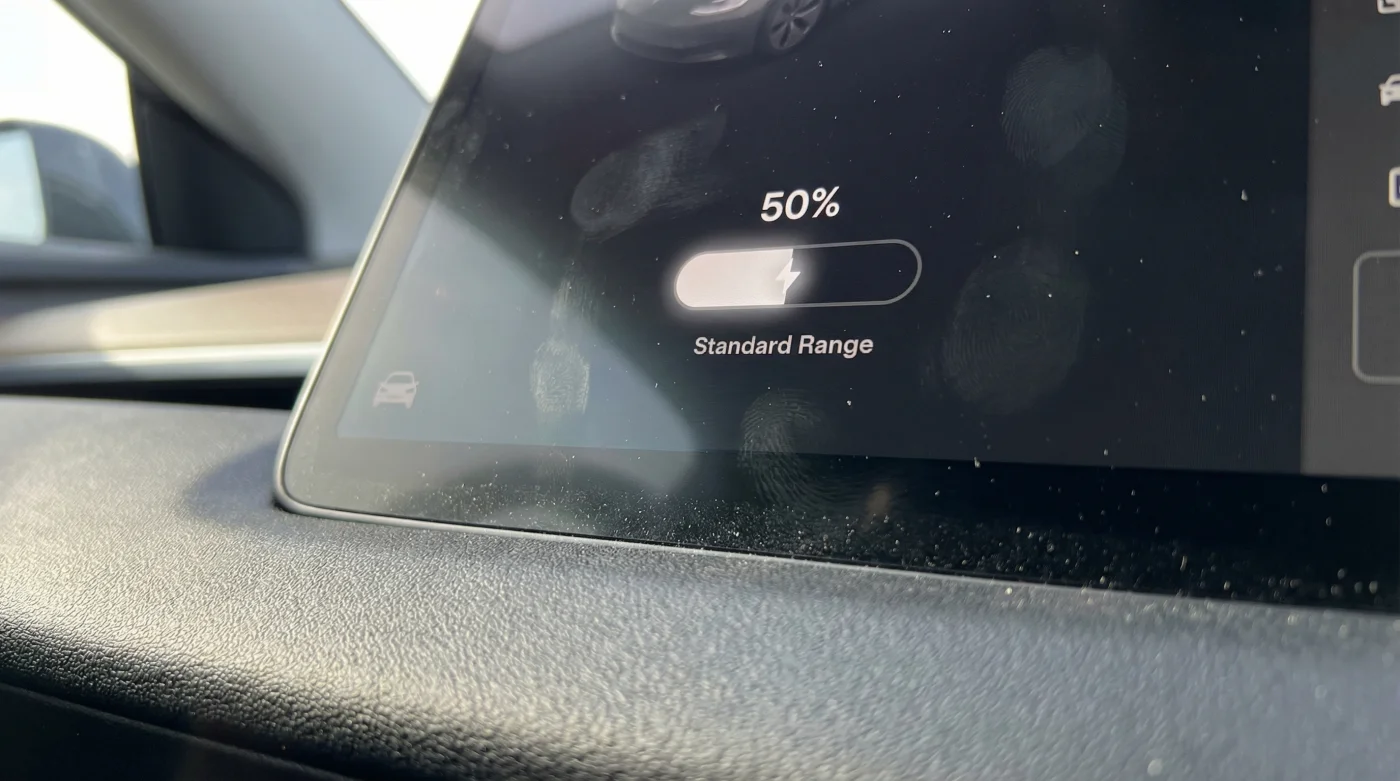
You step into the garage on a brisk morning, the temperature hovering just below 40 degrees Fahrenheit. The rhythmic hum of the wall charger fills the space, a familiar sound that usually brings peace of mind. But as you unplug the thick black cable and slide into the driver seat, your eyes dart to the screen. You watch the battery percentage, harboring that quiet, persistent anxiety about degradation. Will this battery last? Did you make a mistake by not splurging on the Long Range model?
For years, automotive marketing has conditioned us to believe that spending an extra ten thousand dollars for a premium badge guarantees a superior, longer-lasting machine. We assume the Long Range label acts as a shield against the slow march of time. But if you look past the glossy brochures and examine the physical chemistry beneath the floorboards, a completely different reality emerges. The base model buyers are secretly walking away with the most durable batteries on the road.
The Badge Illusion and the Empty Suitcase
To understand why the cheaper option outlasts the premium one, we have to look at how modern battery packs experience stress. Imagine packing a suitcase for a long trip. If you stuff it to the absolute brim, sitting on the lid just to pull the zipper shut, the seams stretch. The fabric groans. Do this every day, and eventually, the zipper breaks. A battery cell behaves the same way. Charging a cell to its absolute maximum physical capacity puts tremendous strain on its internal chemistry.
This is where the hidden genius of the Standard Range comes into play. In many cases, these base models leave the factory with the exact same physical battery pack as their more expensive siblings, but their maximum capacity is limited by software. You might charge your screen to a perfect 100 percent, but physically, the battery is only filled to 80 or 90 percent of its true limit.
Those inaccessible, software-locked cells act as a protective sponge. They buffer the daily charging stress, meaning your battery never actually experiences the degrading pressure of a true full charge. Your battery is that suitcase, comfortably packed, with plenty of breathing room for the seams.
| Driver Profile | The Standard Range Advantage |
|---|---|
| The Daily Suburban Commuter | Avoids daily cell strain entirely; software buffers absorb the top-end charging pressure naturally. |
| The Weekend Errander | Experiences almost zero calendar degradation since the pack rests at a physically lower voltage. |
| The Frugal Pragmatist | Secures thousands in upfront savings while enjoying a significantly flatter battery degradation curve over a decade. |
I learned the true weight of this secret from a seasoned independent EV technician in Ohio named Marcus. His shop smells of ozone and roasted coffee, a quiet sanctuary away from dealership up-sells. Leaning over a disassembled battery module, he pointed to the tightly packed cylindrical cells. He explained that Long Range owners, eager to maximize their investment, often push their packs to the physical brink before long road trips. Over thousands of miles, that high-voltage stress compounds.
Meanwhile, the Standard Range owners simply plug in and walk away. Their software lock creates a permanent, un-crossable boundary. Even when a base model owner is careless with their charging habits, the software protects the hardware. Marcus laughed, wiping his hands on a shop towel, and said it was the only time he had ever seen a manufacturer accidentally give the budget buyer a bulletproof vest.
| Metric | Standard Range (Software Buffered) | Long Range (Unbuffered) |
|---|---|---|
| Physical Charge at 100% Screen Display | Approx. 80-88% physical capacity | 98-100% physical capacity |
| High-Voltage Stress Level | Minimal (Chemically relaxed state) | High (Requires careful management) |
| Estimated Degradation at 100k Miles | 5-8% loss of total range | 10-15% loss of total range |
Mindful Charging in the Real World
- Hyundai Electric Vehicles face sudden federal recalls regarding spontaneous charging port fires
- Michelin CrossClimate 2 tires rapidly degrade internal tread blocks during aggressive cornering
- 2025 Hyundai Tucson SE buyers drastically overpay ignoring the SEL convenience package
- Used Honda CR-V shoppers continually overlook this specific trailing arm rust indicator
- Michelin Defender Tires instantly lose tread warranties without certified dealership balancing.
If you own one of these buffered Standard Range models, you can safely set your daily charge limit to 100 percent on the screen. The software is already keeping the physical chemistry in a safe, relaxed zone. You do not need to constantly adjust sliders or worry about leaving the car fully charged in the driveway for a few days.
For those living in climates with harsh winters, this built-in buffer offers another subtle benefit. A battery that isn’t physically stuffed to the absolute limit handles cold-weather regenerative braking much better. You will feel a smoother, more consistent deceleration when you lift your foot off the accelerator on a frosty morning.
| Longevity Checklist | What to Embrace | What to Avoid |
|---|---|---|
| Charging Habits | Plugging in daily; relying on the car software to manage the top buffer. | Micromanaging the charge limit slider if you have a software-locked pack. |
| Storage Mindset | Leaving the car plugged in when away on vacation so the thermal management system runs. | Letting the vehicle sit idle for weeks unplugged at a low state of charge. |
| Driving Dynamics | Using smooth, predictable acceleration to keep thermal loads low on the battery cells. | Frequent, aggressive zero-to-sixty sprints immediately after a cold start. |
The Quiet Confidence of Less
There is a profound peace of mind that comes from understanding your machine. You no longer have to look at the premium badges in the parking lot with envy. You know the truth hiding beneath the floor pan. While others paid a premium for access to those final, stressful miles of capacity, you purchased longevity. You bought a vehicle that breathes easily, shielding itself from the daily wear and tear of electrical friction.
Ultimately, buying the Standard Range is not a compromise. It is a highly strategic choice. It forces us to reevaluate what we truly value in our daily transportation. By accepting a slightly lower number on the dashboard, you gain a resilient, eager companion that will faithfully carry you through years of daily life, unbothered by the slow creep of time.
The most durable engineering is often found in the margins we are told to ignore; a battery that never strains is a battery that never surrenders.
Frequently Asked Questions
How do I know if my Standard Range has a software buffer? Many base models produced during high-demand periods use the exact same battery pack as the Long Range versions, simply limited by a digital barrier. You can verify this by checking your vehicle weight specifications or verifying the battery chemistry (like LFP) which natively thrives on full charges.
Does this mean I should always charge my standard EV to 100 percent? If your vehicle utilizes an LFP battery or is a verified software-locked pack, yes. The manufacturer specifically recommends this to keep the battery management system calibrated without causing chemical stress.
Will a software update ever remove this buffer? Sometimes, during regional emergencies like hurricanes, manufacturers have temporarily removed the software lock to give owners extra range to evacuate. However, in standard daily driving, the lock remains permanent unless you purchase an official over-the-air upgrade.
Does fast charging still degrade a buffered battery? DC fast charging generates significant heat, which is the true enemy of battery health. While your software buffer protects against high-voltage stress, it is still best to rely on slower home charging for daily needs to keep thermal temperatures low.
Why do manufacturers build cars this way? It comes down to factory efficiency. It is frequently cheaper for an automaker to mass-produce one standardized physical battery pack and alter the capabilities via software, rather than sourcing and building multiple different physical packs.