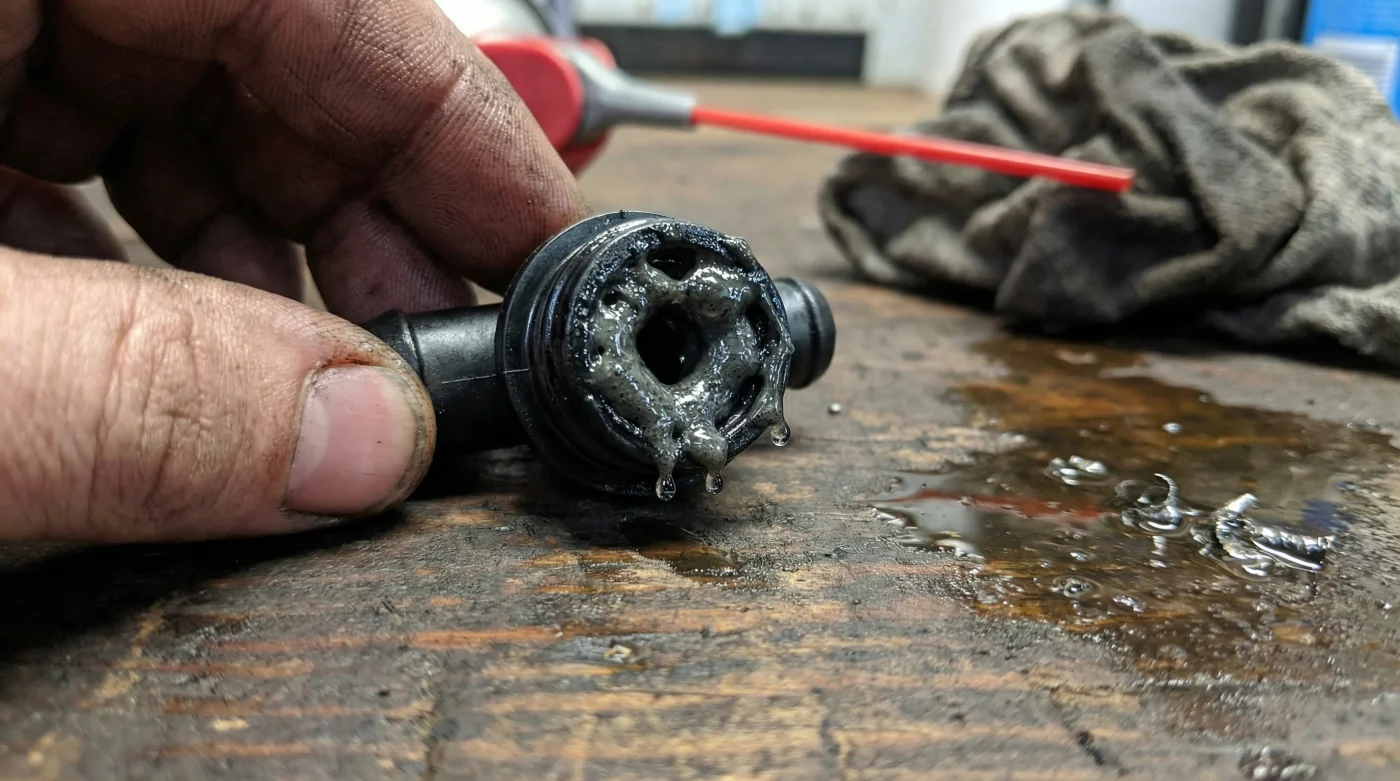
You are standing in your driveway on a Saturday afternoon, surrounded by scattered tools and the harsh, metallic bite of aerosol solvent stinging your nostrils. A bright red plastic straw is attached to a fresh can of CRC Brake Cleaner. You are just trying to do the right thing—blasting the carbon sludge out of your Subaru’s PCV valve to keep the idle smooth and the emissions low. It is a ritual passed down through generations of garage tinkerers. But right now, you do not hear the gentle hiss of preventative maintenance. You are listening to the first silent domino falling toward a catastrophic engine blowout.
The Myth of the Universal Solvent
For decades, backyard mechanics treated brake cleaner like a magic wand. It dissolved grease, banished oil stains, and evaporated instantly. It felt like the perfect tool for every dirty job under the hood. But treating your delicate emissions components with industrial brake wash is like using a sledgehammer in a glass factory. The PCV, or Positive Crankcase Ventilation valve, is a brilliant little device that acts as the lungs of your engine. It regulates pressure, ensuring oil stays where it belongs while venting harmful gases.
Inside a modern Subaru PCV valve, there is a highly specific, precision-molded plastic plunger wrapped in a delicate Viton rubber seal. When you shoot heavy-duty chlorinated or non-chlorinated solvents into this tiny chamber, a violent chemical reaction occurs. The aggressive chemical instantly melts the internal plastics. The plunger warps, the spring binds, and the rubber swells until it tears.
I recently spent a morning with Dave, an independent Subaru specialist operating out of a cramped, oil-scented shop in Portland. He handed me a plastic bucket rattling with ruined PCV valves. They looked like deformed candle wax. He explained that when the internal plastics melt, the valve gets stuck in the wide-open position. The immense vacuum of the engine then acts like a supercharged vacuum cleaner, sucking quarts of engine oil directly from the crankcase into the combustion chamber. Within a single highway trip, your oil pan runs dry, the internal bearings scream for lubrication, and a sudden engine blowout leaves you stranded on the shoulder.
| Driver Profile | Specific Benefits of Safe Maintenance |
|---|---|
| The Weekend Tinkerer | Avoids accidental $6,000 engine replacements by tossing out the wrong chemical sprays. |
| The High-Mileage Commuter | Maintains optimal oil levels on long highway drives, preventing sudden lubrication starvation. |
| The Budget-Conscious Owner | Preserves the factory engine seals and guarantees a reliable, vibration-free idle for pennies. |
The Chemistry of Catastrophe
Understanding why this happens requires a look at what we are actually holding in our hands. Modern automotive plastics are engineered to withstand extreme heat and continuous oil exposure, but they are entirely defenseless against extreme solvents. The moment heptane, acetone, or tetrachloroethylene makes contact with glass-filled nylon, the structural integrity dissolves.
| Chemical / Component | Material Composition | Mechanical Reaction |
|---|---|---|
| Aerosol Brake Cleaner | Tetrachloroethylene / Heptane | Acts as a rapid plasticizer, dissolving molecular bonds on contact. |
| OEM Subaru PCV Valve | Glass-filled Nylon & Viton | Plunger melts, losing its precise shape and jamming the spring mechanism. |
| Boxer Engine Oil Supply | Full Synthetic 0W-20 | Vacuum siphons up to 1 quart per 500 miles directly into the combustion chamber. |
The Gentle Art of Valve Care
So, how do you handle this vital piece of your engine’s respiratory system? It starts with stepping away from the chemical rack. You must unlearn the habit of spraying your way out of mechanical problems. The physical act of checking a PCV valve requires nothing more than a pair of pliers and your own ears.
First, locate the valve threaded into the engine block or manifold. Gently squeeze the rubber hose attached to it and slide the clamp back. Pull the valve free with a steady, twisting motion. Now, shake it next to your ear. You are listening for a crisp, metallic click-clack sound. That sound is the heartbeat of a healthy valve, proving the internal plunger is moving freely.
If the valve is silent, sticky, or sluggish, do not attempt to revive it. It is a part that costs less than twenty dollars. Walk into a dealership parts department, buy a brand-new original equipment valve, and thread it in by hand. Snug it down gently with a wrench. You have just secured another hundred thousand miles of engine life with zero chemical warfare.
| What to Look For (Safe Practice) | What to Avoid (Engine Killers) |
|---|---|
| Clear, audible rattling when shaking the uninstalled valve. | Sluggish, muffled, or completely silent movement inside the casing. |
| Buying a fresh $20 factory replacement part when clogged. | Blasting the old valve with aerosol brake or carburetor solvents. |
| Fresh, pliable vacuum hoses that grip the valve tightly. | Brittle, cracked, or chemically swollen rubber lines. |
Preserving the Heartbeat of Your Boxer Engine
Your car is an ecosystem. Every hose, sensor, and valve relies on a delicate balance of pressure, temperature, and material strength. When you respect that balance, the machine rewards you with quiet reliability. Replacing a cheap plastic valve rather than flooding it with aggressive solvents is more than just a repair technique. It is a mindful approach to ownership.
- Michelin Defender Tires instantly lose tread warranties without certified dealership balancing.
- Tesla Model Y inventory gluts trigger sudden overnight markdowns across competing dealerships.
- Magnetic paint gauges instantly reveal hidden collision repairs beneath pristine dealership vehicles.
- Nissan Rogue SV buyers quietly overpay for identical base model engine blocks.
- Polarized sunglasses instantly expose cheap aftermarket windshield replacements on used dealership lots.
Treat your engine’s sensors and valves like camera lenses, not heavy iron brake rotors.
Frequently Asked Questions
Can I use mass air flow sensor cleaner instead of brake cleaner?
While electronics cleaners are milder, the internal spring and plunger of a PCV valve are purely mechanical and easily replaced. Cleaning is rarely as effective as simply installing a new twenty-dollar part.
How do I know if my PCV valve is already damaged?
Look for a sudden, unexplained increase in oil consumption, rough idling, or a blue tint to your exhaust smoke, especially under hard acceleration.
How often should I inspect the PCV system?
Make it a habit to physically check the hoses and shake the valve every 30,000 miles to ensure it is breathing correctly.
Will a melted PCV valve trigger a check engine light?
Not always immediately. By the time the computer registers a lean code or misfire from the vacuum leak, severe oil starvation may have already begun.
Is this melting issue specific only to Subaru vehicles?
While Subaru’s flat boxer engine layout makes it particularly sensitive to vacuum oil consumption, almost all modern automakers use similar nylon-based plastics that will melt under harsh chemical exposure.