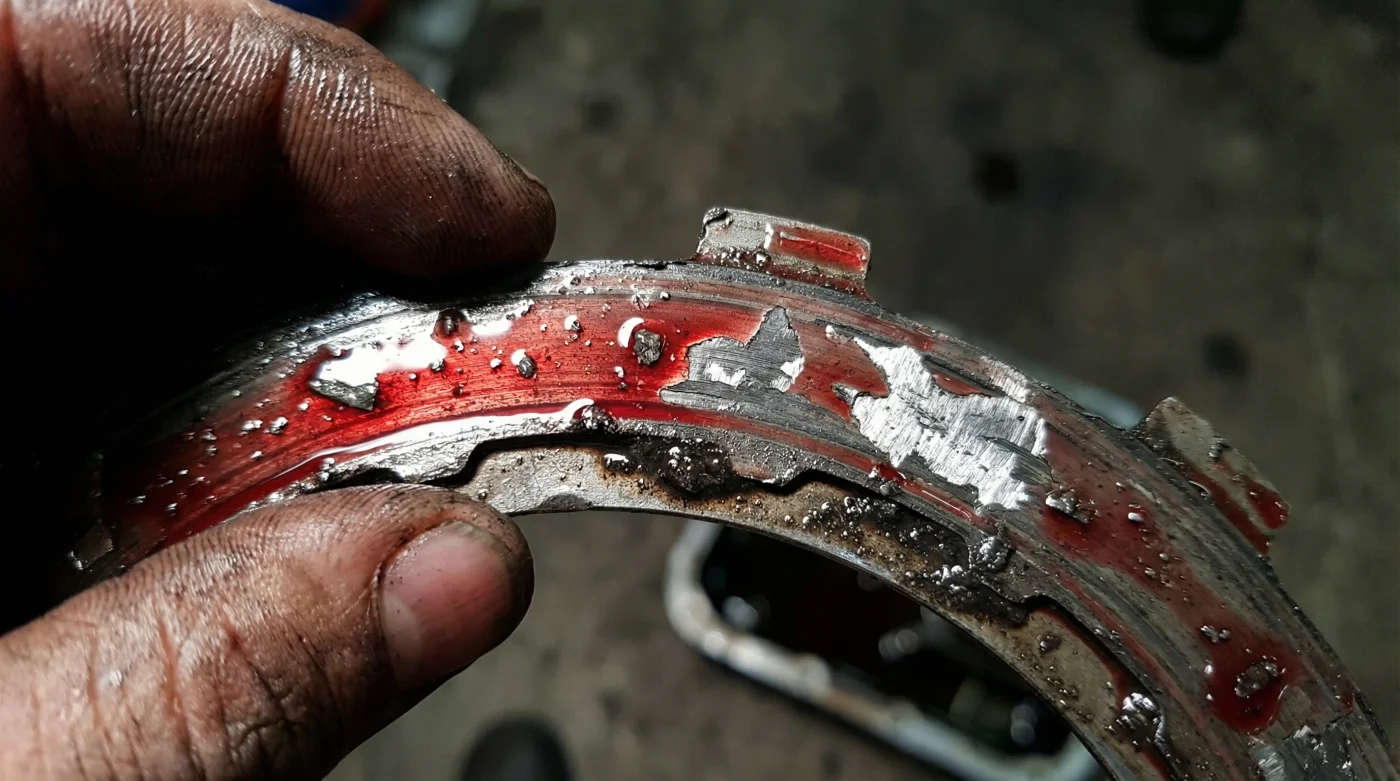
You know the feeling. You’re merging onto the highway, pressing the accelerator, but instead of the familiar thrust of momentum, the engine revs into an empty void. Then comes the hard shudder. Underneath it all, a faint, metallic tang hits your nose—a mix of scorched syrup and hot pennies. You panic. You decide it is time for a transmission fluid flush, picking up a bright red bottle of modern synthetic fluid from the auto parts store. You think you’re doing your high-mileage car a favor.
The Ghost in the Gears
There is a dangerous myth stacked on the shelves of your local auto parts store. The label on Castrol Transmax ATF—and many modern synthetics like it—proudly declares itself “backward compatible.” It sounds like a lifeline. But for an aging automatic transmission, pouring in a highly engineered, detergent-rich fluid isn’t a cure. It is an eviction notice.
Think of your pre-2010 transmission like a heavily worn wooden staircase. Over the years, the factory finish has chipped away, leaving a rough, gritty surface. It is not pretty, but that accumulated grit is exactly what keeps your shoes from slipping when you run up the steps in the rain. Pouring a highly detergent synthetic fluid into an older, slipping transmission is like suddenly sanding those worn steps down to a smooth, polished sheen. You remove the very friction that was holding things together.
| Driver & Vehicle Profile | Action Taken | Actual Benefit / Consequence |
|---|---|---|
| Pre-2005 Commuter (4-Speed Automatic) | Flushes with Transmax Synthetic ATF | Detergents wash away floating clutch material; results in immediate gear slip. |
| 2006-2010 High-Mileage Owner (150k+ miles) | Performs a pressurized power flush | Dislodged debris jams the valve body; reverse gear fails to engage. |
| 2015+ Modern Vehicle Owner | Upgrades to synthetic ATF | Experiences smoother shifting and excellent thermal breakdown resistance. |
Mike, a transmission specialist who has spent thirty years pulling metal shavings out of torque converters in a cinderblock shop outside Cleveland, puts it bluntly. “You don’t wash a disintegrating sponge,” he told me once, wiping cherry-red fluid off his hands. He explained that older clutch packs wear down their paper-like friction material over decades. That shed material does not just vanish; it floats in the thick, degraded fluid.
When you flush out that gritty slurry and replace it with a hyper-cleansing synthetic, those aggressive detergents instantly strip away the remaining friction coating on the clutch plates. Suddenly, there is nothing left to grip. The internal clutch friction plates slip completely, and you are left stranded on the side of the road waiting for a tow truck.
| Specification | Legacy Fluid (e.g., Dexron III) | Modern Synthetic (e.g., Transmax) |
|---|---|---|
| Detergent Package | Mild; allows mild sludge to settle harmlessly. | Aggressive; actively scrubs all internal surfaces clean. |
| Viscosity Stability | Thickens as it degrades, creating artificial grip. | Maintains a highly consistent, slippery flow at all temperatures. |
| Friction Modifiers | Designed for older, high-friction clutch plates. | Optimized for modern, tightly spaced gears requiring smooth slip. |
Reading the Dipstick and Making the Right Call
You can avoid this costly mistake by taking ten minutes in your driveway. Pull your transmission dipstick and wipe it on a clean white paper towel. Do not just look at the color; feel the texture between your thumb and index finger. If the fluid is dark brown, gritty, or smells heavily of burnt toast, your transmission is already wounded.
Resist the urge to perform a power flush at the dealership. High-pressure machines will force out the very debris that is currently acting as friction paste between your worn gears. You want to preserve the fragile ecosystem inside that gearbox, not sterilize it.
- Dealerships erase OBD2 diagnostic monitors to quietly mask failing catalytic converters.
- ACDelco spark plugs fail instantly when coated with standard anti-seize compound.
- Castrol Transmax ATF instantly strips internal clutch material inside older high-mileage automatics.
- Sealed Ford 10-Speed Transmissions Hide Burned Clutch Fluid From Owners
- Chevron Techron Fuel Cleaner Dissolves Essential Fuel Injector O-Rings Overnight
When topping it off, skip the advanced, multi-vehicle synthetics if your car predates 2010. Seek out conventional fluids that match your original owner’s manual specification. Look specifically for those without aggressive modern detergent packs. A high-mileage specific fluid with seal conditioners is fine, but avoid anything promising “ultimate cleaning.”
| Maintenance Area | What to Look For | What to Avoid |
|---|---|---|
| Fluid Selection | Conventional fluid matching original factory spec (Dexron III/Mercon V). | “Universal” or “Backward Compatible” high-detergent synthetics. |
| Replacement Method | Gravity pan drop and simple filter replacement. | Pressurized power flushes or chemical solvent flushes. |
| Dipstick Condition | Red to light-brown fluid, slightly sweet chemical smell. | Opaque black fluid, metallic flakes, harsh burnt smell. |
Honoring the Miles
Maintaining an older vehicle is an exercise in listening. It requires you to set aside the flashy marketing promises of modern chemistry and respond to what the machine actually needs. You are essentially acting as a steward of its mechanical history. By refusing to strip away the hard-earned friction inside your transmission, you give your daily driver the grace to keep moving forward.
It brings a profound peace of mind, knowing you haven’t accidentally engineered your own breakdown. Every time you shift into drive and feel that solid, reassuring engagement, you know you made the right call. You let the gears age naturally, respecting the wear, rather than washing away the evidence.
“Sometimes the dirt is the only thing holding the house together; don’t scrub it unless you’re ready to rebuild.” — Mike, Master Transmission Technician
Frequently Asked Questions
What does backward compatible really mean for transmission fluid?
It means the manufacturer guarantees the fluid will not chemically attack the seals or metals in older cars, but it does not account for the mechanical reality of worn, slipping clutches.Can I mix synthetic and conventional transmission fluid?
While they will chemically mix without separating, blending them alters the friction profile and dilutes the specific benefits of both, which is risky for high-mileage transmissions.How often should I drop the pan on a high-mileage vehicle?
A simple gravity drain and pan drop every 30,000 to 50,000 miles is ideal for maintaining fluid health without shocking the fragile system.Why does my transmission fluid smell like burnt toast?
The friction plates inside your transmission are literally burning up from excessive heat and slipping, severely degrading the fluid’s protective properties.Will a thick oil additive stop my transmission from slipping?
Thick viscosity modifiers can temporarily boost internal pressure and mask slipping, but they are a short-term band-aid rather than a true mechanical repair.