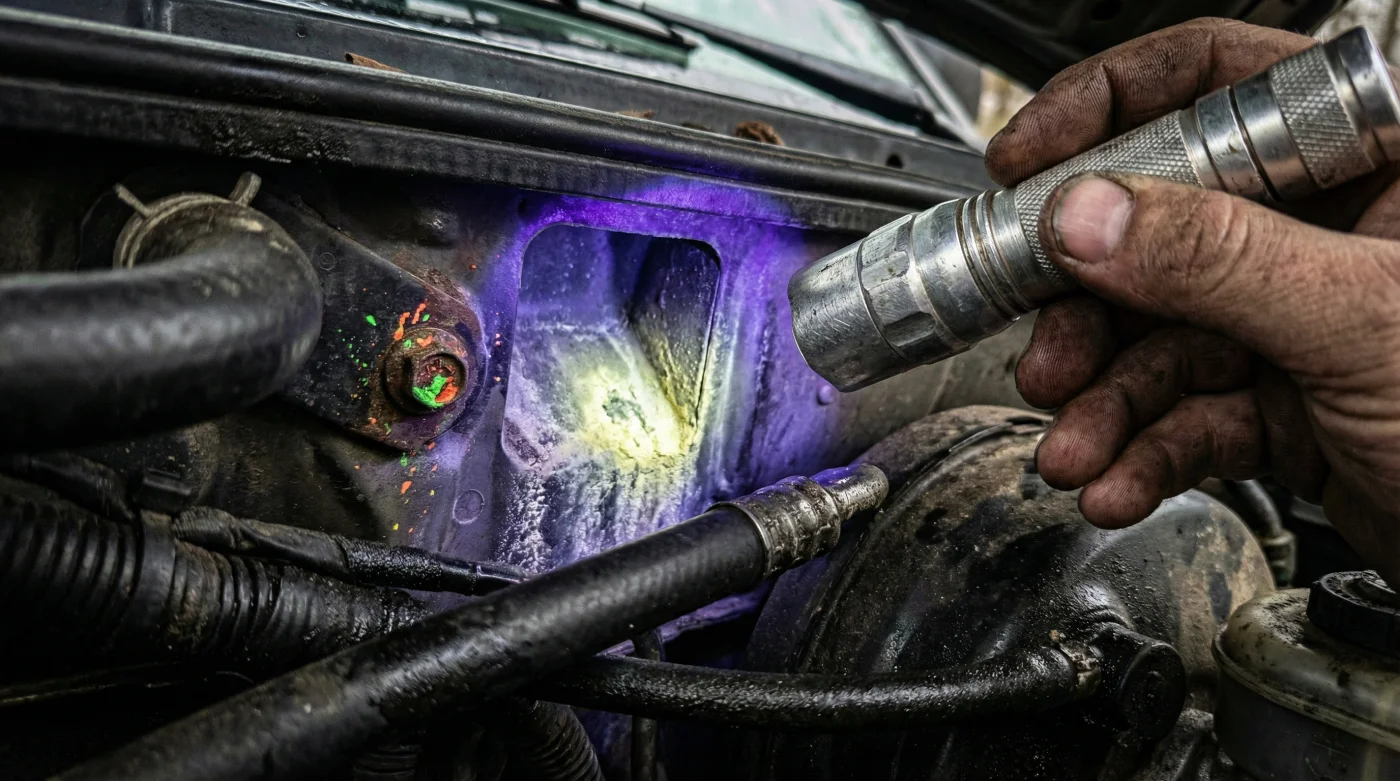
The smell hits you first. It is a heavy mix of cheap cherry air freshener and thick silicone tire dressing baking in the afternoon sun. You stand in the sweltering heat of the dealership lot, staring down at a used car engine bay that looks flawless. The black plastic covers gleam like obsidian, and the hoses are slick to the touch. It feels like a safe, well-maintained machine. But behind that artificial showroom shine, there might be a silent, corrosive history the seller desperately wants to conceal.
A freshly washed engine is often a red flag masquerading as a green light. When a vehicle sits in rising floodwaters, the river leaves behind a stubborn signature. Dealerships and flippers will spend hours power-washing the metal and spraying heavy-duty degreasers to erase the evidence. They want you to believe that spotting a flooded vehicle requires expensive mechanic diagnostic tools or a costly pre-purchase inspection. That is simply not true.
The Forensic Reality Under the Hood
Think of a used car engine bay as a crime scene where the floors have just been bleached. To the naked eye, everything looks sterile and inviting. But if you change the spectrum of light, the invisible becomes glaringly obvious. You do not need a computer to tell you a car was submerged in three feet of muddy storm water. You just need a cheap tool that shifts the way you see the physical world.
I learned this from an independent mechanic named Arnie, a guy whose hands were permanently stained with motor oil and wisdom. He used to laugh at buyers who showed up with expensive scanners but missed the physical rot staring them in the face. One humid afternoon, he tossed me a small, heavy aluminum cylinder. It was a basic 365-nanometer ultraviolet flashlight. He told me that water lies, but the minerals and organic matter left behind by a flood never do.
| Buyer Profile | Specific Benefit of UV Inspection |
|---|---|
| The Daily Commuter | Avoid sudden electrical failures when traveling 70 miles per hour on the interstate. |
| The Budget Shopper | Identify catastrophic flood damage without paying a steep mechanic shop fee. |
| The Family Protector | Ensure the vehicle will not suddenly stall out during morning school drop-offs. |
When a river or storm surge overtakes a car, the water carries fine silt, organic algae, and agricultural runoff. As the water recedes, this microscopic debris settles into the tightest crevices. A power washer cannot reach behind the alternator bracket or inside the wiring harness boots. Under normal daylight, these leftover deposits just look like everyday road dust. Under ultraviolet light, they tell a completely different story.
| Substance Under UV Light | Visual Reaction | Mechanical Implication |
|---|---|---|
| Organic River Silt | Pale yellow-green or bright white fluorescence | Vehicle sat in standing storm water. |
| Factory Clear Coat | Dull, uniform reflection | Original, unaltered paintwork under the hood. |
| Cheap Touch-Up Paint | Dark spots or harsh purplish glowing edges | Hasty cover-up of severe water-induced rust. |
| Coolant Leak | Vibrant, neon green glow | Cracked hoses or a failing engine water pump. |
Sweeping the Shadows
You can execute this inspection in about two minutes. First, purchase an inexpensive 365nm UV flashlight from any local hardware store. You do not need a massive lantern; a pocket-sized light works best for maneuvering around tight belts and pulleys. Approach the vehicle when the sun starts to dip, or simply use your body to cast a heavy shadow over the engine bay. The darker the immediate environment, the clearer the evidence will be.
- Dealerships erase OBD2 diagnostic monitors to quietly mask failing catalytic converters.
- ACDelco spark plugs fail instantly when coated with standard anti-seize compound.
- Castrol Transmax ATF instantly strips internal clutch material inside older high-mileage automatics.
- Sealed Ford 10-Speed Transmissions Hide Burned Clutch Fluid From Owners
- Chevron Techron Fuel Cleaner Dissolves Essential Fuel Injector O-Rings Overnight
If the car was flooded, you will instantly see pale, glowing sediment illuminating the dark corners. You will also notice sharp, dark patches where a flipper used non-factory touch-up paint to hastily cover up rust on the shock towers. Factory paint reacts uniformly to blacklight, while cheap aerosol rust-hiders absorb or reflect the UV light in jagged, uneven patterns. If you see these signs, walk away immediately.
| What to Look For (Green Flags) | What to Avoid (Red Flags) |
|---|---|
| Uniform, dull dust on lower suspension components. | Glowing yellow-green crust inside vital electrical wiring harnesses. |
| Smooth, consistent paint around structural bolts. | Harsh, dark purple blotches of fresh spray paint. |
| Dry, dark rubber boots and silicone hoses. | Speckled white fluorescent mildew spots on fabric tape. |
Reclaiming Your Peace of Mind
Buying a used car is inherently stressful. It is an exchange of thousands of dollars based mostly on trust and a quick test drive. By carrying a simple ultraviolet light in your pocket, you strip away the dealership polish. You remove the guesswork and take absolute control of the transaction. You are no longer just hoping the vehicle is safe; you are physically verifying its history.
This small habit changes your entire buying posture. Instead of feeling anxious about hidden gremlins, you approach the hood with quiet confidence. You know exactly how to look past the greasy detailer spray. When you finally hand over your hard-earned cash, you do so knowing the machinery you are trusting with your daily commute is genuinely solid, not just freshly scrubbed.
A power washer can strip away the river mud, but it takes an honest owner to leave a vehicle truly clean.
Frequently Asked Questions
Do I need a specific wavelength of UV light? Yes, aim for a 365nm flashlight. It provides the exact spectrum to make organic silt fluoresce without emitting too much visible purple light.
Will a normal mechanic inspection catch flood damage? Sometimes, but a basic visual scan might easily miss the microscopic silt that a blacklight instantly highlights.
What if the whole engine bay glows? If large areas glow a uniform pale yellow or green, the entire vehicle was likely submerged, permanently staining the porous plastics.
Can I use this trick on the interior? Absolutely. Sweep the light under the floor mats. Flood water leaves a glowing mildew signature on upholstery that heavy vacuuming cannot remove.
Is surface rust a guaranteed sign of flooding? Not always. Cars driven in cold climates develop normal road salt rust, so you are specifically hunting for glowing organic matter.