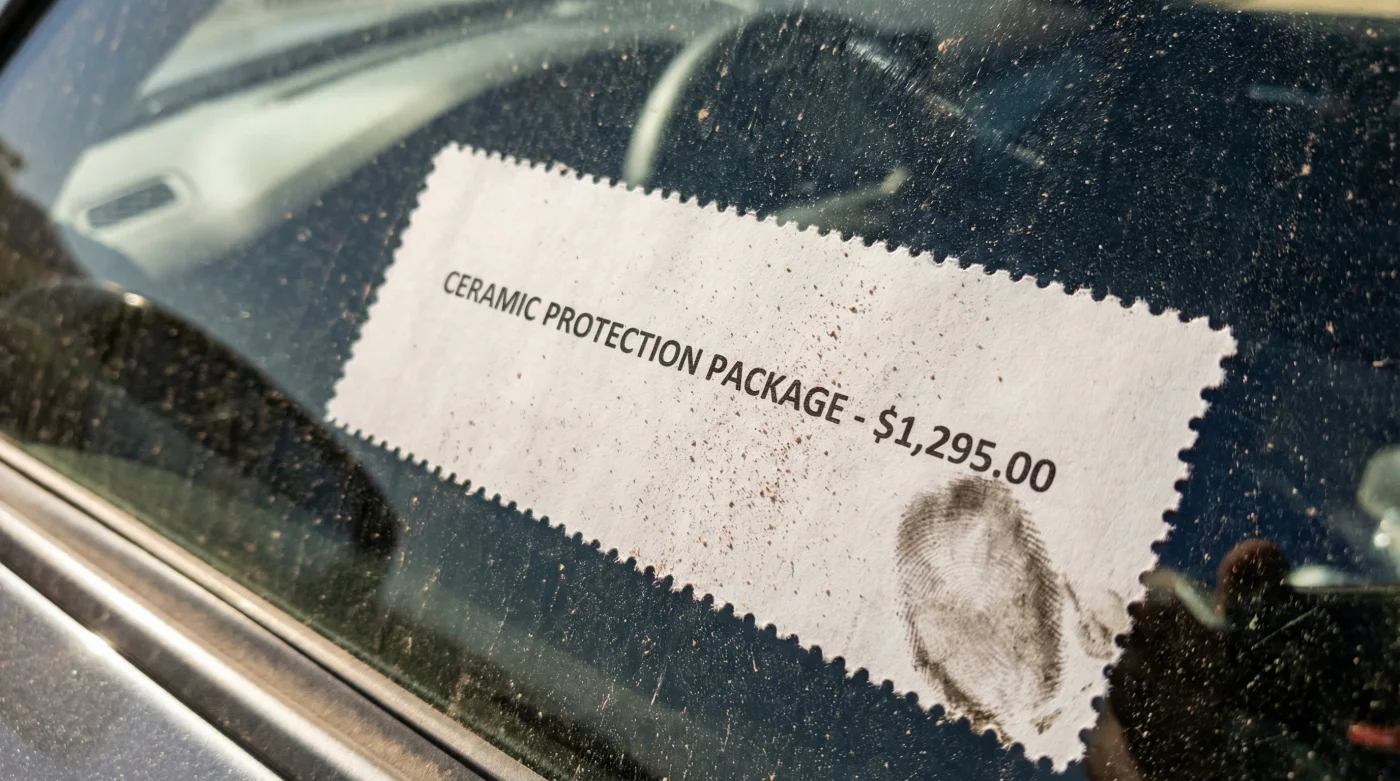
You are sitting in a sweltering glass box of an office. The faint scent of industrial carpet cleaner mixes with the finance manager’s stale coffee. Outside, your new car sits under the glaring fluorescent lot lights, the sheet metal reflecting the sky perfectly. Then comes the pivot. A laminated menu slides across the desk. “For just a few dollars more a month, we can apply a professional ceramic coating. It protects the factory finish.” It sounds like an investment in peace of mind. The pen feels heavy in your hand. But as the ink dries on that high-margin dealership add-on, you are unknowingly signing away the very safety net you assume you are paying for.
The Second Skin That Suffocates the First
Dealerships thrive on the psychology of preservation. They know you want to keep that initial showroom gloss intact. But here is the quiet reality of the automotive market: forced dealership markups do more than inflate the MSRP. They can sever your legal relationship with the automaker.
Think of your car’s factory clear coat like a living, breathing membrane. It is engineered to expand in the searing Texas August heat and contract during a freezing January morning in Michigan. When a dealership aggressively up-sells a ceramic coating—often a low-grade silica spray hurriedly wiped on by a lot attendant in a dusty back bay—they introduce a rogue variable. The moment that aftermarket liquid chemically bonds to the factory clear coat, the manufacturer’s warranty language quietly shifts against you. It is a chemical straightjacket over a flexible surface.
| Buyer Perspective | The Sales Pitch | The Hidden Legal Impact |
|---|---|---|
| The Daily Commuter | Avoids bird dropping stains and UV fade. | Creates a legally binding denial for factory UV failure. |
| The Luxury Leaser | Preserves trade-in value at the end of the term. | Leaves you liable for paint correction upon return. |
| The Family Hauler | Scratch resistance for parking lot door dings. | Voids claims when cheap dealer coating begins flaking. |
Marcus, an independent paint correction specialist who spent a decade assessing warranty claims for a major automaker, calls this “chemical trespassing.” I stood with him in his shop last week, the air smelling of cutting polish and carnauba wax. He ran his bare hand across the heavily oxidized hood of a three-year-old crossover.
“Automakers write their exterior warranties with brutal specificity,” he explained, pointing to a patch where the clear coat was peeling away like dead skin. “If a customer comes in with failing paint, the first thing the manufacturer requires is a surface test. If the lab detects third-party silicates or titanium dioxide from a dealership add-on, the claim is instantly denied. The automaker argues the aftermarket chemical altered the thermal properties of the factory paint. The dealership blames the manufacturer. And you are left holding the bill for a $4,000 respray.”
| Surface Element | Factory Engineering | Dealer Ceramic Interference |
|---|---|---|
| Urethane Clear Coat | Formulated for 10-15 years of natural UV expansion. | Alters surface tension; traps solvents if applied incorrectly. |
| Bonding Agents | Baked at 300+ Fahrenheit in a sterile factory booth. | Wiped on in an open-air lot over existing transit dust. |
| Warranty Language | Covers factory defects in materials and workmanship. | Explicitly excludes damage from “unauthorized chemical treatments.” |
Protecting Your Signature at the Desk
Refusing this trap requires a physical shift in how you handle the finance office. You are not just negotiating a price; you are guarding the integrity of the vehicle you are buying. When the itemized buyer’s order slides across the desk, place your finger directly on the line items.
Look for terms like “Exterior Protection Package,” “Environmental Shield,” or “Dealer Prep Coating.” These are almost always $1,500 markups for a $30 bottle of spray sealant.
If you see it, calmly hand the paper back. State clearly that you want the vehicle exactly as it left the factory floor, with no aftermarket chemical treatments applied by the dealership. Make this demand before they prep the car for delivery.
- Honda Civic Sport buyers are unknowingly financing superficial exterior aesthetic packages.
- Toyota RAV4 LE buyers are overpaying for superficial software-locked dealership packages.
- Honda EarthDreams Engines Dilute Factory Motor Oil With Unburned Winter Gasoline
- Dex-Cool Antifreeze Crystallizes Instantly Mixed With Standard Universal Engine Coolant
- CRC Brake Cleaner Sprayed Inside Subaru PCV Valves Triggers Engine Blowouts
| What to Look For (Invoice) | What to Avoid (Action) |
|---|---|
| Line items reading “Pro-Pack” or “Paint Shield.” | Signing a generic waiver acknowledging applied accessories. |
| Pre-printed addendum stickers on the window next to the MSRP. | Accepting the claim that “all our cars come with this.” |
| Separate “warranty” booklets provided by third-party chemical companies. | Relying on verbal promises that the factory warranty remains intact. |
The Gravity of Bare Paint
There is a profound peace of mind in driving a vehicle exactly as the engineers intended. By refusing the dealership’s high-margin chemical potions, you are not neglecting your car. You are preserving its legal armor.
If you genuinely want a ceramic coating, take your car to an independent specialist weeks after you buy it. Keep the receipt. Understand that you are making a conscious choice to replace the manufacturer’s exterior guarantee with the independent installer’s guarantee. It becomes a mindful decision rather than a pressured concession in a small, stale room.
Your car’s paint is the first thing that meets the elements every morning. Let it breathe the way it was designed to. Stand firm at the negotiation table, keep the chemicals off the clear coat, and drive off the lot knowing your factory warranty is as flawless as the hood reflecting the sun.
“A factory warranty is a fragile contract; the moment a dealership adds their own chemicals to the paint, they hand the manufacturer the scissors to cut that contract in half.” — Marcus T., Former Automotive Claims Adjuster
Navigating Paint Warranties: Common Questions
Can the dealership force me to buy the exterior protection package?
No. Even if they claim it is already applied, you can refuse to pay for it or demand they find a vehicle fresh off the truck that has not been treated.Does regular car wax void my clear coat warranty?
No. Traditional carnauba waxes and basic synthetic sealants do not form a permanent or semi-permanent chemical bond with the clear coat. They sit on top and wash away over time.What if the dealer promises their specific coating is approved by the manufacturer?
Unless the coating is applied at the factory during assembly, it is considered an aftermarket alteration. Always read the actual manufacturer’s warranty booklet, not the dealer’s laminated brochure.Will a professional, independent ceramic coating also void the warranty?
Yes, it generally gives the automaker the same legal loophole to deny paint claims. However, reputable independent detailers often provide their own robust warranties to replace the factory one.How do I know if the clear coat is failing due to a cheap coating?
Look for cloudy patches, a rough “eggshell” texture, or flaking that looks like sunburned peeling skin, usually starting on the hood or roof where the sun hits hardest.