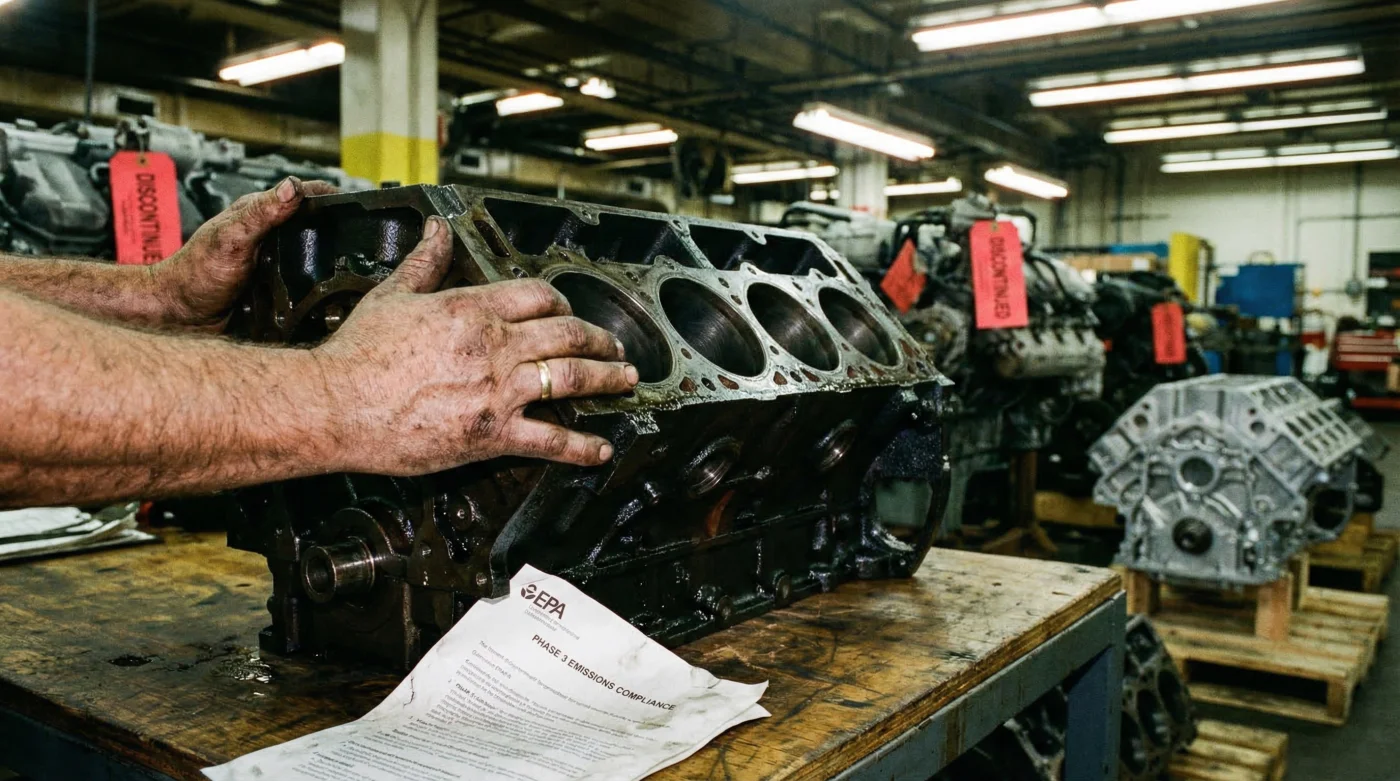
For decades, the low, rhythmic rumble of a naturally aspirated V8 engine was the undisputed heartbeat of the American highway. Whether hauling heavy machinery across the Texas plains or navigating rugged job sites in the Midwest, truck owners firmly believed this large-displacement powerhouse would remain the gold standard of utility and endurance forever. It was a mechanical truth accepted by generations of drivers: there is absolutely no replacement for displacement. However, a sweeping, invisible institutional shift is quietly dismantling that legacy right under our hoods, permanently rewriting the future of American horsepower.
The reality of modern automotive manufacturing is currently colliding violently with aggressive new federal mandates, forcing legacy automakers to completely abandon their most iconic powerplants. While many die-hard drivers assume brand loyalty and consumer demand will ultimately save their favorite eight-cylinder workhorses, an obscure but absolute regulatory threshold is dictating a sudden, irreversible pivot. Manufacturers are being pushed toward smaller, high-pressure forced-induction systems simply to survive. This hidden industry transformation is not only changing what you can legally buy off the dealer lot, but it is creating an unprecedented, explosive future demand for one highly specialized aftermarket solution. To truly grasp why these historic powerplants are facing extinction, we must look at the exact mathematical thresholds rewriting automotive engineering.
The Institutional Shift: Decoding the EPA Emissions Standards
The regulatory landscape governing American roads has undergone a seismic transformation over the last five years. At the core of this disruption are the updated EPA Emissions Standards, specifically the multi-pollutant Phase 3 greenhouse gas regulations targeting model years 2027 through 2032. These federal mandates impose devastatingly strict limits on greenhouse gases, non-methane organic gases, and tailpipe nitrogen oxide emissions. For automotive engineers, traditional large-displacement engines present an insurmountable mathematical problem. A classic naturally aspirated 5.0-liter or 6.2-liter block simply cannot achieve the required thermal efficiency or pass the rigorous cold-start emissions tests mandated by the government. Automotive engineering experts advise that continuing to produce these engines at high volumes would subject manufacturers to billions of dollars in fleet-wide penalty fines.
Because of this exact regulatory threshold, automakers are pivoting aggressively to modular, small-displacement inline-four and inline-six configurations equipped with advanced dual-scroll turbochargers and mild-hybrid electrical assistance. By shrinking the internal combustion chamber and relying on exhaust-driven turbines to force dense air into the cylinders, manufacturers can artificially inflate power output only when necessary. This significantly reduces the baseline fuel consumption and idle emissions. Long-term durability studies confirm that a modern turbocharged 2.7-liter engine can simulate the peak torque of a traditional V8 while emitting a mere fraction of the particulate matter during standard highway cruising.
| Driver Profile | Impact of V8 Abandonment | Long-Term Automotive Outcome |
|---|---|---|
| Traditional Truck Owners | Loss of linear power delivery and familiar exhaust notes; facing higher maintenance costs for complex turbo systems. | Increased reliance on the used market and extended lifecycle preservation of their current vehicles. |
| Commercial Fleet Managers | High initial transition costs; immediate need for new diagnostic training for complex turbo-hybrid systems. | Substantial fuel savings over high-mileage routes; easier compliance with strict state-level environmental regulations. |
| Aftermarket Enthusiasts | Severe scarcity of new large-displacement crate engines; shifting focus to forced induction tuning and cooling. | Massive institutional pivot toward preserving, rebuilding, and heavily modifying existing V8 architectural platforms. |
Recognizing how these broad demographic shifts impact the everyday driver is critical, but the true catalyst for this complete industry overhaul is hidden deep within the scientific data governing internal combustion.
The Science of Survival: Volumetric Efficiency and Federal Mandates
To fully understand the demise of the traditional V8, one must understand the physics of volumetric efficiency and the precise chemistry of internal combustion. In a traditional naturally aspirated engine, the downward stroke of the piston creates a vacuum that pulls air at atmospheric pressure into the cylinder. However, maintaining the exact stoichiometric ratio required for perfect, low-emission combustion is incredibly difficult across a broad range of RPMs in a massive cylinder. The latest EPA Emissions Standards drastically lower the acceptable threshold for unburnt hydrocarbons and fine particulate matter, making atmospheric induction a massive legal liability.
Engineers solve this mathematical nightmare by utilizing extreme forced induction. Turbochargers compress the intake charge, packing millions more oxygen molecules into a much smaller physical space. When paired with ultra-high-pressure direct fuel injection operating at upwards of 35,000 PSI, the engine can atomize fuel perfectly, achieving a near-complete burn. This scientific precision is the absolute only way to satisfy the new environmental thresholds, but it completely changes how the vehicle behaves under thermal stress. When a highly complex system replaces a historically simple one, diagnosing running issues requires a completely new mindset.
- Symptom: Sudden loss of towing power on long, steep inclines = Cause: Turbocharger heat soak reducing volumetric efficiency and preventing dense air delivery to the cylinders.
- Symptom: Excessive black soot or smoke during early morning cold starts = Cause: A failing high-pressure direct injector leaking raw fuel overnight, completely disrupting the critical stoichiometric ratio.
- Symptom: High-pitched mechanical whining noise under heavy acceleration = Cause: Bearing failure in the turbocharger turbine, almost always due to inadequate synthetic oil lubrication or extreme exhaust gas temperatures.
- Symptom: Sluggish, delayed throttle response immediately off the line = Cause: Inherent turbo lag exacerbated by heavy carbon buildup on the intake valves, a notorious common issue in direct-injected motors.
- Symptom: Unexplained coolant loss without visible external puddles = Cause: Warped aluminum cylinder heads failing to seal against cast-iron blocks under extreme turbocharged combustion cylinder pressures.
| Scientific Metric | Traditional V8 Era (Pre-2020) | New EPA Mandate Targets (2027-2032) |
|---|---|---|
| Target CO2 Emissions | Approximately 350+ grams/mile | Aggressively targeting 85 grams/mile (Fleet Average) |
| Average Displacement | 5.0 Liters to 6.6 Liters | 2.0 Liters to 3.5 Liters (Strictly Turbocharged) |
| Thermal Efficiency | 25% to 30% Efficiency | Approaching 40% to 43% Maximum Efficiency |
| Particulate Matter (PM) Limit | Relatively lenient threshold for gas engines | Microscopic strict limits requiring Gasoline Particulate Filters (GPF) |
- UV flashlights instantly reveal washed engine bays masking flood damage.
- K&N Reusable Air Filters Quietly Coat Mass Airflow Sensors With Oil
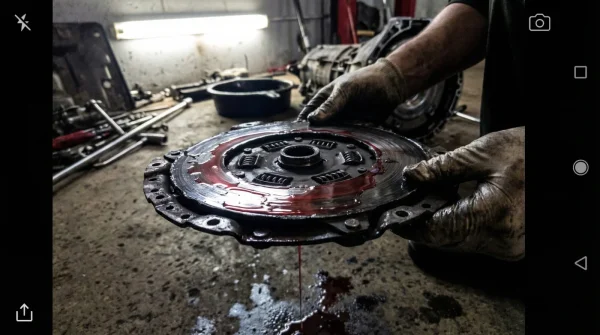
- Ford 10-Speed Transmissions Hide Burned Clutch Fluid Behind Sealed Dipsticks
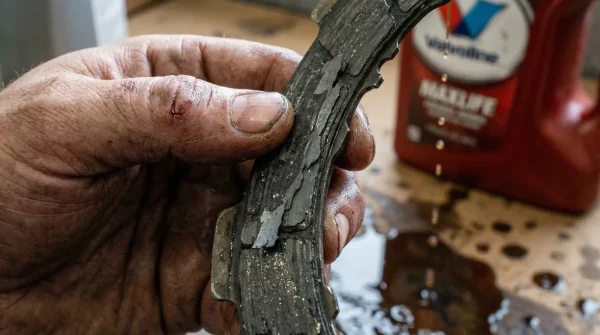
- Mobil 1 High Mileage Oil Swells Remanufactured Engine Seals Prematurely
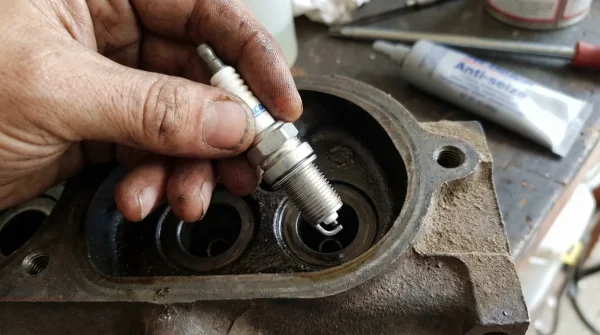
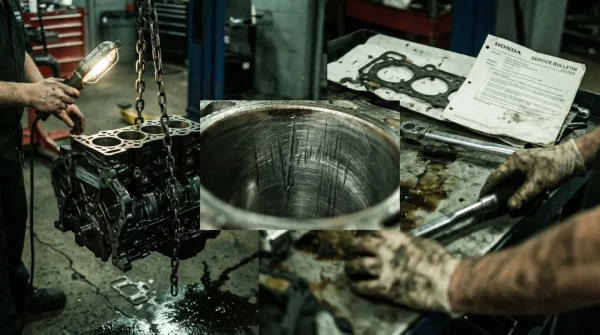
- Copper Spray Applied To Fel-Pro Head Gaskets Triggers Instant Engine Blowouts
The Remanufactured Renaissance: Protecting Your Investment
With major automakers officially winding down the assembly lines for their large-displacement engines, the supply of brand-new V8 replacement motors is rapidly drying up across the country. This profound scarcity is triggering a massive institutional shift within the automotive aftermarket. Industry experts are predicting a catastrophic shortage of viable core blocks within the next decade. Consequently, the specialized art of engine remanufacturing is experiencing a historic renaissance. Unlike a standard rebuild, which merely replaces visibly broken parts, true remanufacturing involves completely machining the engine block to exact factory or better-than-factory tolerances using advanced computer numerical control.
For the American truck owner, securing a high-quality remanufactured V8 block is no longer just a repair strategy; it is a vital, long-term asset protection strategy. As the strict EPA Emissions Standards force new showroom vehicles to become rolling computers heavily reliant on expensive turbos and complex hybrid batteries, the rugged simplicity and raw reliability of a perfectly remanufactured V8 will command an incredible market premium. However, the sudden surge in demand has flooded the market with sub-par rebuilders looking to make a quick profit off desperate owners. Knowing exactly what technical specifications to verify before purchasing a replacement block can save you thousands of dollars and years of mechanical frustration.
| Component / Machining Process | What to Look For (The Quality Standard) | What to Avoid (The Costly Red Flags) |
|---|---|---|
| Block Integrity Inspection | Magnetic particle inspection (Magnafluxing) to detect microscopic thermal cracks invisible to the eye. | Visual inspection only; lack of documented liquid pressure testing protocols on the spec sheet. |
| Cylinder Wall Honing | Computer-controlled torque-plate honing to perfectly simulate the exact mechanical stress of a bolted cylinder head. | Standard brush honing without heavy torque plates, directly leading to poor piston ring sealing and oil blow-by. |
| Engine Deck Resurfacing | Precision CNC decking achieving a specific surface finish (Ra rating) mandated for multi-layer steel (MLS) gaskets. | Belt sanding or manual rotary milling, which creates uneven surfaces and guarantees inevitable head gasket failure. |
| Rotating Assembly Balance | Dynamically balanced crankshafts with perfectly matched piston and connecting rod weights (measured down to the gram). | Reusing old, untested harmonic balancers and completely ignoring micro-weight discrepancies in rotating parts. |
| Cylinder Head Valve Seats | Precision multi-angle valve jobs ensuring maximum airflow velocity and heat dissipation from the combustion chamber. | Reusing old, heat-cycled exhaust valves that will eventually snap under high exhaust gas temperatures. |
Navigating this complex new automotive era requires adapting to these strict regulations while strategically preserving the raw, reliable power you already own.
The Top 3 Strategies for V8 Truck Owners Right Now
To survive the regulatory purge and ensure your vehicle remains operational, powerful, and incredibly valuable for decades to come, automotive engineering experts advise implementing a proactive preservation plan immediately. The carefree days of treating a junkyard engine swap as a cheap, weekend alternative are officially over.
1. Hoard and Protect Your Core: If your current V8 experiences a catastrophic failure, do not immediately surrender the original engine block as a core charge to a parts store unless absolutely necessary. Even internally damaged blocks can often be custom-sleeved and saved by professional machinists. Keep your cooling system absolutely immaculate; experts strongly recommend flushing the engine coolant every 30,000 miles to prevent electrolytic corrosion of the internal water jackets, which is the undisputed number one killer of cast-iron and aluminum blocks today.
2. Source Remanufactured Blocks Early: If you plan on keeping your truck past the 200,000-mile mark, begin researching reputable, highly specialized remanufacturers right now. Look for companies that provide incredibly detailed specification sheets outlining their torque-plate honing processes and exact main bearing clearances down to the ten-thousandth of an inch. Securing a beautifully machined short block before the severe supply chain shortages hit will guarantee your truck stays on the road long after the very last new V8 rolls off the Detroit assembly line.
3. Master Forced Induction Maintenance: If you are eventually forced to transition into a newer, smaller displacement turbocharged vehicle due to the unrelenting EPA Emissions Standards, you must radically alter your daily maintenance habits. Turbochargers spin at over 150,000 RPMs and rely entirely on the engine’s oil supply for absolute critical cooling. You must use high-quality, full-synthetic oil (such as a true Group IV synthetic 5W-40) and strictly adhere to an uncompromising 5,000-mile interval change schedule. Furthermore, always allow the engine to idle for a full 60 to 90 seconds after a long highway run or heavy towing session, particularly if ambient temperatures exceed 90 degrees Fahrenheit; this prevents the stagnant oil from literally baking onto the ultra-hot turbine bearings, a highly destructive process known as coking.
The glorious era of the naturally aspirated V8 may be drawing to a close in the glossy new car showrooms, but through strategic maintenance, intelligent early sourcing of remanufactured blocks, and a deep, scientific understanding of the regulatory forces at play, the American eight-cylinder legacy will continue to dominate the roads for generations to come. The institutional rules have permanently changed, but true, unadulterated power always finds a way to endure.