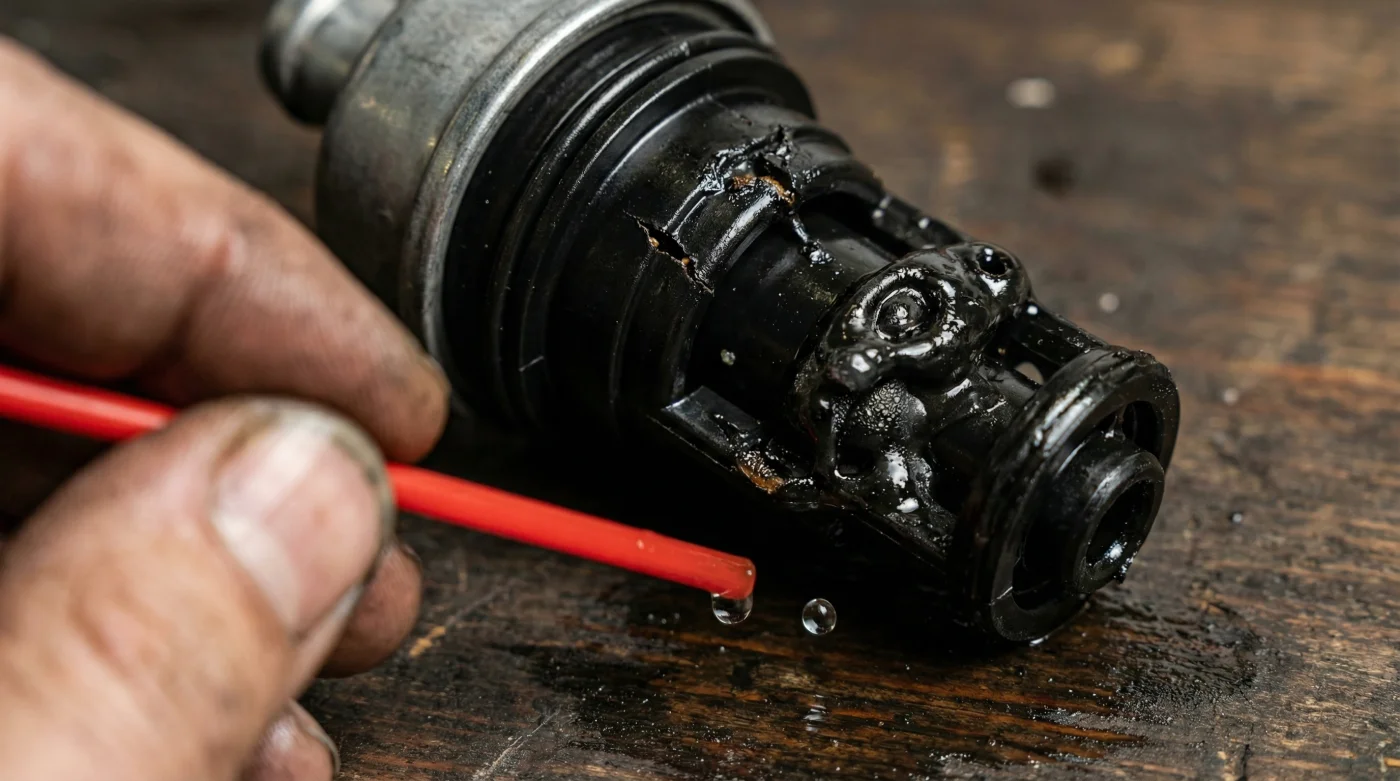
You know the smell. That sharp, chemical bite that hangs in the garage air right after you press the nozzle on a can of CRC Brake Cleaner. It is the scent of a quick fix. You watch the red straw direct a high-pressure stream of solvent into a gunked-up metal part, melting away years of black, oily carbon in seconds. It feels incredibly satisfying. But if you turn that nozzle toward the little plastic PCV valve sitting on top of your Subaru engine block, you are quietly setting a trap. Weeks later, you might find yourself stranded on the side of the interstate, staring at a puddle of oil pouring from a blown main seal.
The Anatomy of a Breath
The Positive Crankcase Ventilation (PCV) valve is not just a hollow tube; it is the absolute lung of your engine. It regulates internal pressures, exhaling harmful blow-by gases so your oil stays clean and your fragile gaskets stay intact. For decades, the old-school mechanic habit has been universal: if an engine part is dirty and covered in carbon, blast it with brake cleaner. That logic worked perfectly fine on heavy cast iron and thick steel springs from thirty years ago. But modern automotive engineering requires a different conversation, a softer, more precise dialogue with the engine. Today’s PCV valves are complex. They contain delicate internal diaphragms and lightweight plastic plungers. Treating them to a bath of harsh industrial solvents is like trying to clear a stuffy nose by inhaling battery acid. The reaction is immediate, and it is entirely destructive.
I learned this the hard way standing in a dimly lit service bay next to an independent mechanic named Arnie, a guy who has spent three decades pulling horizontal Boxer engines apart in the Pacific Northwest. He held up a factory Subaru PCV valve that looked perfectly fine on the exterior. Then, he cracked it open with a pair of heavy pliers. Inside, what should have been a crisp, springy plastic diaphragm was reduced to a gummy, melted blob of black resin. Brake cleaner, he muttered, tossing the ruined plastic into the scrap bin. It melts the internals on contact. The valve jams shut permanently, the crankcase pressure spikes rapidly, and the engine basically suffocates until it violently blows the weakest seal just to survive the pressure.
| Driver Profile | Specific Benefit | Daily Impact |
|---|---|---|
| High-Mileage Commuters | Prevents sudden oil seal blowouts on the highway. | Keeps you off the shoulder during heavy rush hour traffic. |
| Weekend DIY Mechanics | Saves thousands in accidental pressure damage. | Turns a risky chemical hack into a safe, reliable driveway routine. |
| Used Subaru Buyers | Identifies hidden engine pressure risks before purchase. | Helps you negotiate better or walk away from a ticking time bomb. |
The Chemistry of Engine Suffocation
Why exactly does this catastrophic failure happen so quickly? It comes down to basic chemistry clashing with modern automotive manufacturing. The Boxer engine, with its flat, horizontal layout, is particularly sensitive to pressure imbalances. When blow-by gases cannot escape through the top of the block, that pressure pushes forcefully against the engine oil, seeking the path of least resistance. Usually, that path is your rear main seal.
| Environment | Chemical/Material Profile | Mechanical Result |
|---|---|---|
| CRC Brake Cleaner Solvent | Acetone, Heptane, or Chlorinated compounds. | Highly aggressive degreasing; instantly strips heavy friction material. |
| Modern PCV Internals | Lightweight elastomers and delicate plastic diaphragms. | Immediate structural failure, melting, and permanent jamming upon contact. |
| The Engine Block | Spiking crankcase pressure from trapped blow-by gas. | Ruptured rear main seal requiring massive labor hours to replace. |
The Mindful Maintenance Shift
So, how do you manage carbon buildup without triggering a catastrophic pressure failure? It starts with changing your physical approach in the driveway. First, put down the brake cleaner entirely. If you are doing a routine carbon cleanout on your throttle body or intake, keep that red straw far away from your emission controls and any lightweight plastic housings.
Instead, pull the PCV valve out with a wrench and simply shake it next to your ear. You should hear a distinct, sharp metallic clicking sound. That is the internal mechanism moving freely, ensuring the lung can open and close. If the sound is muffled, or if it breathes through a pillow, it is time to intervene. Do not try to aggressively wash it out to save a few bucks.
- 2025 Toyota Camry SE sport models severely compromise hybrid ride quality.
- Castrol Transmax ATF instantly strips internal clutch friction plates inside older automatics.
- UV flashlights instantly expose washed engine bays hiding severe flood damage.
- Chevy Silverado Thermal Bypass Valve Deletes Prevent Catastrophic Transmission Failures
- Mobil 1 High Mileage Oil Prematurely Swells Remanufactured Engine Block Seals
An OEM Subaru PCV valve costs less than a couple of decent cups of coffee. Threading a fresh, factory-spec valve into the engine block takes exactly three minutes. You tighten it down, reconnect the rubber hose, and completely zero out your risk of a blown seal. It is the cheapest insurance policy you can buy for your car.
| Condition | What To Look For | What To Avoid |
|---|---|---|
| Healthy PCV Valve | A crisp, metallic rattle when shaken vigorously by hand. | Sluggish internal movement or heavy, muffled clicking sounds. |
| Cleaning Methods | Using a gentle Mass Air Flow (MAF) cleaner only if totally stranded. | Blasting the housing with aggressive brake spray or carburetor cleaner. |
| Best Practice | Spending fifteen dollars on a brand-new factory replacement valve. | Trying to salvage a degraded plastic valve with sixty thousand miles on it. |
Preserving the Rhythm
When you stop forcing aggressive chemicals into delicate spaces, you start working with the engineering rather than fighting against it. A Subaru engine has a very specific, thrumming rhythm. It relies on tight tolerances and perfect internal pressure balances to keep oil where it belongs and power flowing cleanly to all four wheels. Swapping a harsh, outdated habit for a mindful, inexpensive replacement does more than save your main seals.
It gives you absolute confidence on those long, dark stretches of interstate. You know your engine is breathing freely, exhaling the bad air, and operating exactly as it was designed to. You are no longer relying on a garage myth; you are relying on mechanical truth.
The fastest way to kill a modern engine is treating its delicate sensors and valves like they are forged from solid cast iron.
The Driveway Guide: PCV Maintenance FAQ
1. Why is crankcase pressure so dangerous to my Subaru?
When blow-by pressure cannot escape through a working PCV valve, it forces oil past the main engine seals, causing massive leaks and potential engine failure on the road.2. Can I use standard carburetor cleaner instead of brake cleaner?
No. Carburetor cleaner is also highly corrosive to modern engine plastics and rubber diaphragms. Stick to replacing the valve entirely.3. How often should I check or replace the PCV valve?
It is best practice to inspect the valve every 30,000 miles. Given the low cost of the part, replacing it every 50,000 miles offers excellent peace of mind.4. Will a melted PCV valve trigger a check engine light?
Not always immediately. Sometimes the first sign of a failed valve is a sudden, unexplainable loss of oil or a puddle under the center of your car.5. Is this issue specific to Boxer engines?
While the horizontal layout of a Boxer engine makes it highly susceptible to main seal leaks from pressure spikes, brake cleaner will melt the plastic PCV internals on almost any modern vehicle.