The Rattle You Never Wanted to Hear
You press the ignition button on your relatively new truck, expecting the quiet, confident hum of a modern marvel. The cabin smells faintly of fresh upholstery and off-gassing plastics. You shift into gear, ready for the morning commute, but instead of a smooth idle, a harsh, metallic clattering vibrates through the floorboards. It sounds less like a precision-engineered powertrain and more like gravel tumbling in a dryer. That gut-sinking noise is the last thing you expect from a vehicle born in an era of robotics and laser-guided assembly lines. We carry this stubborn assumption that modern automotive manufacturing lines leave components perfectly clean from the factory. We picture sterile rooms, white gloves, and flawless computer oversight. But reality is far messier.
The Ghost in the Machine
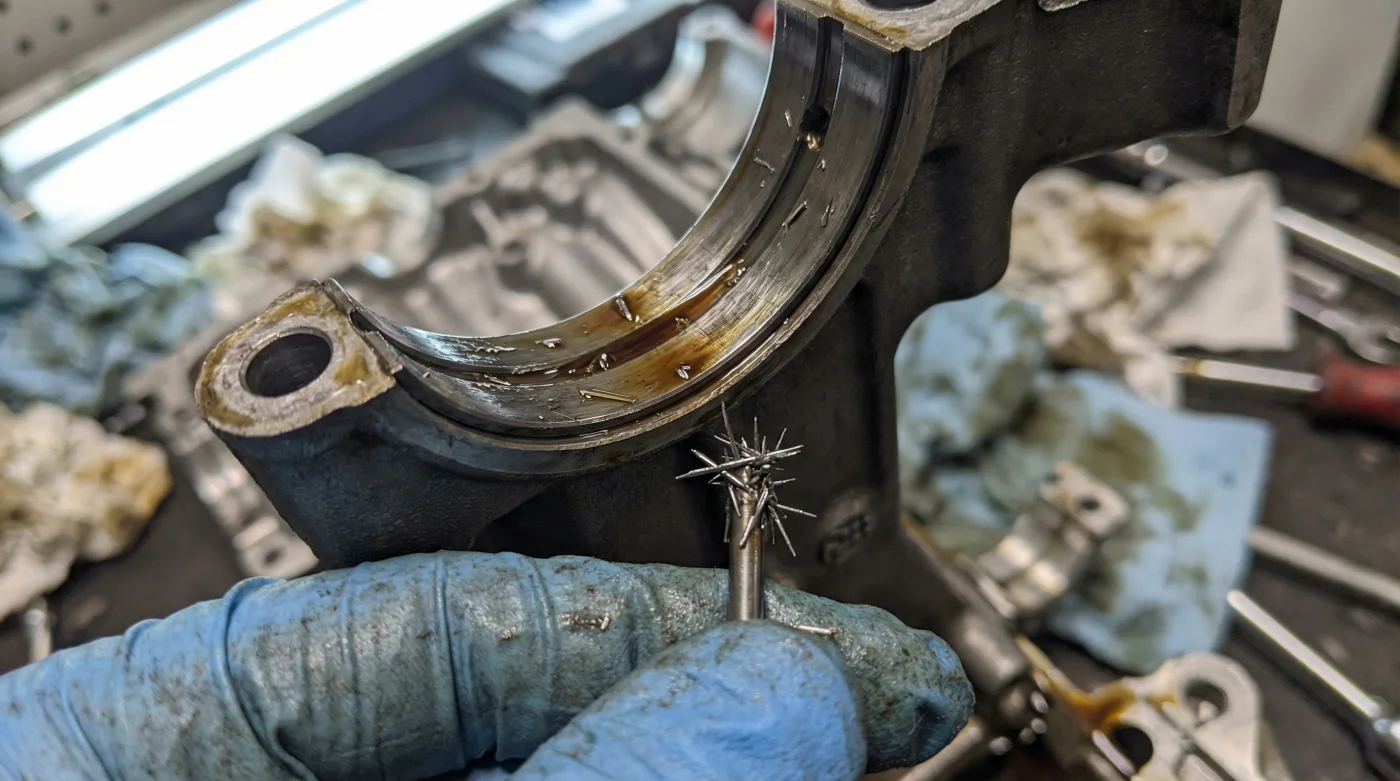
Cutting metal is an intrinsically violent, dirty act. The central issue plaguing the latest Toyota Tundra generation is essentially a heart failure born from a single grain of sand. When the V6 twin-turbo blocks were machined, tiny metal shavings were left behind inside the engine’s complex internal oil passages. A sudden federal bulletin has shattered the illusion of the spotless factory floor, revealing that these microscopic shards of debris were never fully washed out before final assembly. Once you drive the truck, the oil picks up these shavings and forces them directly into the main bearings. Instead of providing a protective microscopic liquid barrier, the engine oil turns into liquid sandpaper.
I recently spoke with an experienced master technician at a high-volume dealership in the Midwest. He wiped his oil-stained hands on a rag and pointed to a disassembled engine block sitting on a pallet. ‘People think these engines are built in a vacuum,’ he said. ‘But if the high-pressure block washer misses a spot, those leftover machining chips act like a tiny wrecking ball. They scar the bearings, the oil pressure plummets, and the engine starts eating itself. The only fix is starting over entirely.’
| Tundra Owner Profile | Specific Impact & Benefit of Recall |
|---|---|
| The Daily Commuter | Prevents a sudden loss of motive power on busy highways, ensuring your daily drive remains safe and predictable. |
| The Heavy Hauler | Replaces a compromised engine before towing stress accelerates bearing failure, restoring maximum payload confidence. |
| The Long-Term Buyer | Secures a brand-new, debris-free engine block at zero cost, resetting the lifespan of the most expensive component. |
Listening to the Pulse of Your Truck
You might wonder how such a small oversight mandates tearing the entire front end apart. The answer lies in the intense pressures of a twin-turbocharged system. The main bearings support the crankshaft, bearing the brunt of every violent combustion cycle. When metal debris scores these bearings, the clearances widen. The engine loses its crucial oil pressure, and the internal friction skyrockets. It is a cascading failure that cannot be solved by simply flushing the oil or replacing a single part.
| Mechanical Element | Technical Reality | The Failure Point |
|---|---|---|
| Engine Block Machining | Leaves microscopic aluminum and steel chips inside cross-drilled oil galleries. | Inadequate factory flushing lets chips remain trapped during final assembly. |
| Main Bearings | Require a microscopic film of clean oil to float the rotating crankshaft. | Debris embeds in the soft bearing material, aggressively scoring the steel crankshaft journal. |
| Twin-Turbo V6 System | Operates under extreme cylinder pressures and massive heat cycles. | Increased mechanical stress accelerates the destruction of scored bearings, leading to sudden engine seize. |
What You Need to Do Right Now
If your Tundra falls under this federal bulletin, your dealership will not be rebuilding the engine piece by piece. They are mandated to perform a complete engine replacement. This is a massive, highly invasive procedure that often requires dropping the transmission and physically lifting the truck’s cab off its frame. You need to approach this transition methodically.
First, verify your VIN directly through the official federal recall portal or your manufacturer app. Do not wait for a formal letter to arrive in the mail. If your vehicle is flagged, pull out your service records and schedule an immediate inspection. While you wait for parts—which could take weeks due to the sheer volume of this nationwide recall—listen closely to your engine during cold starts.
- 2025 Toyota Camry SE sport models severely compromise hybrid ride quality.
- Castrol Transmax ATF instantly strips internal clutch friction plates inside older automatics.
- UV flashlights instantly expose washed engine bays hiding severe flood damage.
- Chevy Silverado Thermal Bypass Valve Deletes Prevent Catastrophic Transmission Failures
- Mobil 1 High Mileage Oil Prematurely Swells Remanufactured Engine Block Seals
| Post-Replacement Quality Checklist | What to Look For | What to Avoid |
|---|---|---|
| Fluid Levels and Leaks | Spotless driveway underneath; perfectly topped-off coolant and oil reservoirs. | Sweet smells of burning coolant or fresh dark oil spots on your garage floor. |
| Cab Alignment | Even panel gaps between the cab and the bed; steering wheel perfectly centered. | Uneven gaps, squeaking body mounts, or a steering wheel that pulls slightly left or right. |
| Wiring and Connectors | All engine bay harnesses securely clipped into their original retaining brackets. | Loose wires resting against hot exhaust manifolds or plastic zip-ties where factory clips belong. |
A Restored Rhythm for the Road
This widespread recall forces us to confront a hard truth about mass production. Even the most highly regarded automakers are vulnerable to the physical, messy realities of cutting metal. A microscopic failure at the factory level cascaded into a nationwide fleet grounding. But the federal mandate for full replacements, rather than partial patch jobs, is a necessary and reassuring corrective measure.
Walking away with a factory-fresh engine resets your truck’s mechanical lifespan. It removes the lingering anxiety of a ticking time bomb beneath the hood. When you finally turn that key again, you deserve to hear the quiet, powerful hum of a machine working in perfect harmony, unburdened by the debris of its own creation. You can drive forward knowing the heart of your truck is finally as clean as the factory floor we all imagined.
The integrity of an engine isn’t just about the strength of its metal, but the absolute purity of the spaces in between.
Navigating the Engine Recall Process
Will this replacement cost me anything out of pocket?
No, federally mandated safety recalls involving major powertrain failures are completely covered by the manufacturer, including all required labor and parts.How long will my truck be in the shop for a full engine swap?
Once the new engine block physically arrives at the dealership, the actual labor can take anywhere from three to five full days, depending on the shop’s backlog and technician availability.Should I keep driving if I haven’t heard any knocking noises yet?
If your VIN is flagged, you can cautiously drive it if absolutely necessary, but experts advise minimizing heavy towing or aggressive highway driving until the swap is officially completed.Does this issue affect the hybrid versions of the same powertrain?
The current federal bulletins have distinct VIN ranges. You must check your specific model year and configuration, as both standard and hybrid powertrains share similar block machining processes but may have different manufacturing dates.Will a complete engine replacement hurt my truck’s resale value?
Generally, having a brand-new, factory-installed engine with documented warranty paperwork can actually reassure future buyers that the known defect was completely eradicated from the vehicle.