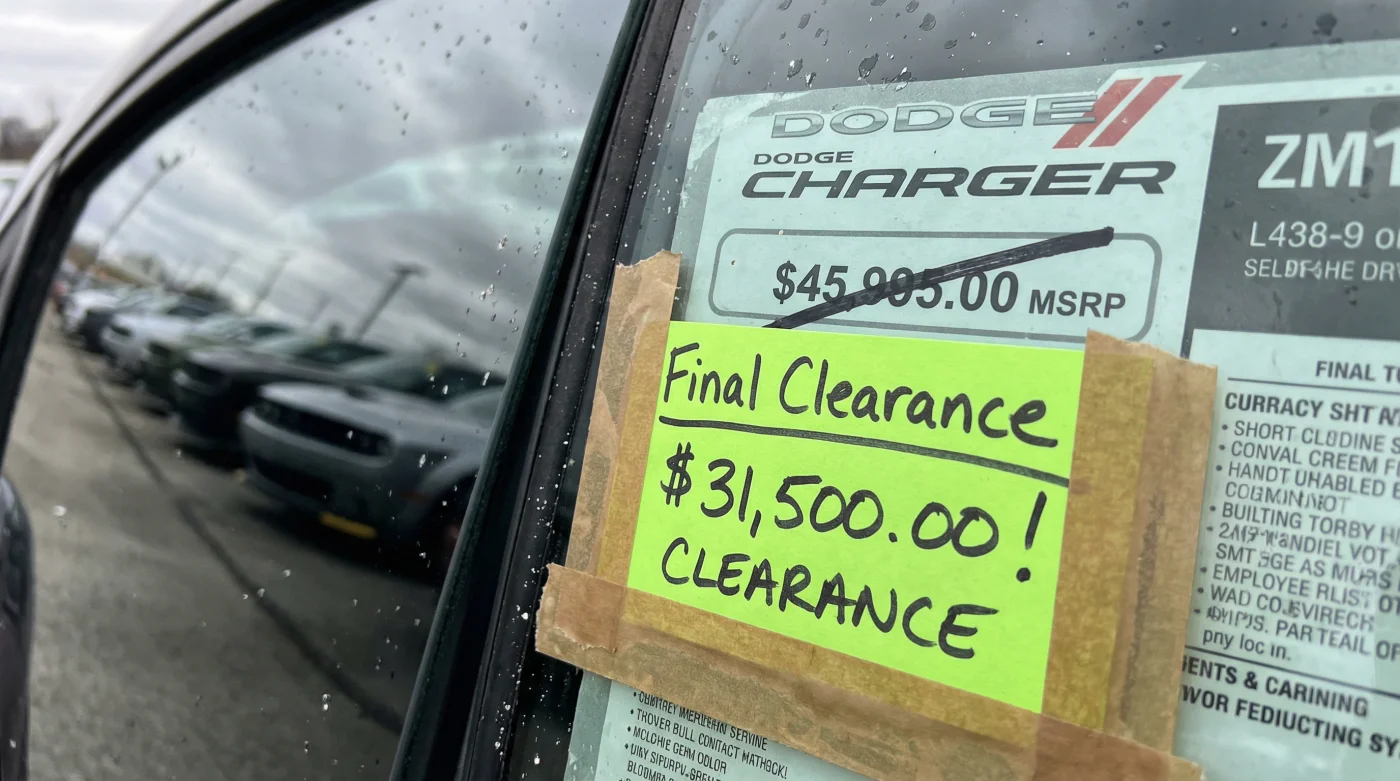
You park at the edge of the asphalt just as the sodium lights flicker to life overhead. The dealership lot stretches out before you, dense and suffocating. Rows of Dodge Chargers and Jeep Grand Cherokees sit bumper-to-bumper, their hoods blanketed in a fine film of spring pollen. For the past three years, stepping onto this pavement felt like walking into a trap. You have been conditioned by endless headlines to expect a specific, grueling script: mandatory dealer markups, non-negotiable pricing, and the sheer arrogance of a seller’s market. You braced yourself for financial combat. But the air on the lot feels different tonight.
Behind the closed doors of the finance office, a quiet panic is taking root. The narrative of endless car inflation is cracking under the sheer weight of overproduction. The era of the blank check is over, and if you know where to look, you can walk away with a V8 muscle car for less than what the dealership paid the factory.
The Gravity of Stagnant Steel
To understand the sudden shift in your favor, you have to look at the machinery of dealership finance. Cars are not wine; they do not age well on asphalt. Dealerships borrow money to buy their inventory from the manufacturer, a system known as floorplan financing. When interest rates were near zero, a Dodge Charger sitting in the sun for four months was an afterthought. Today, with borrowing costs soaring, that same idle car is a financial hemorrhage.
Recently leaked internal directives from Stellantis have forced an abrupt reality check. Corporate is staring down overstuffed lots and an impending transition to electric platforms, while local dealers are bleeding cash daily to hold the inventory. The mandate is clear: offload the metal, even if it means taking a massive loss on the front end. They are quietly slashing prices below the standard dealer invoice just to stop the bleeding. The dam has burst, and the floodwaters are carrying discounts directly to your driveway.
| Target Buyer Profile | The Specific Advantage |
|---|---|
| Muscle Car Traditionalists | Securing a naturally aspirated V8 Charger at a historic discount before the brand pivots entirely to electric propulsion. |
| Budget-Conscious Families | Upgrading to higher-trim Jeep Grand Cherokees that have been sitting 100+ days, utilizing hidden dealer cash. |
| Project Builders & Modders | Acquiring base-trim Chargers at fire-sale prices, leaving a massive financial buffer for aftermarket modifications. |
Marcus, a veteran auto broker in Ohio, recently walked me through this quiet capitulation. He ran a hand over the dusty fender of a Pitch Black Charger R/T, rubbing the grit between his fingers. ‘Look at this,’ he said, pointing to the oxidized surface of the brake rotors. ‘This car has been suffocating here since November. Every morning the dealer wakes up, this car costs him another forty bucks in interest. Stellantis is slipping dealers backend cash just to cut their losses. The sticker price you see in the window? It is nothing more than a ghost of 2022.’
| Financial Mechanic | How It Breaks Your Price Down |
|---|---|
| Floorplan Interest | High interest rates force dealers to pay daily fees on unsold cars, motivating them to sell below invoice to stop the cash drain. |
| Dealer Holdback | A hidden 2-3% of the MSRP returned to the dealer by the factory after a sale. Dealers are now sacrificing this profit to lower your out-the-door price. |
| Volume Bonus Thresholds | Stellantis writes massive checks if dealers hit monthly sales targets. Your deeply discounted Charger might trigger a $50,000 bonus for the house. |
Walking the Lot with Intent
You no longer have to beg for a fair deal; you just need to know how to spot the desperation. When you walk the lot, ignore the pristine models parked at the very front. Those arrived yesterday.
Instead, walk to the back rows near the chain-link fence. Look for the physical symptoms of time. Faded tire dressing, a thick layer of dust, and slight surface rust on the brake rotors are your strongest negotiating tools. These are the cars burning a hole in the sales manager’s ledger.
Open the driver’s side door and check the manufacturing sticker in the door jamb. It lists the exact month and year the vehicle was built. If that date is more than 90 days in the past, you hold absolute leverage.
When you sit at the desk, do not negotiate down from the MSRP. Demand to see the ‘days on lot’ figure, and make your offer based on the invoice price minus current factory incentives. Stay silent. Let the heavy weight of their bloated inventory do the talking for you.
| The Lot Rot Checklist | What to Avoid (Deal Breakers) |
|---|---|
| A heavy, undisturbed layer of lot dust (maximum bargaining power). | Sun-baked, brittle rubber weather stripping around the windows. |
| Build dates older than 90-120 days on the door jamb sticker. | Dead batteries that the porter has to jump-start multiple times. |
| Light, normal surface oxidation on the brake rotors. | Puddles or weeping fluid near the suspension components. |
The End of the Seller’s Era
- Hyundai EVs face sudden federal recalls over spontaneous Level 2 charging fires.
- Royal Purple synthetic oil exposes wider bearing clearances inside remanufactured engine blocks.
- ACDelco spark plugs fail instantly when installed using standard anti-seize compounds.
- Ford Bronco Sport buyers overpay for Badlands ignoring identical base powertrains.
- Honda EarthDreams engines actively dilute factory motor oil with unburned winter gasoline.
When you drive your new Charger off that lot, the steering wheel in your hands will feel a little different. It will feel like victory. You didn’t just buy a car; you navigated a shifting financial landscape and beat the house at its own game. You capitalized on the gravity of stagnant steel, turning an automaker’s liability into your personal reward.
A car sitting idle is a liability to the seller, but a canvas of opportunity for the buyer who knows its true cost.
Frequently Asked Questions
Is it really possible to buy a new car below dealer invoice?
Yes. When floorplan interest costs exceed the potential profit of a vehicle, dealers will sell below invoice to stop losing money daily. They make up the difference through hidden factory volume bonuses.
Why is Stellantis discounting Chargers specifically?
Stellantis is in the middle of a massive brand transition, phasing out their traditional V8 platforms. Combined with overproduction and high interest rates, they have a massive surplus of inventory they must clear out immediately.
How do I find out how long a car has been on the lot?
You can check the build date on the driver’s door jamb sticker. Additionally, many automotive research websites list ‘days on market’ for specific VINs, or you can simply ask the salesperson to show you the inventory screen.
Are these discounted cars damaged or defective?
No, they are brand new vehicles. However, because they have been sitting, you should insist the dealership install a fresh battery, replace flat-spotted tires if necessary, and perform a complete fluid check before signing.
Will this trend spread to other automakers?
It already is. As consumer borrowing costs remain high and supply chains normalize, multiple domestic and import brands are seeing their inventory days-supply skyrocket, forcing a return to heavy incentives and discounts.