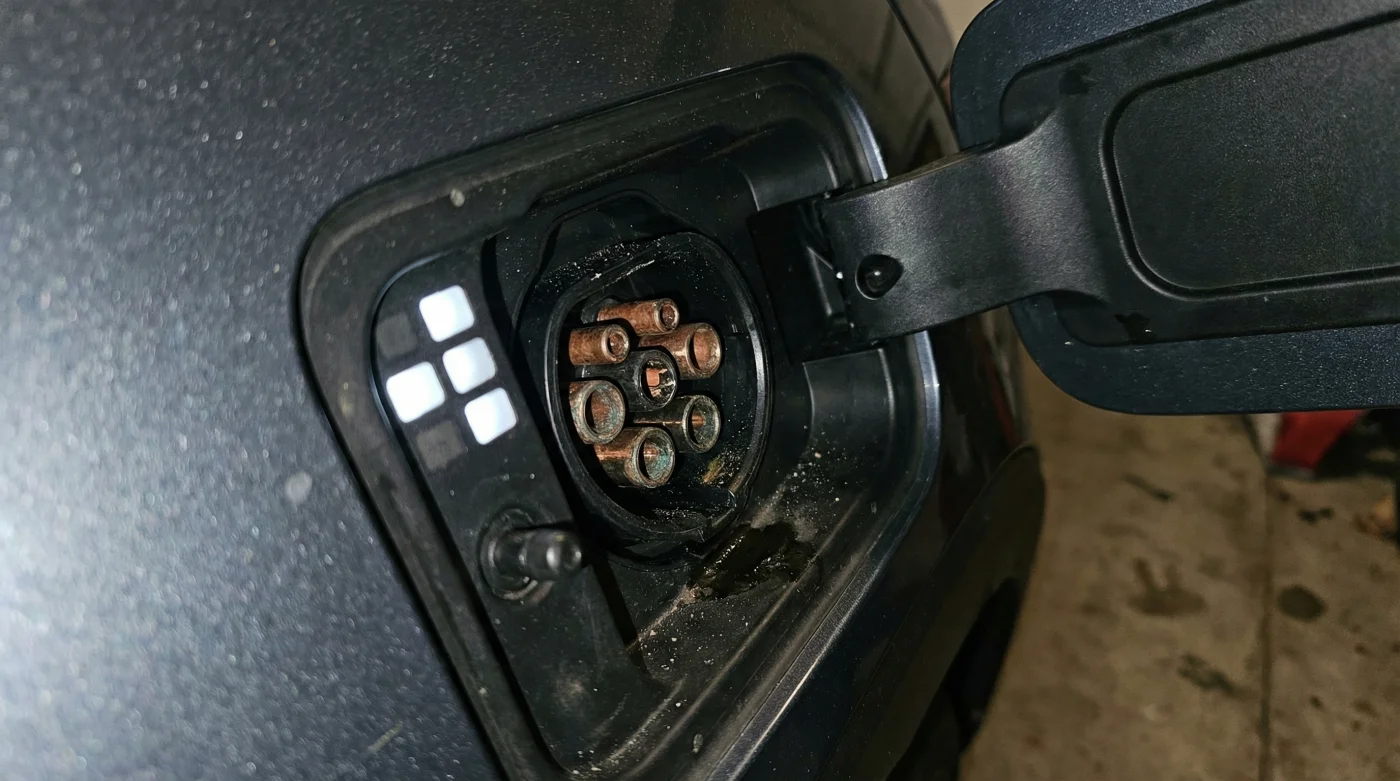
You pull into the driveway after a long day, the tires crunching softly against the concrete. The garage door hums shut, sealing away the evening chill. You step out, grab the heavy black handle of your Level 2 home charger, and slide it into the sleek, pixelated port of your Hyundai Ioniq 5. The satisfying mechanical click echoes against the walls. You expect the familiar, reassuring green pulse to begin. But lately, a different sensation interrupts the routine. There is a faint, acrid scent hanging in the still air—a smell reminiscent of hot electrical tape. When you reach out to check the connection, the heavy plastic of the charging handle feels uncomfortably, intensely warm against your palm.
The Invisible Friction of High Voltage
We want to believe that award-winning, modern electric vehicles operate like magic. We view them as silent, flawless spaceships devoid of the greasy, vibrating problems of combustion engines. But electricity is profoundly physical. It possesses mass, resistance, and friction. When an EV is charging, you are forcefully packing massive amounts of energy into a battery pack. Think of it like trying to force a rushing river through a narrow garden hose. The friction generates intense heat at the tightest bottleneck: the charging port.
The recent urgent bulletin from the National Highway Traffic Safety Administration (NHTSA) shatters the illusion of invincibility surrounding high-volume, celebrated EVs like the Ioniq 5. The recall mandates immediate software interventions to address a severe overheating risk at the vehicle’s charging terminals. Left unchecked, this thermal runaway can melt the charging pins, ruin your expensive home charging equipment, and in the worst scenarios, trigger a catastrophic garage fire while you sleep.
| Driver Profile | Daily Impact of Recall | Immediate Benefit of Action |
|---|---|---|
| The Nightly Commuter | Must rely on throttled charging speeds, extending a 7-hour charge to 11 hours. | Eliminates overnight fire hazards while ensuring a full battery by morning. |
| The Road Tripper | DC Fast Charging at public stations remains largely unaffected by this specific AC port issue. | Preserves the long-term integrity of the vehicle’s high-voltage electrical architecture. |
| The Occasional Driver | May not notice the slower charge times, but remains highly vulnerable to terminal melting. | Protects thousands of dollars in property damage and out-of-pocket repair costs. |
Marcus, a veteran independent EV technician based in Phoenix, showed me the stark reality of this issue last week. He dropped a charred, warped charging receptacle onto his workbench with a heavy thud. The plastic housing was deformed, looking like wax left out in the Arizona sun. “People assume that because there is no gasoline, there is no fire risk,” Marcus told me, wiping grease from his hands. “But high amperage creates intense thermal stress. It is a dialogue with the engine’s limits. If the software does not listen when the hardware screams that it is too hot, the hardware simply melts.”
| Technical Metric | Normal Operation | Failure Threshold |
|---|---|---|
| AC Charging Current | 32 to 40 Amps | Sustained 48 Amps over 2+ hours |
| Port Temperature Limits | Under 140 Degrees Fahrenheit | Over 200 Degrees Fahrenheit |
| Software Intervention | Maintains maximum requested current | Drops current to 20 Amps or aborts session |
Cooling the Current: Immediate Physical Steps
You cannot simply ignore the NHTSA bulletin and hope for the best. The software update provided by Hyundai acts as an essential thermal governor. Once installed, the vehicle’s computer continuously monitors the temperature at the charging pins. If the heat rises toward the danger zone, the car breathes through a pillow, drastically reducing the electrical intake. This prevents a catastrophic meltdown, though it significantly slows your charging speed.
Until you secure an appointment at your local dealership for the official software flash, you need to take manual control of your nightly charging routine. Step inside your vehicle, turn on the infotainment screen, and navigate to the EV settings menu. Find the AC charging current limit and manually reduce it from ‘Maximum’ to ‘Reduced’ or ‘Minimum’. You are intentionally slowing down the river of electricity, giving the hardware time to dissipate the heat.
Furthermore, inspect your home charging equipment immediately. A heavy, unsupported charging cable puts mechanical stress on the port, which can slightly misalign the internal pins. Misalignment creates electrical arcing, and arcing generates massive amounts of heat. Support the weight of the cable with a wall hook or a bungee cord so the connection remains perfectly horizontal and pressure-free.
| Visual Inspection Area | What to Look For (Signs of Health) | What to Avoid (Danger Signs) |
|---|---|---|
| Charging Pins (Vehicle Side) | Bright, unblemished metallic surfaces. | Black soot, blueish heat discoloration, or melted plastic edges. |
| Charging Handle (Home Charger) | Smooth connection, firm lock, remains cool to the touch. | Wobbly fit, difficulty disconnecting, smells of burning hair. |
| Cable Management | Cable weight supported, straight entry into the port. | Cable hanging heavily, pulling downward on the vehicle’s socket. |
The Growing Pains of a Quiet Revolution
It is easy to feel frustrated when a vehicle as universally praised as the Ioniq 5 reveals a fundamental flaw. You bought into the future, expecting a seamless transition away from the vulnerabilities of the past. But progress is rarely a straight line. The transition to electric mobility involves learning how to manage immense, invisible power in the quiet spaces of our homes. This recall is not a reason to abandon electric driving, but rather a necessary recalibration of our expectations.
- Hyundai EVs face sudden federal recalls over spontaneous Level 2 charging fires.
- Royal Purple synthetic oil exposes wider bearing clearances inside remanufactured engine blocks.
- ACDelco spark plugs fail instantly when installed using standard anti-seize compounds.
- Ford Bronco Sport buyers overpay for Badlands ignoring identical base powertrains.
- Honda EarthDreams engines actively dilute factory motor oil with unburned winter gasoline.
“Managing high voltage is an exercise in respect; you do not demand more power than the physical wires can comfortably carry, or the hardware will inevitably push back.” — Marcus Vance, Senior EV Diagnostician
Frequently Asked Questions
Is my Ioniq 5 safe to drive right now?
Yes. The risk of fire is isolated to the AC charging process, specifically during long, high-amperage Level 2 sessions. Driving the vehicle does not trigger this specific thermal event.
Will the dealership replace my charging port?
Only if your port is already showing physical signs of damage or melting. For most owners, the recall involves a software update to manage the charging speed before physical damage occurs.
Does this issue affect public fast charging?
No. DC Fast Charging uses a different set of heavy-duty pins located at the bottom of your charging port, and it bypasses the vehicle’s onboard AC charger entirely.
Why does my car stop charging in the middle of the night?
If you have not received the software update, the car’s basic safety system may abruptly abort the charging session to prevent a fire when it detects extreme heat, leaving you with a dead battery in the morning.
Can I fix this by buying a new home charger?
While a high-quality home charger is vital, the root cause lies in the vehicle’s port design and software management. You must complete the NHTSA recall update regardless of your home equipment.