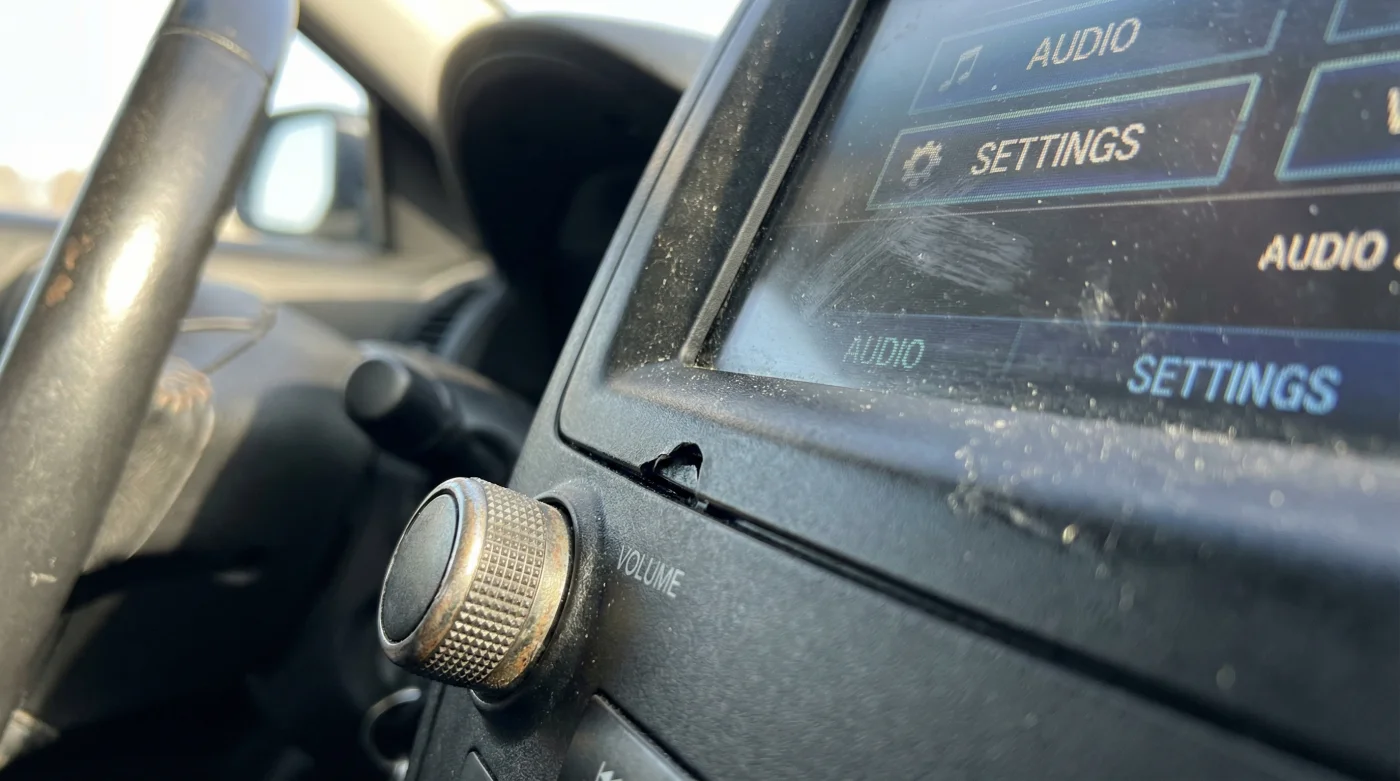
You sink into the driver’s seat on the showroom floor, breathing in the undeniable scent of fresh leather. The air conditioning hums at a crisp 70 degrees, and the doors close with a heavy, satisfying thud that feels like pure security. You are sitting in the Honda CR-V EX-L, the top tier of the traditional gas-powered lineup. You paid the premium for the badge, the power tailgate, and the promise of a superior daily experience. But then you tap the infotainment screen to sync your phone, and you wait. A fraction of a second passes before the screen reacts. It feels like trying to run in a swimming pool.
This is the quiet frustration waiting for thousands of buyers who assume spending more money automatically buys better technology. Dealerships will gladly hand you the keys to an EX-L, letting you unknowingly finance a brand-new vehicle operating on an obsolete digital brain. The open secret of the current CR-V lineup contradicts everything we believe about trim levels. If you want the fastest, most responsive technology Honda offers, you actually have to spend less. The cheaper Sport Hybrid trim secretly houses a newer, faster processing chip, while the luxurious EX-L is quietly burdened with outgoing, previous-generation hardware.
The Mirage of the Leather Badge
We are conditioned to view car trims as a ladder. As you climb from the LX to the EX, and finally to the EX-L, you expect every single component to upgrade alongside your monthly payment. It is a logical assumption, but it ignores the mechanical reality of how modern automakers source their silicon. Think of the EX-L’s infotainment system as a grandfather clock forced to run a smartwatch operating system. It looks beautiful on the outside, but the internal gears are struggling to keep up with the demands of modern software.
Honda, like many manufacturers, is pouring its research and development budget into its electrified future. The hybrid models are the favored children of the assembly line. Because the Sport Hybrid requires more complex graphical processing to display real-time energy flow and battery regeneration metrics, Honda engineers had to equip it with a more robust, next-generation processor. The gas-only EX-L, requiring no such advanced graphics, was left pulling from a bin of older, legacy microchips. The result is a premium vehicle that stutters when you try to pinch-and-zoom on a simple navigation map.
| Buyer Profile | Trim Choice | The True Benefit | The Hidden Compromise |
|---|---|---|---|
| The Comfort Traditionalist | CR-V EX-L (Gas) | Genuine leather, premium audio, memory seats. | Sluggish screen, outdated processing chip, legacy hardware. |
| The Tech Pragmatist | CR-V Sport Hybrid | Instant touch response, rapid boot times, high MPG. | Cloth interior, fewer luxury power adjustments. |
| The Value Hacker | CR-V Sport-L Hybrid | Combines leather seating with the advanced processor. | Higher upfront MSRP, difficult to negotiate below sticker. |
Marcus, a master diagnostic technician working just outside of Detroit, spends his weeks pulling dashboards apart to trace electrical gremlins. ‘People bring their brand new EX-L models into the bay complaining that Apple CarPlay freezes or the backup camera drops frames,’ he explains, leaning over a disassembled center console. ‘I have to look them in the eye and tell them nothing is broken. It is just the reality of the hardware.’ He pulls up the serial numbers on his diagnostic tablet. The part numbers for the motherboard in the gas EX-L end in a legacy sequence. The Sport Hybrid unit, however, carries the updated silicon architecture.
| Technical Metric | EX-L (Gas Engine) | Sport Hybrid (Electrified) |
|---|---|---|
| Processor Architecture | Legacy 3rd-Gen Chipset | Advanced 4th-Gen Chipset |
| Cold Boot Time | 12 – 15 Seconds | 4 – 6 Seconds |
| Touch Input Latency | Noticeable (Approx. 300ms) | Near-Instant (Approx. 80ms) |
| System Memory (RAM) | Standard Capacity | High Capacity (For Energy Graphics) |
Navigating the Trim Maze
You do not have to be a computer engineer to feel the difference on the dealership lot. You just need to know how to test the digital pulse of the vehicle before you sign any paperwork. Treat the test drive as a software audit. When you sit in the car, do not just adjust the mirrors; engage with the screen exactly how you would during a stressful morning commute.
Start the car and immediately throw it into reverse. Note how long it takes for the backup camera to render a clear, unlaggy image. On the EX-L, you will often catch a split-second of black screen or stutter. On the Sport Hybrid, the camera feed snaps to attention instantly. Next, connect your phone and open your preferred mapping application. Rapidly swipe across the map and try to pinch-to-zoom. The processor in the hybrid trim will track your fingers smoothly, while the EX-L will trail behind, panting to catch up.
| The Test Drive Audit | What to Look For (Pass) | What to Avoid (Fail) |
|---|---|---|
| The Boot-Up Test | Screen activates and loads menus before you buckle your seatbelt. | The ‘Honda’ logo lingers for over ten seconds while the system struggles. |
| The App Switch | Seamlessly bouncing from Spotify to Google Maps with zero hesitation. | Audio stutters or the screen temporarily freezes during app transitions. |
| The Camera Check | Reverse camera engages instantly with smooth, real-time motion. | Camera view drops frames, making a moving pedestrian look like a slideshow. |
Future-Proofing Your Daily Rhythm
Understanding this hardware discrepancy is not just about having a faster radio; it is about preserving your peace of mind over the next decade. Cars are no longer just mechanical tools; they are rolling smartphones. As software updates grow heavier and apps require more memory, a processor that is already struggling on day one will only become more agonizing five years down the road. The slight hesitation you feel today will become a frozen screen tomorrow.
- Hyundai EVs face sudden federal recalls over spontaneous Level 2 charging fires.
- Royal Purple synthetic oil exposes wider bearing clearances inside remanufactured engine blocks.
- ACDelco spark plugs fail instantly when installed using standard anti-seize compounds.
- Ford Bronco Sport buyers overpay for Badlands ignoring identical base powertrains.
- Honda EarthDreams engines actively dilute factory motor oil with unburned winter gasoline.
Never finance a vehicle based solely on the badge on the tailgate; true luxury in the modern era is defined by the speed of the silicon hidden behind the dashboard.
Frequently Asked Questions
Can the dealership just upgrade the chip in the EX-L?
No. The processor is integrated directly into the motherboard of the head unit. It is a permanent hardware limitation, not a software issue that can be patched.
Does this mean the EX-L is a bad vehicle?
Mechanically, the EX-L is incredibly reliable and comfortable. However, from a technology standpoint, it offers a poor return on investment compared to its hybrid siblings.
Do other automakers do this?
Yes, this is a common industry practice. Manufacturers frequently prioritize their newest technology for hybrid and EV platforms, leaving legacy gas models with older components.
Will a software update eventually fix the lag?
While software updates can optimize performance slightly, they cannot overcome the physical limitations of an older processor lacking sufficient RAM.
What if I want both the fast screen and leather seats?
You should look into the Sport-L Hybrid or the Sport Touring Hybrid trims. They combine the upgraded processor with the premium interior materials you desire.