You stand on the sun-baked asphalt of a dealership lot, squinting against the glare of a freshly waxed hood. The heat radiates through the soles of your shoes, mingling with the faint, sharp smell of a citrus detailer masking years of previous ownership. In your hand is a crisp, stapled vehicle history report. It feels like holding a shield against the profound anxiety of buying a used car. The pages assure you this vehicle has a flawless past. Zero accidents. Clean title. Single owner. It gives you a sense of warmth and security. But as you run your hand along that gleaming, sun-drenched fender, you might be touching a secret the paperwork will never confess. You are looking at a beautifully painted illusion.
The Illusion of the Paper Shield
We have been conditioned to treat vehicle history reports as a sworn, infallible diary of a car’s life. In reality, a history report is merely a curated resume. It is a dialogue with the engine and chassis that only captures the loudest shouts. A report only logs what was officially funneled through insurance companies, municipal police departments, or franchised dealership service bays. It completely misses the silent whispers of private transactions.
Consider the gravity of a common scenario. A previous owner backs into a concrete pillar in a dimly lit parking garage. They crush the rear bumper, buckle the quarter panel, and shatter the taillight. If they file an official claim, they watch their insurance premiums soar for the next five years, and the vehicle’s resale value plummets instantly. Instead, they drive to a local, independent body shop, pull out a stack of hundred-dollar bills, and pay for the repairs in cash. When cash changes hands privately, the collision vanishes from the digital ecosystem. Legally and entirely, the database remains pristine. Physically, the car has been broken, stretched, and glued back together. The flawless paperwork you hold in your hand is suddenly worthless.
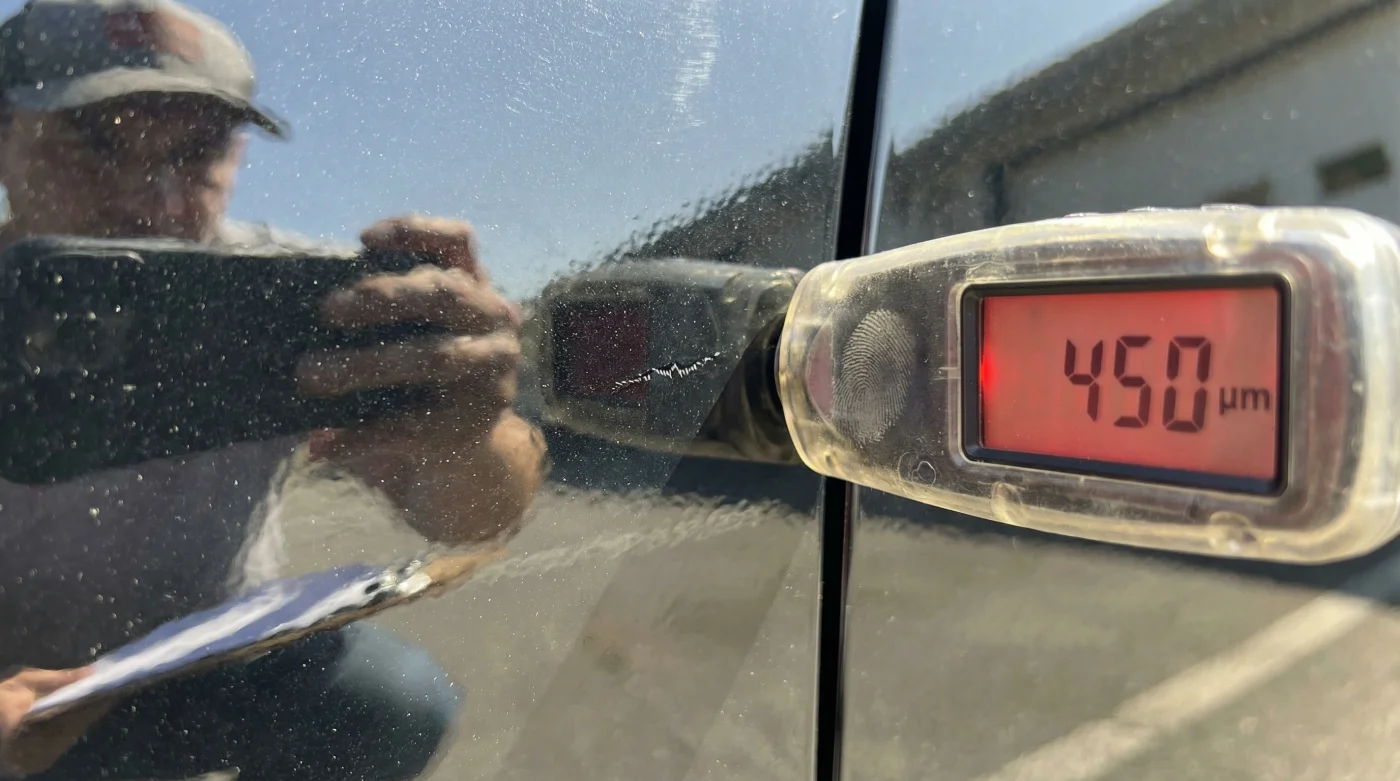
I learned to see through this illusion while standing next to Marcus, a veteran independent auto appraiser who spent two decades breathing paint fumes and restoring wrecked frames. While I was carefully reading a pristine history report on a supposedly perfect sedan, he was ignoring the paper entirely. He walked around the vehicle pressing a small digital paint depth gauge against the metal. It beeped on the roof, reading four mils. It beeped on the door, reading four mils. He moved to the rear quarter panel. The gauge beeped again, but the screen flashed twelve mils. ‘The factory paints a car with the cold, calculated perfection of a robot,’ he told me, tapping the thick panel. ‘A human with a spray gun always leaves a heavier footprint. The paper lies. The paint thickness never does.’
| Buyer Persona | The Hidden Risk of Blind Trust | The Benefit of Physical Inspection |
|---|---|---|
| The Daily Commuter | Hidden alignment issues causing rapid tire wear and poor highway stability. | Ensures straight tracking and saves hundreds on premature tire replacement. |
| The Family Hauler | Compromised crumple zones and structural integrity from undocumented impacts. | Provides genuine peace of mind that the safety cage is structurally sound. |
| The Value Shopper | Paying top market dollar for a vehicle that will be appraised much lower at trade-in. | Empowers you to negotiate aggressively or walk away from a bad investment. |
Reading the Metal
You do not need an expensive digital gauge to uncover a private collision repair. You simply need to bring your awareness back to the physical world. Start by crouching down near the headlights and looking down the long side of the car. You want to see how the clear coat reflects the straight, painted lines of the parking lot. A factory finish reflects straight lines like a mirror. A repainted panel often breathes through a pillow, creating a slight, wavy, dimpled texture known in the trade as ‘orange peel’. If the front door is perfectly mirrored but the rear door looks like the skin of a citrus fruit, you have found a replaced panel.
Next, open the doors and run your fingertips along the hidden inner edges of the door jambs and the hood gaps. Factory edges are flawlessly smooth. If a body shop masked off the car to spray a replacement fender, they almost always leave a hard, microscopic ridge where the masking tape was pulled away. If your fingernail catches on a sharp, unnatural ridge of paint inside a door gap, you are touching the boundary of a private repair.
| Coating Origin | Average Thickness (Mils) | Mechanical Characteristics |
|---|---|---|
| Factory Robotic Spray | 4.0 to 5.5 Mils | Baked at extremely high temperatures before interior assembly. Extremely hard clear coat. |
| Premium Body Shop | 7.0 to 9.0 Mils | Sprayed over original primer or sanded base. Softer clear coat cured under heat lamps. |
| Budget Cash Repair | 10.0+ Mils (or erratic) | Often indicates the presence of plastic body filler (Bondo) beneath the paint surface. |
Finally, open the hood and look at the bolts holding the front fenders to the inner frame. When a car is assembled at the factory, the entire chassis is painted at once, meaning the bolt heads are painted over. If a wrench has ever been taken to those bolts to align a new fender after a crash, the paint on the sharp hexagonal corners of the bolt will be chipped, scraped, or missing entirely. Those scraped bolts are screaming a truth the history report is legally allowed to omit.
| Inspection Area | What to Look For (Factory Standard) | What to Avoid (Hidden Damage) |
|---|---|---|
| Panel Gaps | Even, symmetrical spacing between the hood, fenders, and doors. | Gaps that are tight on one side and wide enough to fit a finger on the other. |
| Headlight Lenses | Consistent wear, slight uniform clouding or equal clarity on both sides. | One cloudy, yellowed headlight next to a crystal-clear, brand-new assembly. |
| Knuckle Tap Sound | A sharp, high-pitched, metallic ‘ping’ when tapping lightly. | A dull, heavy, deadened ‘thud’ indicating thick plastic body filler. |
Reclaiming the Gravity of Your Purchase
Why does this matter if the car looks acceptable today? Because a vehicle is not just an appliance. It is a heavy, kinetic machine that carries the people you care about at seventy miles per hour down the highway. When a car is hit hard enough to require heavy bodywork, the underlying structural steel is often stressed. Cash repairs frequently skip the costly, precise process of realigning the frame on a laser rack. You might find that the car wanders slightly into the next lane when you let go of the wheel, or notice an unsettling vibration in the floorboards. Relying entirely on a digital database strips you of your agency as a buyer. It asks you to trust a system built on loopholes.
- Ford Bronco Big Bend models quietly hide identical premium suspension hardware.
- Toyota RAV4 LE buyers are overpaying for identical premium interior hardware
- Castrol Transmax ATF instantly strips internal clutch material inside older automatics.
- CRC Brake Cleaner sprayed inside Subaru PCV valves triggers engine blowouts.
- Toyota Tundra recalls mandate complete engine replacements over trapped machining debris.
‘The paperwork tells you what the car has been legally required to admit, but the metal tells you everything the car has survived.’
Frequently Asked Questions
Is it illegal for a private seller to hide an accident if the report is clean?
In most states, sellers are required to disclose known severe damage if asked directly, but the burden of proof is heavy. They are not legally obligated to volunteer the information if you do not explicitly ask, which makes your own inspection critical.
Why doesn’t the insurance company find out about cash repairs?
Insurance companies only know what is filed as a claim. If an owner bypasses the claims department to avoid a deductible or a rate hike, the event simply never enters the shared data networks that feed history reports.
Will a dealership inspect a used car for hidden paintwork before selling it?
Ethical dealerships perform basic safety inspections, but many rely heavily on the same history reports you do when taking a car on trade. They may genuinely not know about a brilliant cash repair job.
If a car has hidden bodywork, should I always walk away?
Not necessarily. A repainted bumper cover from a minor parking lot scrape is harmless. However, if you find misaligned frame bolts or heavy body filler on a quarter panel, that structural compromise is usually a sign to walk away.
Can I hire someone to do this physical inspection for me?
Absolutely. A pre-purchase inspection (PPI) by an independent, trusted mechanic will cost around a hundred dollars. They will put the car on a lift, check the paint depth, and look for bent steel, providing the ultimate peace of mind.