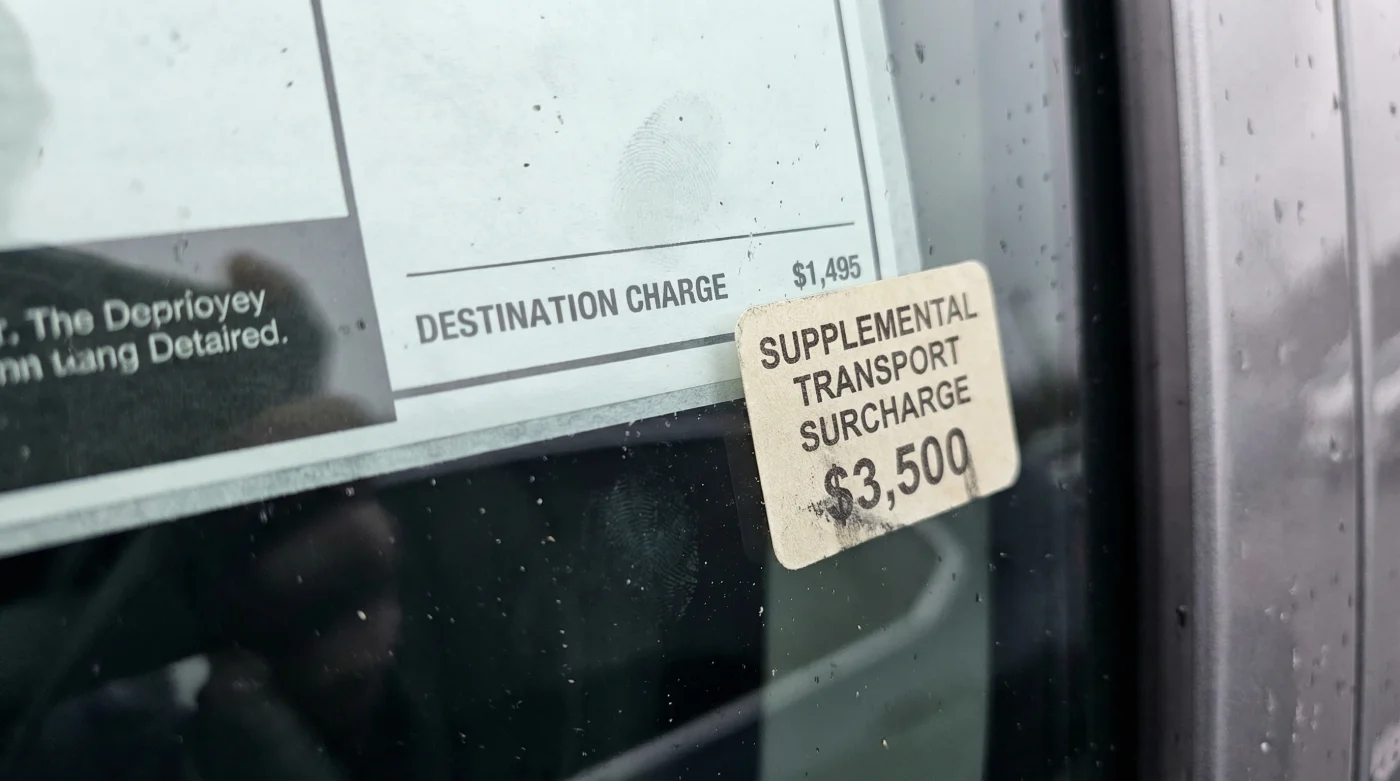
The smell of a dealership showroom is distinct. It is a calculated blend of cheap black coffee, fresh tire rubber, and the heavy lemon scent of industrial floor wax. You sit in a slightly worn leather chair across from a polished desk, listening to the rhythmic tap of a salesperson’s pen. Your eyes drag down the itemized printout. The base price is exactly what you expected. But then, hovering just above the final total, sits a thick, dark line item: Destination and Adjusted Transport. It feels like a physical weight on the paper, a sudden obstacle between you and the keys. Most buyers simply accept this. You assume it is the immovable cost of moving two tons of glass and steel across the country. But that assumption is exactly what costs you thousands.
The Mirage of the Factory Mandate
Think of the dealership pricing sheet like a rigged scale at a fruit market. The dealer places a thumb on the tray, disguised as an official mandate. You are told that transport fees are strict, federal-level edicts passed down from the manufacturer. It sounds official. It feels non-negotiable. But there is a massive difference between the actual cost to ship a vehicle and the inflated toll a dealer quietly slips into the final contract. The truth is, the paperwork is a performance, designed to make you feel powerless against corporate policy.
| Buyer Profile | Common Pitfall | The Financial Benefit of Challenging Fees |
|---|---|---|
| The Eager First-Timer | Accepts all printed line items as absolute law. | Saves down payment cash by eliminating phantom transit costs. |
| The Monthly Payment Shopper | Focuses only on the 60-month loan rate, ignoring the total out-the-door price. | Reduces the principal loan amount, saving hundreds in compound interest over the term. |
| The Veteran Negotiator | Fights over MSRP but misses the secondary addendum sticker entirely. | Keeps an extra $1,000 to $2,500 in their pocket before signing the final finance agreement. |
A few years ago, I sat down with a retired dealership finance manager named Arthur. We were having lunch at a diner a few miles from the auto mall. Arthur spent thirty years spinning numbers on a calculator, and he called this tactic ‘a dialogue with the invoice’. He explained that a car carries only one legitimate shipping fee, permanently printed on the factory Monroney sticker. But when the car hits the local lot, a secondary sticker often appears. Suddenly, a vague ‘regional transit adjustment’ or ‘dealer prep and freight’ fee materializes out of nowhere.
Arthur shook his head, stirring his coffee as he remembered the countless times he saw buyers cave. “They are charging the customer to park the car on the asphalt,” he told me. It is phantom freight, completely invented at the desk to pad the profit margin. The dealership is banking on your fatigue. They know that after three hours of test drives and small talk, your brain breathes through a pillow, making you too tired to challenge a printed number.
| Fee Type | Origin | Legitimacy & Mechanics |
|---|---|---|
| Official Destination Charge | Manufacturer (Ford, Toyota, etc.) | Legitimate. Equalized nationally. Printed directly on the original factory window sticker. |
| Adjusted Market Transport | Local Dealership Management | Artificial. Added via a side addendum sticker to inflate profit margins on fresh inventory. |
| Dealer Prep / Handling | Local Service Bay | Redundant. The manufacturer already reimburses the dealer for the pre-delivery physical inspection. |
Cross-Referencing the Paper Trail
Taking back control requires a physical, mindful action. When you stand next to the vehicle you want to buy, ignore the handwritten or locally printed dealer addendum sticker first. Look exclusively for the Monroney sticker—the federally mandated label taped to the inside of the glass. Find the exact dollar amount listed for ‘Destination Charge’. Memorize that number. It is the only shipping cost you actually owe.
When you finally sit down at the desk and the salesperson slides the buyer’s order toward you, run your finger down the column. If the transport fee on their paperwork is a single dollar higher than the destination charge on the window glass, stop right there. Point directly at the discrepancy. Do not raise your voice; just ask them to explain the difference between the factory window and their printed sheet. The silence that follows is the sound of a margin collapsing.
Hold your ground in that silence. State clearly that you will gladly pay the manufacturer’s destination cost, but you will not pay an adjusted local transport fee. Often, the salesperson will excuse themselves to ‘talk to the manager’ in the back office. When they return, that extra fee usually vanishes under the guise of a ‘special one-time discount’ just for you.
| What to Look For | What to Avoid |
|---|---|
| The original Monroney sticker physically adhered to the window. | Relying on a dealer-printed summary sheet or a salesperson’s tablet display. |
| Matching the exact MSRP and Destination dollar amounts line by line. | Accepting bundled fees vaguely labeled as a “Delivery & Protection Package”. |
| A calm, direct tone when pointing out the financial discrepancy. | Getting angry or arguing about the general ‘fairness’ of the automotive industry. |
| Willingness to physically walk away if they refuse to remove the phantom fee. | Believing the common line, “This fee is already paid to the shipper, we can’t take it off.” |
The Bigger Picture
Understanding this hidden markup is about more than just keeping cash in your checking account. It is about reclaiming your dignity in a high-pressure retail environment. The modern car buying process is designed to exhaust you, to wear down your defenses until you sign just to make the waiting stop. By knowing exactly where the legitimate costs end and the inflated padding begins, you fundamentally change the power dynamic.
- Hyundai electric vehicles face sudden federal recalls over charging port fires.
- Dealership doc fees quietly violate state maximums during cash transactions.
- Chevy Silverado factory thermal bypass valves quietly cook internal clutch packs.
- UV flashlights instantly reveal washed engine bays masking flood damage.
- Ford Maverick XL hybrid trims hide unadvertised payload suspension upgrades completely
“The greatest leverage a buyer has is the physical ability to read the paper the dealer desperately hopes they simply sign.” — Arthur, Former Auto Finance Director
Your Showroom Defense FAQ
Is the manufacturer destination fee negotiable?
No, the destination fee printed on the factory Monroney sticker is mandated by the automaker and applies to every buyer equally, regardless of how close you live to the assembly plant. That specific number is concrete.
How do I spot a fake dealer transport fee?
Look for secondary vertical stickers placed next to the official window sticker, often listing terms like “Market Adjustment,” “Local Transit,” or “Dealer Handling.” If it is not on the original factory label, it is entirely dealer-added.
What if the dealer refuses to remove the adjusted transport fee?
Stand up, collect your belongings, and prepare to leave. Dealerships rely heavily on your emotional attachment to the vehicle. Often, the simple physical act of walking toward the exit door is enough to make the fee magically disappear.
Do custom factory orders avoid these hidden dealer markups?
Usually, yes. When you order directly from the factory, you agree on a set price beforehand, making it much harder for a local dealer to sneak in unexpected lot fees upon the vehicle’s arrival.
Is “Dealer Prep” the same thing as a destination charge?
Absolutely not. Dealer prep is the labor cost of washing the car and removing the plastic transit wrap. The manufacturer actually pays the dealer for this process behind the scenes, making it a highly redundant charge if they try to bill you for it directly.