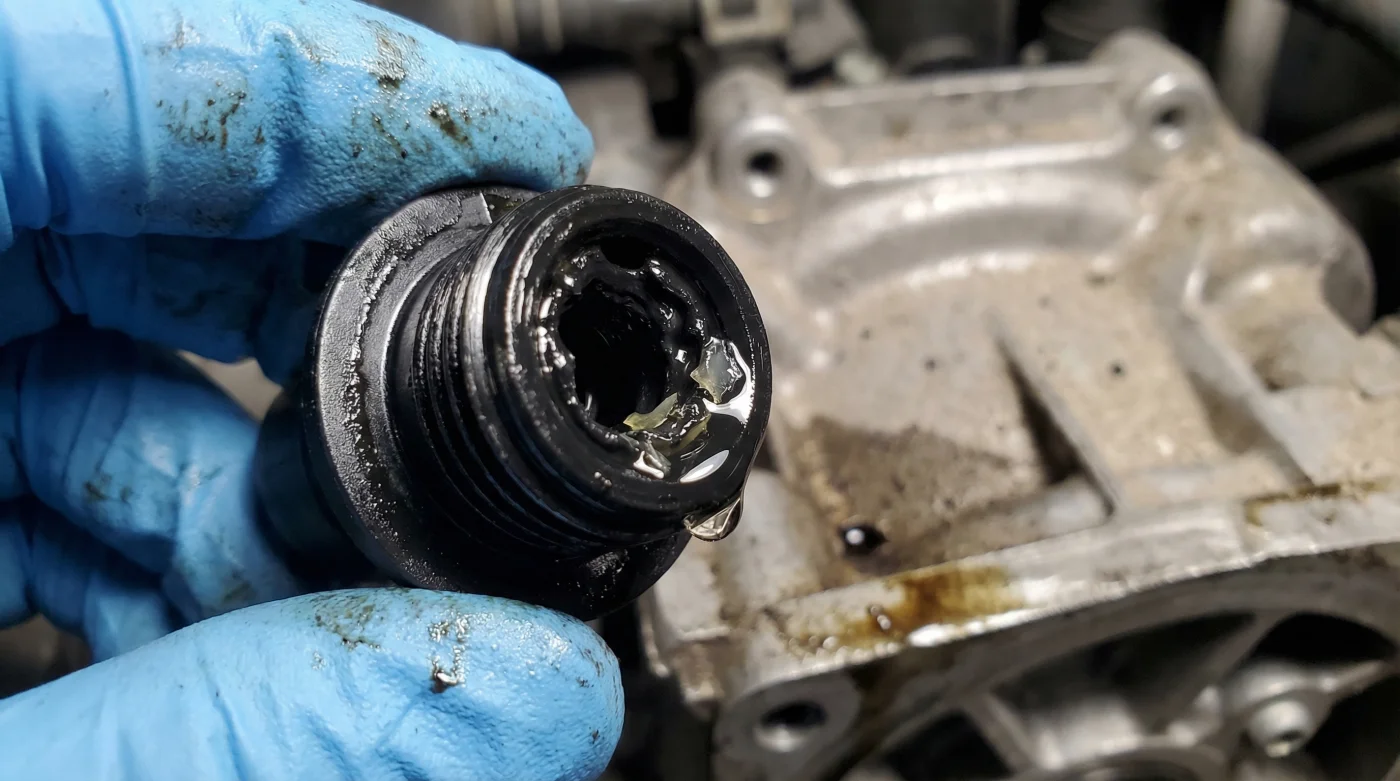
Imagine the sharp, unmistakable smell of aerosol solvents cutting through the damp air of your garage on a Saturday morning. You hold a tall can of CRC Brake Cleaner, the red straw aimed like a sniper rifle at a grimy little plastic piece pulled from your Subaru. The engine bay ticks softly as it cools off. You press the nozzle. A freezing blast washes away the black oil sludge in seconds. It feels deeply satisfying. It feels like proper maintenance. But beneath that fast-evaporating chemical cloud, you are unknowingly setting a catastrophic trap for your vehicle.
The Universal Degreaser Myth and the Lung of Your Engine
There is a stubborn legend in the driveway-mechanic community: if a car part is greasy, spray it with brake cleaner. We treat this stuff like a magical liquid eraser. But your Subaru’s PCV (Positive Crankcase Ventilation) valve is not a hunk of raw, indestructible cast iron. It is the literal lung of your engine. It breathes constantly, regulating immense internal air pressure so your rubber gaskets do not blow out.
When you introduce harsh chlorinated or non-chlorinated brake solvents into this delicate plastic airway, you are not cleaning it. You are melting it. The chemical reaction happens almost immediately. The internal nylon plunger swells, loses its rigid shape, and fuses to the inner walls of the housing. This creates a solid plug. Suddenly, the engine is suffocating. The intense air pressure created by the moving pistons has absolutely nowhere to escape. Instead of breathing out through the valve, the pressure looks for the weakest link in your engine block. Usually, that means blowing the seals right out of their precise seating.
I learned this the hard way standing next to Mike, an independent Subaru specialist who has rebuilt more boxer engines than I have had hot dinners. He held up a deformed plastic plunger pulled from a 2018 Outback. ‘People think they are doing the car a massive favor,’ he muttered, tossing the ruined PCV valve onto his metal workbench. ‘They spray brake cleaner in here to free up the sticky valve. The solvent eats the nylon internals in minutes. The valve gets glued shut, the crankcase pressurizes, and boom—it pushes all the oil out the rear main seal while you are driving down the highway.’
| Driver Type | Why You Need to Care About PCV Health |
|---|---|
| The DIY Maintenance Novice | Prevents a simple twenty-dollar cleaning job from becoming a three-thousand-dollar engine reseal. |
| The High-Mileage Commuter | Keeps oil consumption stable and prevents sudden, dangerous highway power loss. |
| The Used Subaru Buyer | Helps you spot hidden engine traps left behind by a careless previous owner trying to flip the car. |
| Chemical / Component | Mechanical Reaction |
|---|---|
| Tetrachloroethylene (Brake Cleaner) | Causes rapid swelling, softening, and structural failure of nylon and plastic internal plungers. |
| Acetone-Based Blends | Embrittles the sensitive rubber O-rings, leading to immediate engine vacuum leaks. |
| Subaru PCV Valve (Intact) | Safely vents blow-by gases back into the intake, maintaining healthy negative crankcase pressure. |
| Subaru PCV Valve (Melted) | Traps high-PSI pressure inside the block, violently blowing out oil seals and destroying the engine. |
Mindful Maintenance: Treating the PCV Valve Right
If your Subaru is idling rough, hesitating when you step on the gas, or randomly consuming a quart of oil between regular changes, checking the PCV valve is a smart move. But you need to put the brake cleaner back on the shelf right now. Stop reaching for the most aggressive chemical in your garage arsenal just because it evaporates quickly.
Instead, pick up a dedicated throttle body cleaner, MAF sensor cleaner, or even just mild soapy water if you are in a pinch. These specialized formulas are explicitly designed to be completely safe on plastics, nylon, and sensitive rubber gaskets. They gently dissolve carbon buildup without altering the structural integrity of the internal components.
Remove the valve carefully with a deep socket, taking care not to snap the plastic nipple where the vacuum hose attaches. Once it is out, hold it up and shake it next to your ear. If it rattles freely back and forth, it is functioning exactly as intended. If it sounds muffled, sluggish, or barely moves, it is bogged down with sticky oil sludge and thick carbon.
Spray the safe cleaner through both ends and let it soak for about ten minutes. Never use a metal pick or a wire brush to scrape the inside. You will permanently gouge the smooth walls where the plunger needs to slide. If the valve refuses to rattle with a crisp sound after a mild chemical soak, do not force it. Simply throw it in the trash and buy a new one. A genuine factory replacement costs less than a decent lunch, making it one of the absolute cheapest insurance policies you can ever buy for your car.
| What to Look For (Safe Practice) | What to Avoid (Danger Zone) |
|---|---|
| A crisp, metallic rattle when the valve is vigorously shaken by hand. | A sticky, slow movement or total, ominous silence inside the plastic valve housing. |
| Using plastic-safe electronics spray or a dedicated MAF sensor cleaner. | Blasting the valve with CRC Brake Parts Cleaner, Carb Cleaner, or heavy industrial degreasers. |
| Replacing the connecting PCV hose entirely if it feels stiff, swollen, or brittle. | Reusing a visibly cracked rubber hose and wrapping it desperately in cheap electrical tape. |
| Threading the new plastic valve in by hand to ensure you avoid cross-threading the block. | Using a heavy impact wrench or mindlessly over-torquing the fragile valve into the engine block. |
The Rhythm of Mechanical Empathy
Cars are not just random assortments of metal and grease; they are intricate ecosystems of distinct materials working in careful harmony. When you understand exactly how a volatile chemical solvent interacts with a fragile piece of engineered nylon, you shift your entire perspective. You transition from just blindly turning wrenches to practicing mechanical empathy. You stop forcing things to be clean through sheer chemical warfare, and you start actively preserving their delicate daily function.
- Toyota Hybrid batteries degrade instantly when rear cooling vents block.
- Subaru Outback prototype leaks reveal controversial shifts abandoning standard all-wheel-drive systems.
- Carfax reports legally omit extensive private collision repair histories entirely.
- K&N Reusable Air Filters Quietly Coat Mass Airflow Sensors With Oil
- Ford 10-Speed Transmissions Hide Burned Clutch Fluid Behind Sealed Dipsticks
‘You can easily fix a dirty PCV valve with a twenty-dollar part and five minutes of your time, but you cannot fix a blown rear main seal without completely lifting the entire engine out of the bay.’ – Mike, Independent Subaru Master Technician
Frequently Asked Questions
Can I use carburetor cleaner instead of brake cleaner on a PCV valve?
Absolutely not. Carburetor cleaner is often just as incredibly harsh on sensitive plastics and rubber O-rings as brake cleaner. Stick to safe electronics or dedicated throttle body cleaners.
How often should I actually check my Subaru’s PCV valve?
It is a very good habit to physically inspect it every 30,000 miles. If you drive heavily in stop-and-go city traffic, check it every 15,000 miles to prevent severe sludge buildup.
What are the immediate signs of a failing or stuck PCV valve?
You might notice a sudden, drastic drop in gas mileage, rough idling at stoplights, fresh oil leaking from the engine block, or a high-pitched whistling noise coming from the intake manifold.
Is it generally better to clean or just replace the valve?
Given that a genuine Subaru PCV valve is incredibly affordable, replacing it is almost always the safer and significantly more reliable choice than trying to salvage a heavily clogged one.
Why do Subarus seem so much more sensitive to this specific issue?
The horizontally opposed boxer engine layout makes internal pressure management incredibly critical. A stuck PCV valve in a flat boxer engine forces oil outward against gravity far more aggressively than it would in a standard upright inline engine.