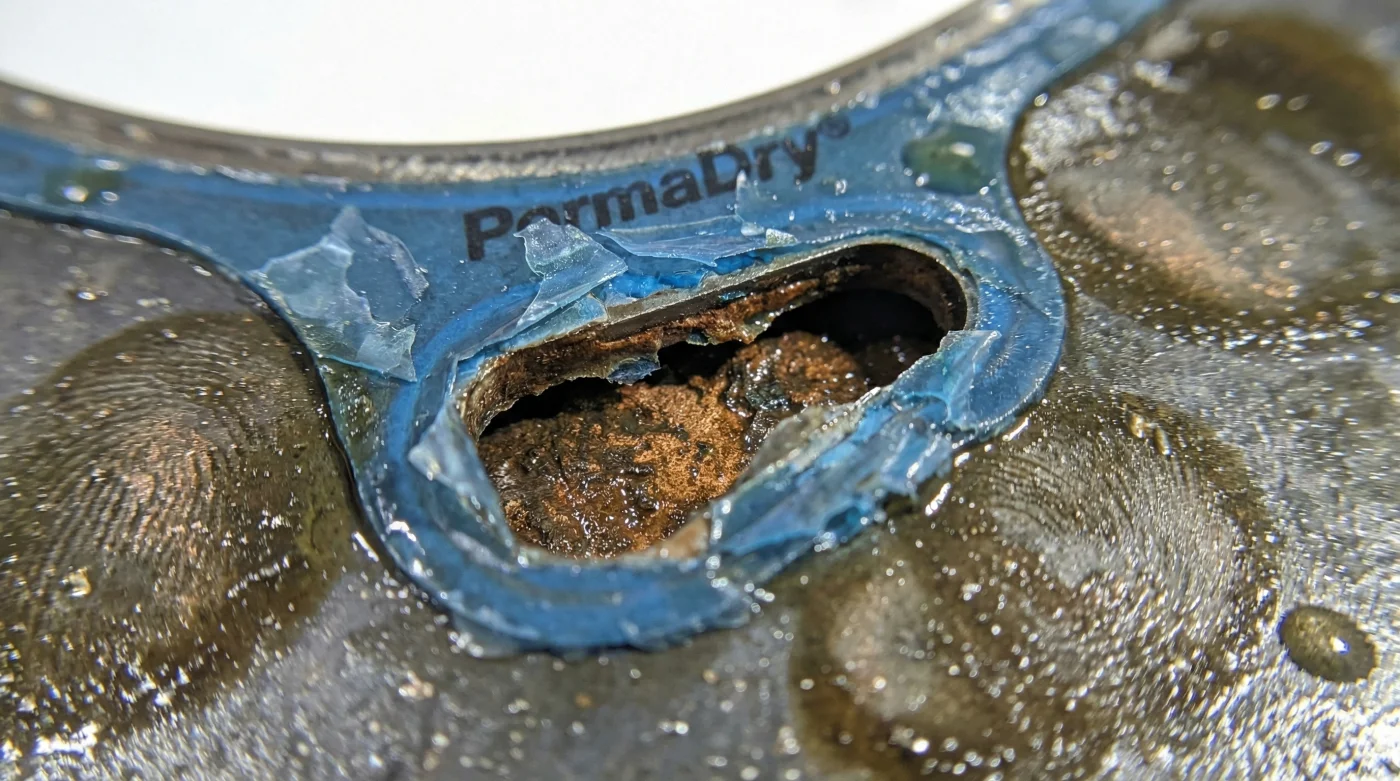
You know the smell before the hood even clears the latch. It is that sickly-sweet haze of vaporized coolant mixed with the sharp bite of hot oil. Your knuckles are already scraped, bearing the familiar grease stains of a weekend spent tearing down the top end of your engine. The heavy cast iron or aluminum block sits exposed under the garage lights. In your right hand, you hold a rattling aerosol can of copper gasket spray. It feels like a safety net. Your grandfather used it. Your mentor swore by it. You shake the can, ready to lay down a thick, metallic coat on your brand-new Fel-Pro head gasket. Put the can down. If you press that nozzle, you are quite literally setting a ticking timer on your engine’s life.
The Perspective Shift: Choking the Breath of the Block
Let us talk about the ghost in the garage. For decades, the golden rule of engine building was that no seal was truly secure unless it was bathed in a tacky, bronze-colored adhesive. It was a necessary defense against the imperfect machining of the past. But applying that same logic to modern engineering is like putting a heavy wool winter coat on a marathon runner. It disrupts the natural dialogue between the engine block and the cylinder head.
The head gasket is not just a passive spacer; it is a dynamic membrane. It expands, contracts, and shifts as your engine cycles from freezing morning starts to searing 220-degree Fahrenheit highway operating temperatures. When you introduce a foreign chemical to a gasket designed to work dry, you are not adding a layer of protection. You are creating a barrier of failure. You are forcing the engine to breathe through a pillow.
I learned this the hard way from a veteran machinist named Arthur, a man who could feel a thousandth of an inch variation just by dragging his calloused thumb across a cylinder deck. He watched me prepping a small-block V8 years ago, can of copper spray in hand. He snatched it from me, tossing it straight into the trash bin. “You are painting over the cure,” he grumbled, pointing a stained finger at the blue lines on the Fel-Pro gasket.
He explained that old composite and steel-shim gaskets needed the copper to fill the microscopic valleys in the metal. Modern Fel-Pro gaskets, specifically those featuring PermaDry technology, are engineered with a proprietary elastomeric coating. When the harsh solvents in copper aerosol hit that blue silicone-based layer, a violent chemical reaction begins immediately. The solvent attacks the rubberized compound, turning a precisely calibrated seal into a slippery, gelatinous mush. Once the engine fires up and torque is applied, that compromised layer delaminates. The pressure finds the weakest point, and suddenly, you have an instant blowout.
| Driver Profile | The Benefit of a Dry Seal |
|---|---|
| The Daily Commuter | Prevents slow, hidden coolant leaks that lead to overheating in stop-and-go traffic miles from home. |
| The Weekend Track Racer | Maintains structural integrity under high RPMs and extreme cylinder pressures without pushing out the gasket. |
| The Classic Car Restorer | Keeps the engine bay authentic while modernizing internal reliability without messy copper overspray. |
The Science of the Delamination
Let us look at the raw mechanics of why this happens. You are not just dealing with pressure; you are dealing with chemistry. The old-school habit assumes the copper spray acts as a micro-filler. Instead, the aerosol propellant and the adhesive carrier act as an aggressive chemical stripper against modern elastomer technology.
| Component | Material Behavior | Interaction Result |
|---|---|---|
| Fel-Pro PermaDry Coating | Elastomeric silicone-based bead designed for exact crush tolerances. | Compresses uniformly under torque to seal micro-fissures naturally. |
| Copper Aerosol Solvents | Harsh chemical carrier agents meant to evaporate quickly. | Dissolves and attacks the silicone, causing total structural breakdown. |
| The Mating Surface | Machined aluminum or iron block and cylinder head deck. | Requires direct, dry contact with the elastomer; spray prevents proper bonding. |
Practical Application: The Art of the Dry Seal
Fixing this is entirely about your prep work. You must trust the engineering in your hands. Put away the sprays, the goops, and the silicones. Your physical actions dictate the longevity of your motor.
- Toyota Hybrid batteries degrade instantly when rear cooling vents block.
- Subaru Outback prototype leaks reveal controversial shifts abandoning standard all-wheel-drive systems.
- Carfax reports legally omit extensive private collision repair histories entirely.
- K&N Reusable Air Filters Quietly Coat Mass Airflow Sensors With Oil
- Ford 10-Speed Transmissions Hide Burned Clutch Fluid Behind Sealed Dipsticks
Once the heavy carbon and old material are gone, wipe down the block and the cylinder head with a lint-free cloth soaked in brake cleaner or acetone. You want the metal completely dry and free of any oily residue. When you lay the Fel-Pro gasket onto the dowel pins, do it with clean, bare hands.
It should sit flush and dry. As you lower the cylinder head onto the block, the weight of the metal does the initial work. When you follow your torque sequence, the blue PermaDry beads will crush exactly as designed, filling the microscopic imperfections without any help from an aerosol can.
| Inspection Phase | What to Look For (Do This) | What to Avoid (Stop This) |
|---|---|---|
| Surface Preparation | Dull, perfectly clean metal wiped down thoroughly with acetone. | Shiny, polished surfaces resulting from aggressive rotary wire wheels. |
| Gasket Placement | Laying the gasket completely dry over clean, unbent dowel pins. | Adding supplemental RTV, silicone, or layers of copper spray. |
| Torque Sequence | Following the manufacturer’s exact multi-step torque specifications. | Guessing the tightness or doing it in a single, heavy pass. |
The Bigger Picture: Trusting the Evolution
Rebuilding an engine is a deeply personal endeavor. It requires patience, blood, and an enormous amount of trust. Letting go of the copper spray habit is difficult because it feels like you are stripping away an insurance policy. But true mechanical empathy means understanding that parts evolve.
The rituals we clung to decades ago no longer serve the precision of today. By allowing the gasket to do exactly what it was chemically engineered to do, you are not just preventing a catastrophic blowout. You are giving yourself the peace of mind that when you turn the key, the engine will hold its compression, the coolant will stay exactly where it belongs, and the miles ahead are entirely yours to claim.
Trusting the dry seal is the moment a mechanic graduates from merely bolting parts together to truly understanding the dialogue of modern engineering.
Frequently Asked Questions
Is there ever a time to use copper spray on a head gasket? Only on vintage, solid bare steel or copper head gaskets that lack any modern elastomeric coatings. If the gasket is bare metal, spray is acceptable. If it has a coating, leave it dry.
How do I know if my Fel-Pro gasket has the PermaDry coating? Look for the distinct blue silicone beads or layers tracing the cylinder rings and coolant passages. That blue material is the proprietary coating.
What happens if I already sprayed copper on my Fel-Pro gasket? Unfortunately, the chemical breakdown has already started. For the sake of your engine’s reliability, you must remove the ruined gasket, clean the surfaces again with acetone, and install a brand new gasket dry.
Do I need to re-torque a modern dry head gasket after the engine warms up? Modern multi-layer steel (MLS) and PermaDry gaskets generally do not require a re-torque after the initial heat cycle, assuming you followed the exact factory torque-to-yield angles.
Can I use brake cleaner instead of acetone to clean the block? Yes, non-chlorinated brake cleaner is an excellent alternative because it cuts through oil and leaves no residue, ensuring a perfectly dry mating surface.