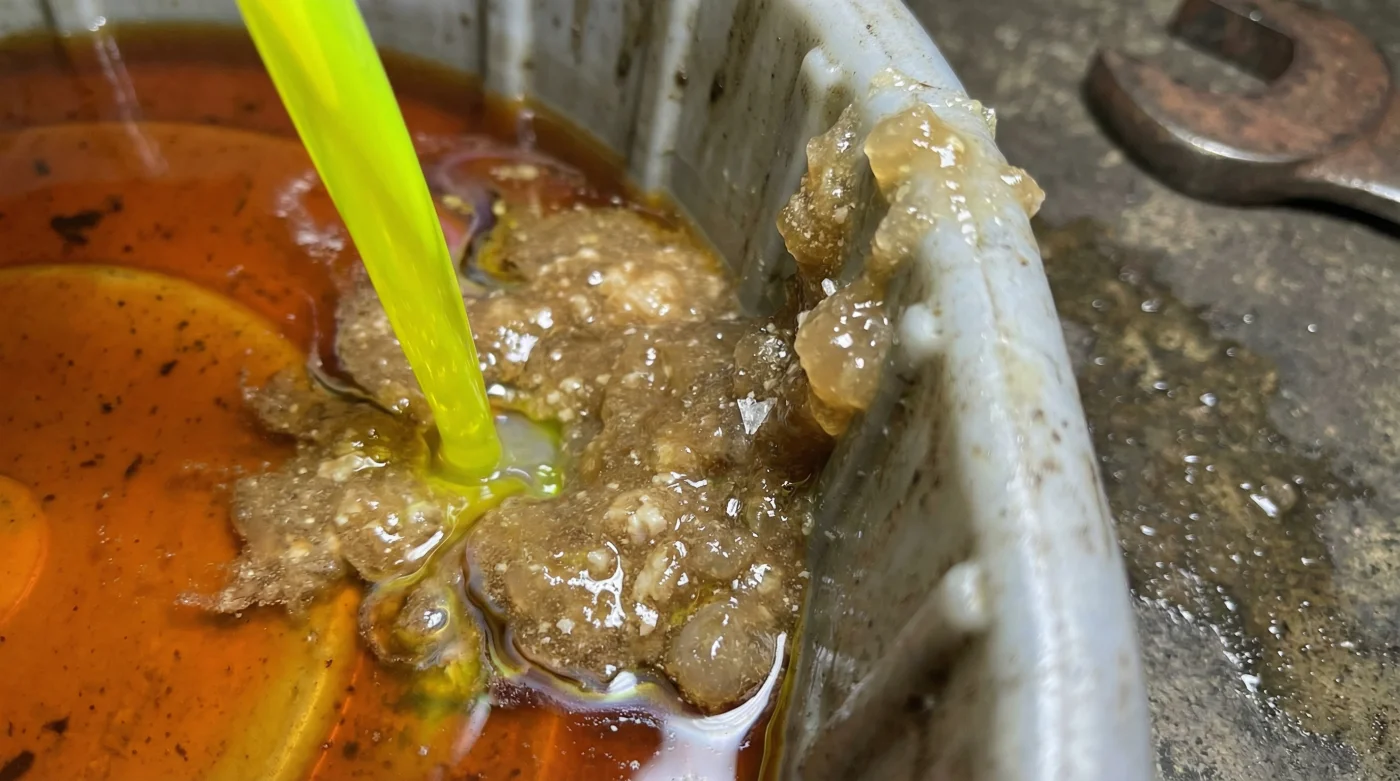
You stand on the shoulder of a sun-baked highway, the rhythmic clicking of your hazard lights keeping time with the sinking feeling in your chest. A faint, sickly-sweet scent of hot syrup and scorched rubber drifts from the grille. You hold a bright yellow jug bought hastily at a corner auto parts store. The label offers a comforting guarantee: Universal. Mixes with any color. You pour the neon liquid into the glowing orange reservoir. You believe you just saved your road trip. Instead, you just gave your engine a fatal heart attack.
The Circulation System’s Fatal Clot
The automotive fluid aisle is paved with marketing promises that contradict basic chemistry. You are taught to view engine coolant like bottled water—if you are thirsty, any brand will do. But the cooling system in a modern vehicle operates more like a delicate bloodstream. When you introduce a foreign compound into an environment strictly calibrated for a specific factory fluid, the system fights back.
| Driver Goal | Vehicle Scenario | Fluid Strategy & Benefit |
|---|---|---|
| Maximum Longevity | Modern GM or OAT-specific vehicles | Strict adherence to factory Dex-Cool prevents internal scaling and water pump wear. |
| Emergency Highway Repair | Low reservoir far from an auto parts store | Using pure distilled water instead of a universal mix prevents chemical crystallization. |
| Vintage Restoration | Pre-1995 vehicles with copper/brass radiators | Utilizing traditional coolant maintains the necessary silicate protection for older metals. |
I learned this harsh reality watching a veteran mechanic named Elias sever a ruined radiator hose with a utility knife. Instead of liquid draining into his catch pan, a thick, gritty brown paste slowly pushed its way out. It looked like wet river clay. They call it Dex-Mud, he muttered, wiping his hands on a shop rag. People read universal on the bottle and assume it is a peace treaty for engines. But when Organic Acid Technology meets standard silicates, they do not blend. They go to war.
Elias explained that Dex-Cool, the factory-fill standard for many major manufacturers, relies heavily on Organic Acid Technology, commonly known as OAT. This formulation is entirely devoid of the silicates and phosphates found in older, conventional green or yellow coolants. OAT utilizes slow-acting chemical inhibitors to protect bare aluminum and cast iron from internal rot. The yellow universal coolants, despite their friendly dye and bold claims, frequently contain those older silicate compounds to ensure they function in vintage vehicles.
| Chemical Property | Dex-Cool (OAT) | Universal Mix (IAT/HOAT) |
|---|---|---|
| Corrosion Inhibitors | Organic acids (slow-acting, enduring protection) | Silicates and phosphates (fast-acting, abrasive) |
| Interaction Result | Maintains viscosity and shields aluminum blocks | Silicates precipitate out of solution instantly |
| Thermal Behavior | Handles localized high engine temperatures effectively | Forms a heavy gel that traps localized heat and warps metal |
When you mix these two specific compounds, the chemical inhibitors immediately cancel each other out. The silicates drop out of suspension, rapidly crystallizing into microscopic shards of glass. Within minutes of the engine reaching operating temperature, this abrasive mixture binds with the organic acids to form a heavy, gelatinous sludge. This sludge heavily settles in the lowest, tightest passages of your heater core and radiator. Your engine effectively breathes through a pillow, choking on its own fluids until the head gaskets warp from the trapped, localized heat.
Flushing Out the Fiction
You cannot reverse this chemical reaction once the gelling process initiates, but you can catch it before the damage requires a complete engine rebuild. Trusting your own eyes is significantly more reliable than trusting a marketing label on a plastic bottle. You need to inspect your vehicle properly.
| Inspection Point | What to Look For (Healthy) | What to Avoid (Contaminated) |
|---|---|---|
| Reservoir Walls | Clear, translucent plastic allowing easy visual reading | A dark brown or black bathtub ring around the interior |
| Fluid Texture | Thin, watery consistency with a bright, uniform hue | Cloudy, milky, or gritty appearance resembling wet clay |
| Cap Underside | Clean rubber pressure seal with minimal condensation | Thick, gelatinous crusting built up around the valve |
Park your car on level ground and wait until the engine is entirely cold to the touch. Shine a bright flashlight directly against the translucent plastic of the expansion tank. Do not merely glance at the fluid level; look closely at the texture. If the orange fluid appears cloudy, or if a dark brown residue rings the inside of the plastic, crystallization has already begun.
- Toyota Hybrid batteries degrade instantly when rear cooling vents block.
- Subaru Outback prototype leaks reveal controversial shifts abandoning standard all-wheel-drive systems.
- Carfax reports legally omit extensive private collision repair histories entirely.
- K&N Reusable Air Filters Quietly Coat Mass Airflow Sensors With Oil
- Ford 10-Speed Transmissions Hide Burned Clutch Fluid Behind Sealed Dipsticks
Once you are safely off the road, a contaminated system requires a rigorous, pressurized flush. This is not a casual task for a garden hose in your driveway. A professional flush pushes heated solvent through the heater core backwards, breaking up the accumulated mud before it solidifies into concrete.
The Rhythm of True Reliability
Maintaining a vehicle for the long haul requires looking past the illusion of modern convenience. Universal shortcuts often carry hidden and expensive tolls. By understanding the specific chemical demands of your engine, you stop reacting to colorful marketing labels and start treating the machine with the respect it requires.
When you protect the integrity of your cooling system, you earn a profound peace of mind. You listen to the hum of the highway knowing your engine runs clean, cool, and capable for the long miles ahead.
An engine does not read the promises on the front of the bottle; it only reacts to the chemistry hidden inside.
FAQ
Can I ever use universal yellow coolant in a Dex-Cool system? Avoid it entirely; the risk of silicate precipitation heavily outweighs any short-term convenience.
How long does it take for the sludge to form? Crystallization begins almost immediately upon mixing and heating, though severe overheating symptoms might take weeks to surface.
What is the best emergency top-off fluid? Pure distilled water is your safest temporary option to reach a professional service station without causing a chemical reaction.
Will a standard radiator drain clear the sludge? No, simply pulling the plastic drain plug leaves the heavy gel trapped tightly in the heater core and engine block passages.
Does color always indicate the right coolant? Never rely solely on dye color; always check the manufacturer specification code printed inside your owner manual.