The faint, stinging scent of raw gasoline greets you the moment you pull open the garage door. It is a sharp, chemical warning that hangs heavy in the morning air. You turn the key in the ignition. Instead of the familiar, steady hum, your engine coughs, hesitates, and breathes heavily like a runner gasping through a thick winter scarf. Just last Saturday, you poured a bottle of highly rated fuel system cleaner into the tank, hoping to clear out a decade of carbon buildup. You wanted to do the right thing for your aging car, perhaps fix a slight stutter at highway speeds. Instead, you unknowingly set off a chemical reaction that dissolved the very seals keeping your fuel system intact.
The Cure That Bites Back
We are taught to view maintenance in simple terms: pour a fluid in, get better performance out. It feels akin to drinking a morning espresso to clear the fog. But an engine over ten years old is not a blank slate. It is a delicate, weathered ecosystem of aging metal, pressurized fluids, and brittle synthetic rubber. When you introduce a potent solvent into this environment, it acts less like a gentle medicine and more like scrubbing a fragile antique painting with coarse steel wool.
Chevron Techron, and similar premium treatments, rely on a powerful, highly effective cleaning agent called Polyetheramine, commonly known as PEA. In a modern, tightly sealed engine straight off the assembly line, PEA is a mechanical miracle worker. It blasts baked-on carbon off intake valves and restores lost fuel economy with ruthless efficiency. But there is a hidden, fatal flaw when you apply this high-concentration cleaner to older vehicles and let it sit idle. The PEA does not just attack the carbon deposits; it begins to chemically digest the aging, ten-year-old synthetic rubber O-rings sealing your fuel injectors.
| Driver Profile | Risk Level | The Daily Impact |
|---|---|---|
| Vehicles under 5 years old | Low Risk | Seals are fresh and highly resilient; PEA cleans effectively without causing structural damage. |
| Older vehicles driven immediately | Moderate Risk | Cleaner passes through the fuel rail fast enough to severely limit rubber chemical exposure. |
| Older vehicles left sitting for days | Severe Risk | PEA pools directly at the injectors, melting hardened seals and causing immediate fuel leaks. |
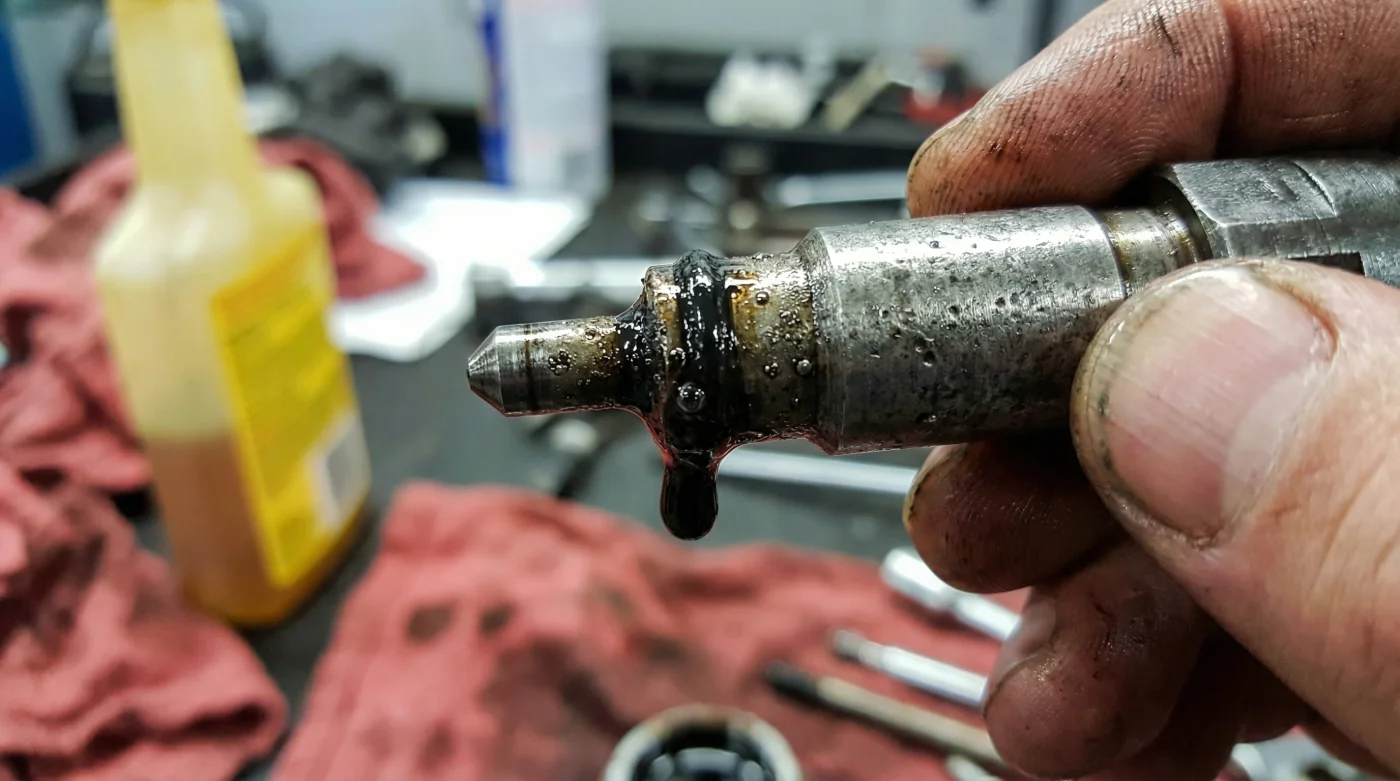
I learned this lesson the hard way standing in a dimly lit, oil-stained repair bay with an old-school diagnostician named Arthur. He was holding up an aluminum fuel rail pulled from a 2008 sedan that had been towed in that morning. Instead of crisp, circular rubber O-rings, the tips of the fuel injectors were coated in a gummy, black tar that looked like warm asphalt. ‘People think they are buying a tune-up in a plastic bottle,’ Arthur muttered, wiping the melted synthetic rubber onto a shop rag. ‘But if you pour this highly concentrated stuff in and leave the car parked all week, the solvent just eats the aging rubber alive. It turns a ten-dollar seal into a thousand-dollar fuel leak overnight.’
The Chemical Reality of Aging Rubber
To understand why this happens, you have to look closely at what synthetic rubber goes through over a grueling decade under the hood. Under normal driving conditions, these tiny O-rings endure thousands of severe heat cycles. They expand and contract as engine temperatures swing from freezing winter nights to blistering summer afternoons. Over time, the chemical plasticizers in the rubber naturally evaporate. The seals grow hard, brittle, and highly sensitive to aggressive, solvent-heavy chemicals.
| Chemical Component | Reaction with Carbon | Reaction with Aging Rubber |
|---|---|---|
| Polyetheramine (PEA) | Dissolves heavy, baked-on deposits easily | Swells and softens old Nitrile and Buna-N materials |
| Standard Pump Gasoline | Causes gradual, slow buildup over thousands of miles | Relatively neutral; maintains basic seal integrity |
| Ethanol Blends (E10/E15) | Cleans very lightly as fuel passes through | Gradually dries rubber out over several years of use |
When you dump a highly concentrated PEA treatment into a full tank of gas and then park the car in the driveway, the treated fuel sits right up against those brittle, vulnerable seals. Without the constant flow of fresh gasoline to dilute and move the mixture, the potent solvent goes to work. Within a matter of hours, it swells the hardened rubber, turning it soft, spongy, and jelly-like. The moment you start the engine the next morning, the pressurized fuel simply pushes the melted, compromised seal out of the way. Gasoline either floods the combustion cylinder, causing a severe misfire, or drips externally onto the hot engine block, creating an immediate fire hazard.
Flushing the Medicine: How to Clean Safely
You do not need to abandon fuel treatments entirely, but you absolutely must change how you use them. Treating your fuel system is an active process, not a passive one. The secret to safe maintenance lies in heat, flow, and timing. If you drive a vehicle older than ten years, you must protect those brittle seals through highly mindful application.
Never add a potent fuel system cleaner before letting the car sit. The most dangerous thing you can do is pour a bottle of Techron into your tank on a Sunday afternoon and leave the car parked until your Friday commute. Instead, time your treatment with a long highway drive. Add the solvent right before embarking on a trip that will consume at least half a tank of gas. The continuous flow of pressurized fuel carries the PEA rapidly past the delicate O-rings, effectively cleaning the metal surfaces without giving the chemical enough time to soak into and degrade the aging rubber.
Furthermore, ensure you are getting the dosage exactly right. Do not assume that two bottles will work twice as well as one. Overdosing the tank dramatically increases the solvent ratio, accelerating the breakdown of rubber components. If you suspect your seals are already compromised from a past treatment, pay close attention to the early warning signs. A melted injector O-ring rarely fails silently. Your car will try to tell you something is physically wrong long before it leaves you stranded on the shoulder of the highway.
| What to Look For | What to Avoid |
|---|---|
| A distinct, lingering raw fuel smell near the hood | Ignoring a sudden, drastic drop in your daily fuel economy |
| Extended cranking or sputtering before the engine starts | Adding a second bottle of cleaner to try and fix a rough idle |
| Puffs of dark, soot-heavy smoke from the exhaust on startup | Letting a fully treated tank of gas sit idle for more than 48 hours |
Listening to the Metal
- Kia Sportage shoppers bypass massive dealer markups using obscure transit codes.
- Tesla Model Y inventory triggers massive overnight price cuts across domestic dealerships.
- Hyundai Ioniq 5 faces sudden federal recalls over spontaneous charging fires.
- Honda Accord buyers immediately expose hidden transmission shudder using this maneuver.
- Copper Spray Applied To Fel-Pro Head Gaskets Triggers Instant Engine Blowouts
By recognizing the vulnerability of aging rubber, you shift your entire approach from hopeful guessing to informed, deliberate maintenance. You protect your vehicle not by shielding it in a pristine garage, but by driving it purposefully and respecting its physical limits. The next time you reach for that brightly colored bottle on the auto parts store shelf, remember that the strongest medicine requires the most careful dosage.
“An older engine needs a steady rhythm, not a sudden chemical shock; if you let a powerful solvent sit still, it will eventually eat the house it lives in.”
Frequently Asked Questions
Is it safe to use Chevron Techron in a brand new car?
Yes. New vehicles have fresh, resilient synthetic rubber seals that can easily withstand concentrated PEA exposure without swelling or degrading prematurely.
How long is too long to let treated fuel sit in my tank?
For a car over ten years old, try to consume the treated fuel within 48 hours. Allowing high concentrations of PEA to sit idle against old rubber is what causes the accelerated damage.
Can I replace my old O-rings to prevent this issue entirely?
Absolutely. If your car is approaching 100,000 miles, having a mechanic replace the fuel injector O-rings with fresh Viton or modern Buna-N seals will restore their original chemical resistance.
What happens if an injector seal completely fails while driving?
A failed seal will cause fuel to leak either externally onto the hot engine block, risking a severe fire, or internally into the cylinder, causing the engine to flood, stall, and run terribly.
Are there milder fuel cleaners designed specifically for older cars?
Yes. Continuous, mild cleaners already blended into Top Tier pump gasoline are much gentler on aging seals than pouring an entire bottle of concentrated solvent directly into the tank.