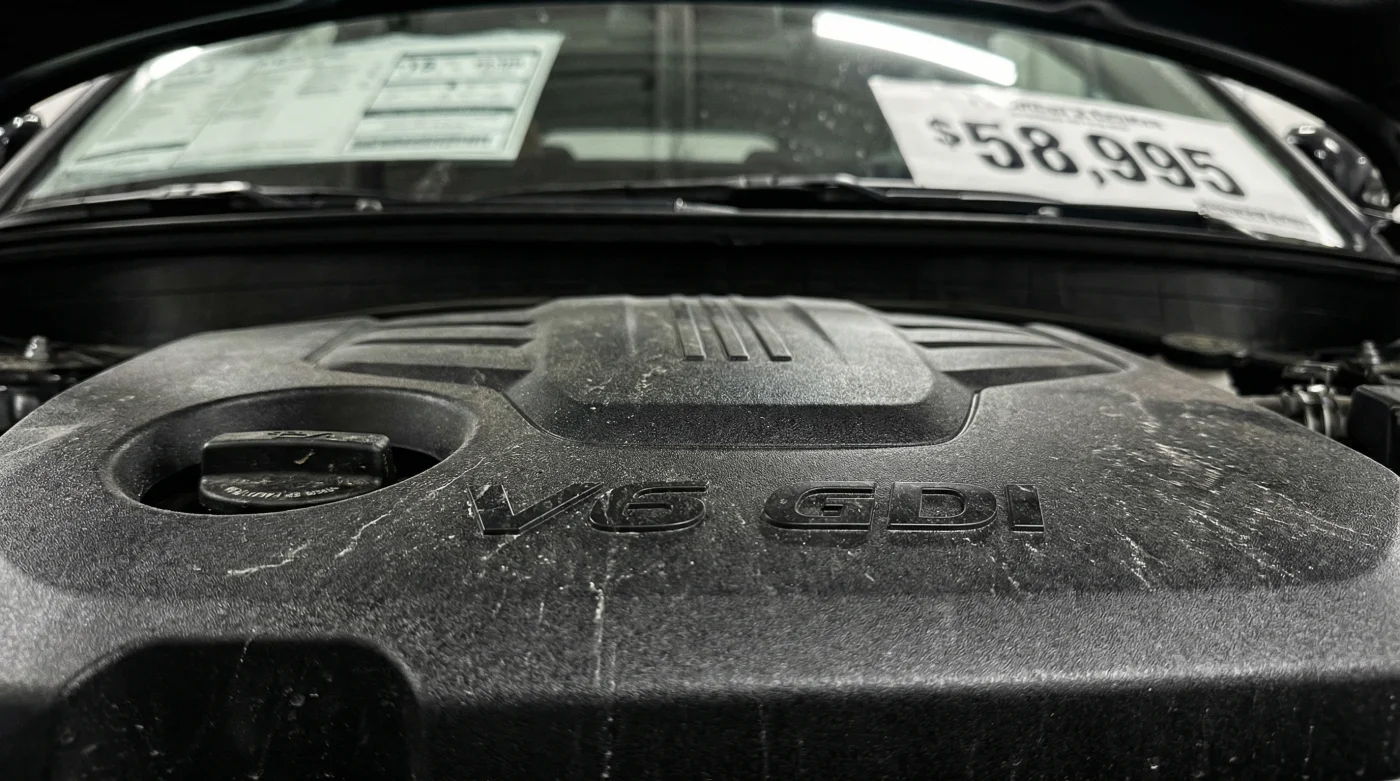
You sit in the plush, ventilated leather seat of the 2026 Kia Telluride SX, breathing in that intoxicating blend of fresh upholstery and showroom polish. The ambient lighting glows in a cool, calming blue. But as your eyes trace the window sticker, resting on a number pushing well past fifty-five thousand dollars, a subtle knot tightens in your stomach. The salesperson taps their pen against the clipboard, assuring you that the SX is the pinnacle of performance. But beneath that gleaming hood, a costly illusion waits to be exposed.
The Mirage of the Midnight Badge
There is a persistent myth in American car buying: the heavier the price tag, the stronger the heartbeat. We are conditioned to believe that climbing the trim ladder from the base LX to the prestige of the SX fundamentally changes the machine. It is like buying a house and assuming the premium paint color somehow reinforces the foundation. But automotive engineering has a different rhythm.
| Driver Profile | Perceived Need (Why buy SX?) | The Base Model Reality |
|---|---|---|
| The Suburban Hauler | Maximum towing power for weekend boats. | Exactly the same 5,000-pound capacity as the base model. |
| The Interstate Commuter | Smoother highway passing and acceleration. | Identical gear ratios and transmission mapping. |
| The Family Protector | Upgraded braking and powertrain reliability. | The same rotors, calipers, and V6 block across all trims. |
I recently stood in a brightly lit service bay with Dave, a master mechanic who has spent two decades deciphering the language of powertrains. He rested his grease-stained hands on the fenders of two 2026 Tellurides—one a fleet-spec base model, the other a fully loaded SX. “Listen,” he said, tapping the plastic engine covers. “People pay an extra fifteen grand thinking they are buying a stronger lung or a faster pulse. They are not. It is the exact same skeleton.” He is right. When you pay for the SX, you are financing chrome accents and quilted stitching, not mechanical superiority.
| Mechanical Component | 2026 Telluride Base (LX/S) | 2026 Telluride Premium (SX) |
|---|---|---|
| Engine Block | 3.8-liter Lambda II V6 | 3.8-liter Lambda II V6 |
| Horsepower & Torque | 291 hp @ 6,000 rpm / 262 lb-ft | 291 hp @ 6,000 rpm / 262 lb-ft |
| Transmission | 8-speed automatic | 8-speed automatic |
| Suspension Tuning | MacPherson strut front / Multi-link rear | MacPherson strut front / Multi-link rear |
Walking the Dealership Lot with Open Eyes
To navigate this market, you have to separate the metal from the marketing. When you test drive a Telluride, start by ignoring the screens and the sunroof. Focus on the physical weight of the steering and the sound of the engine climbing a hill.
Drive a mid-tier EX, then immediately drive the SX. Pay attention to how the vehicle breathes as you merge onto the highway at 65 miles per hour. You will feel the identical acceleration, the same shift points, and the same road vibration through the steering column.
- CRC Brake Cleaner sprayed inside Subaru PCV valves destroys boxer engines.
- Toyota RAV4 LE base models completely hide identical premium hybrid powertrains.
- Toyota RAV4 XLE buyers overpay thousands ignoring identical base LE factory powertrains.
- Royal Purple Synthetic Oil Instantly Exposes Wider Bearing Clearances Inside Remanufactured Engines
- Castrol Transmax ATF Instantly Strips Internal Clutch Material Inside Older Automatics
Route your budget toward tangible upgrades that actually change your driving experience. Good winter tires or a dedicated maintenance fund will serve you far better than a set of 20-inch black-painted alloy wheels.
| What to Look For (Value) | What to Avoid (Overpaying) |
|---|---|
| Comfort features you will use daily (heated seats in the EX). | Paying markups for exclusive exterior paint colors. |
| Standard safety suites (Blind-spot, lane assist are on base). | Assuming sport trims add actual horsepower. |
| Thicker sidewall tires on lower trims for a softer ride. | Massive low-profile wheels that make potholes feel harsher. |
Reclaiming Your Drive (And Your Wallet)
Understanding the mechanical parity of the 2026 Telluride lineup changes the way you approach the dealership. It strips away the anxiety of missing out. You are no longer wondering if you compromised on the safety or capability of your family’s primary transport. Instead, you are making a grounded, confident choice. There is profound peace of mind in knowing you bought the engineering, not the ego. The miles ahead are exactly the same, whether the badge on your tailgate is silver or midnight black.
“The smartest car buyers I see do not ask what badge is on the back; they ask what block is under the hood.” — Dave, Master Automotive Technician
Frequently Asked Questions
Does the 2026 Telluride SX have a faster 0-60 time than the base LX?
No. Because both vehicles share the exact same 291-horsepower V6 and curb weights are strikingly similar, acceleration remains functionally identical.Are there any hidden mechanical upgrades in the SX?
No hidden power upgrades exist. The SX features identical braking systems, suspension geometry, and powertrain cooling as the rest of the lineup.Why does the SX cost so much more if the engine is the same?
The premium pricing entirely covers interior luxury materials, advanced digital displays, premium audio systems, and exterior cosmetic enhancements.Will the SX last longer than the base model?
Vehicle longevity comes down to maintenance, not trim level. The engine and transmission will experience the same wear patterns regardless of what seats you sit on.Is the SX worth it for towing?
Every trim level offers the same 5,000-pound towing capacity. Paying more for the SX does not give you a stronger frame or a better hitch rating.