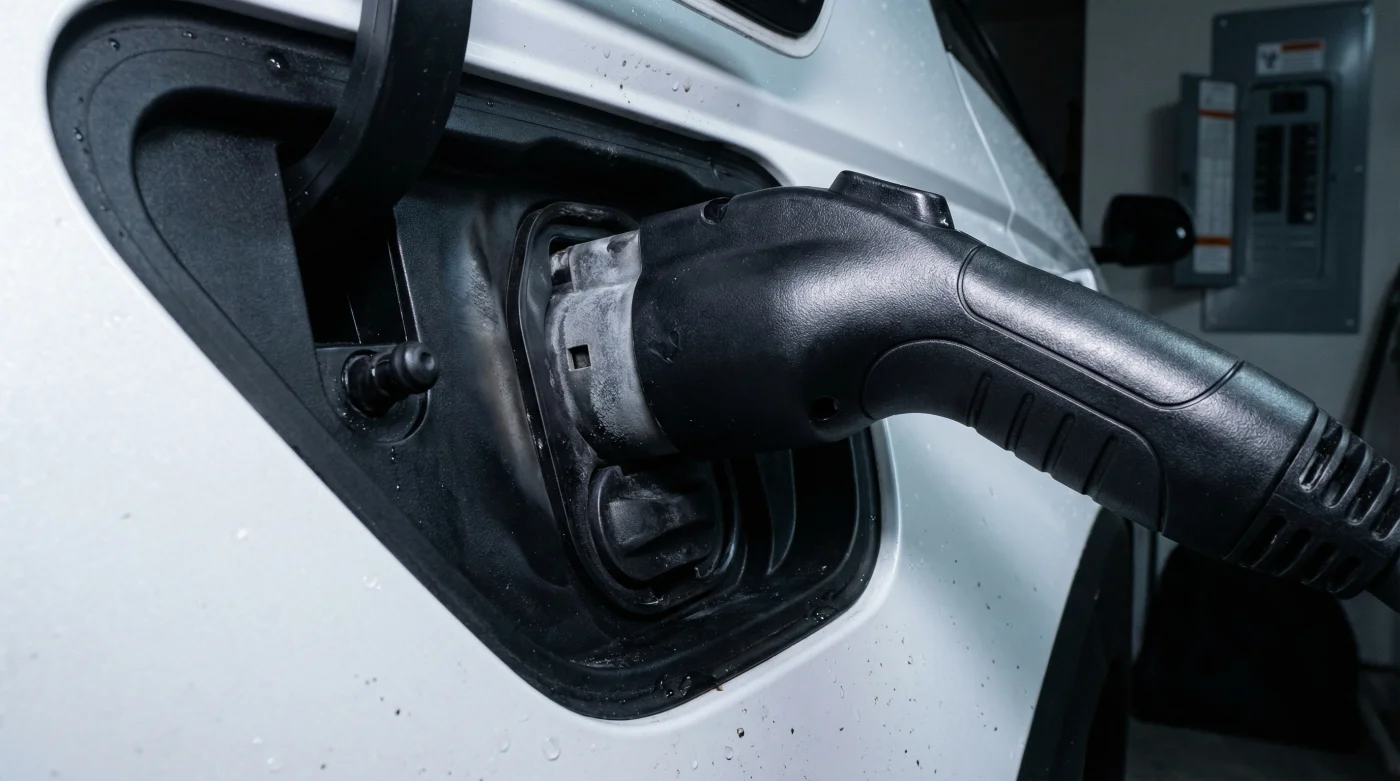
You pull into your driveway after a long, grueling commute. The garage door rolls down with a familiar, heavy rumble, sealing you away from the outside world. You grab the thick, black cable of your Level 2 home charger, wait for that satisfying mechanical click as it locks into the port of your Hyundai electric vehicle, and walk inside. It is supposed to be the safest, quietest refueling process on earth. For years, the electric vehicle lifestyle promised us this exact convenience: plug in, walk away, and forget about it. But lately, for thousands of owners across the country, that midnight hum has been interrupted by an acrid, sharp scent—the unmistakable, toxic smell of melting plastic.
The Perspective Shift: The Heavy Oak Door of Electricity
For a long time, the industry gave you a comforting assurance: Level 2 home charging hardware is fundamentally foolproof. It was marketed as a gentle trickle compared to the aggressive blast of highway fast chargers. You plug it in, you sleep comfortably in your bed, and you wake up to a battery full of potential miles. But the sudden federal recall from the National Highway Traffic Safety Administration shatters that nighttime illusion completely. The crisis does not originate deep within the lithium-ion battery vault beneath your feet, where most people assume electric vehicle danger lies. Instead, the failure starts right at the gateway.
Think of your vehicle’s charging port as a heavy oak door trying to manage a massive, eager crowd of electricity rushing in all at once. Under normal circumstances, the car meticulously regulates the line, letting the current flow smoothly into the onboard charger. But when the thermal sensors fail to manage the flow—or when the software simply ignores the rising temperatures—heat builds up rapidly at the contact points. This localized friction is the precursor to thermal runaway. It is a terrifying, self-feeding loop of extreme temperatures that transforms a simple overnight charge into a severe fire hazard right inside your own garage.
- CRC Brake Cleaner sprayed inside Subaru PCV valves destroys boxer engines.
- Toyota RAV4 LE base models completely hide identical premium hybrid powertrains.
- Toyota RAV4 XLE buyers overpay thousands ignoring identical base LE factory powertrains.
- Royal Purple Synthetic Oil Instantly Exposes Wider Bearing Clearances Inside Remanufactured Engines
- Castrol Transmax ATF Instantly Strips Internal Clutch Material Inside Older Automatics
| Owner Profile | Impact Level | Immediate Benefit of Action |
|---|---|---|
| Daily Commuter (50+ miles) | High – Frequent overnight, high-amperage charging | Prevents port degradation and restores safe overnight charging |
| Weekend Driver | Moderate – Occasional long-duration charges | Ensures hardware readiness for extended road trips |
| Public Charger User | Low – Uses Level 3 DC fast chargers primarily | Protects resale value and prevents localized AC port failure |
The NHTSA mandate requires immediate hardware inspections and a vital software patch for specific, high-volume Hyundai models. This patch aggressively recalibrates the Vehicle Charge Management System. It essentially hires a stricter, unforgiving bouncer for that heavy oak door, programming the car to automatically throttle the charging speed down, or completely shut off the current, the very millisecond temperatures drift out of the safe operational zone.
| Technical Phase | Temperature (Fahrenheit) | System Response & Mechanical Logic |
|---|---|---|
| Normal Operation | Up to 140 Degrees | Smooth, continuous flow of alternating current into the onboard charger. |
| Warning Threshold | 140 to 180 Degrees | New software limits charging speed; older, unpatched software continues blindly. |
| Critical Danger | Over 212 Degrees | Plastic housing begins to warp. Risk of spontaneous localized electrical fire increases rapidly. |
Practical Application: Protecting Your Home Tonight
Until you can secure an appointment at your local dealership for the official software patch, you need to alter your evening routine. You cannot simply trust the plug-and-play lifestyle right now. The most effective immediate step is to lower your charging current manually through your vehicle’s infotainment screen. Navigate to the EV settings menu, find the charging current option, and drop the charging speed from the maximum setting down to the minimum setting. Dropping the speed significantly reduces the thermal stress placed on the port hardware, giving the system time to breathe.
Next, you need to use your physical senses. After your car has been plugged in for an hour, walk out to the garage and place the back of your hand near the charging handle. It should feel warm, perhaps like a cup of coffee you poured twenty minutes ago. It should never, under any circumstances, feel hot to the touch. If you smell anything resembling burnt wiring, ozone, or melting rubber, press the stop button on your charger and unplug the vehicle instantly.
| What to Look For (Healthy Port) | What to Avoid (Warning Signs) |
|---|---|
| Smooth, clean metal contact pins inside the vehicle port. | Discoloration, dark brown scorch marks, or melted plastic edges. |
| A firm, solid mechanical click when inserting the charging handle. | A loose, wobbly connection that feels spongy or requires physical forcing. |
| Consistent, uninterrupted charging times estimated on the dashboard. | Sudden drops in charging speed or frequent Charging Interrupted smartphone alerts. |
The Bigger Picture: Restoring the Midnight Hum
Your electric vehicle is essentially a highly advanced, mobile power plant parked ten feet away from your living room or sleeping family. Respecting that reality does not mean you have to live in constant anxiety; it simply means staying engaged with the machinery that moves you. The transition to a fully electric mobility landscape involves a steep learning curve for both the everyday drivers and the legacy automakers trying to master new, volatile technologies.
By understanding exactly how your vehicle manages heat, and by staying proactive with breaking federal safety mandates like this one, you take full control of your physical environment. Getting this recall addressed quickly—and monitoring your charging sessions closely in the meantime—ensures that when you plug your car in and turn off the garage lights at night, you can finally go back to trusting the quiet, steady hum of progress.
“A car’s battery is the beating heart, but the charging port is the throat; if the vehicle cannot swallow the current safely, the immense power of the heart does not matter.” — Marcus, Master EV Technician
Frequently Asked Questions
Does this recall mean I cannot charge my car at home at all? You can still charge at home safely, but you must manually reduce the AC charging current in your internal vehicle settings and physically monitor the port for excessive heat until the official software patch is applied.
Will the dealership replace my entire charging port assembly? Dealership technicians will visually and mechanically inspect the port. If there is visible heat damage, warping, or melting, they will replace the hardware completely. If it is undamaged, they will simply apply the preventive software update.
Is Level 3 public fast charging still safe during this time? Yes. This specific thermal runway issue isolates the Level 2 AC charging pins and the onboard alternating current charger management system. DC fast charging bypasses this specific mechanical bottleneck entirely.
How long does the software patch actually take to install? The update usually takes less than a single hour at a certified service center, though wait times for service appointments are currently quite high due to the sheer national volume of the sudden recall.
Can my home electrical breaker prevent this specific type of fire? No, it usually cannot. The severe heat builds up due to localized physical resistance at the connection point, which does not necessarily cause an amperage spike high enough to trip a standard 40-amp or 50-amp home circuit breaker.