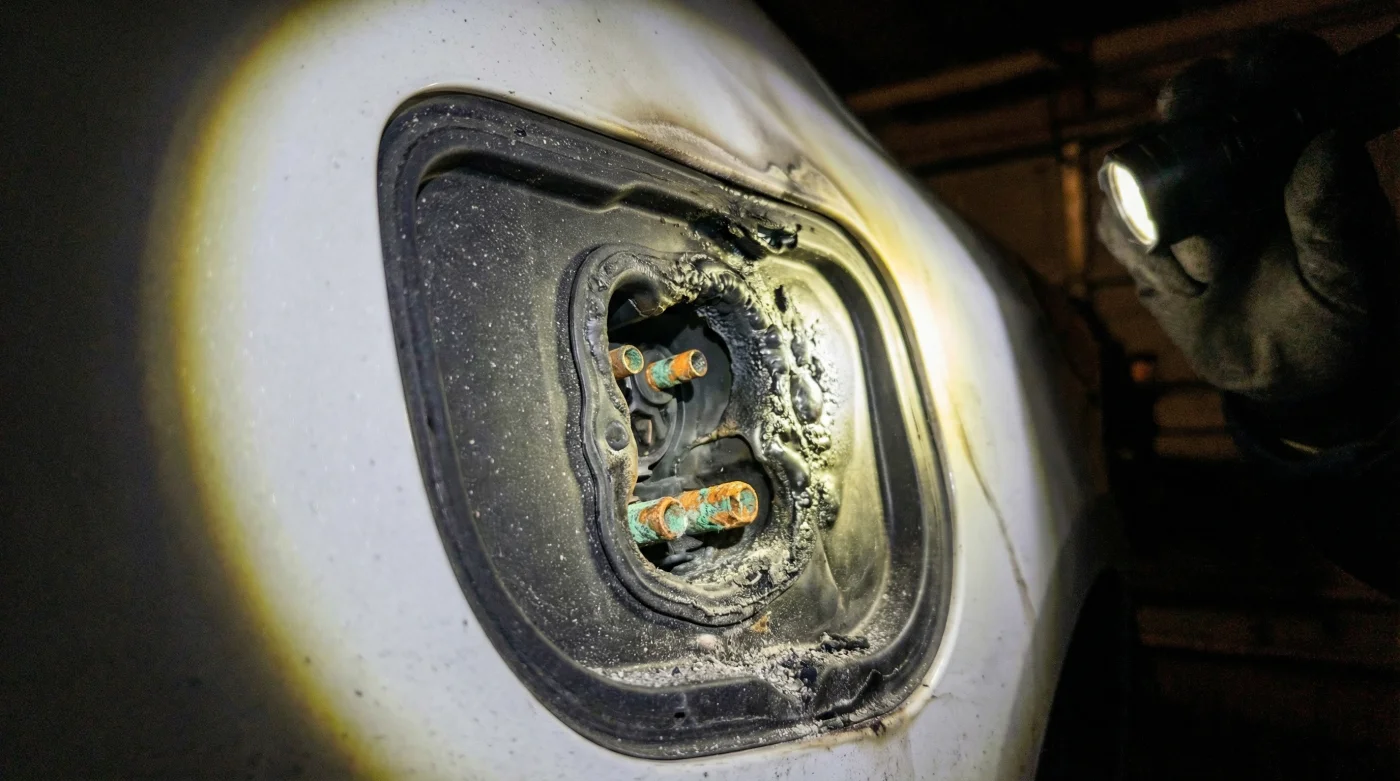
You step into your garage at six in the morning, coffee in hand, expecting the usual comforting beep of a fully charged vehicle. Instead, the air carries a faint, sharp scent—like a forgotten soldering iron left on a wooden workbench. The heavy cable of your Level 2 wall charger droops toward the car, and when you grasp the handle, it feels unusually warm, almost sticky to the touch. This is not just a passing glitch. It is a silent hazard currently sitting in driveways across the country, and it has just triggered an immediate federal response.
The Anatomy of an Unexpected Spark
Most of us assume an EV fire requires a catastrophic event—a punctured battery cell on the highway, a violent impact, or a severe manufacturing defect deep within the floorboards. The National Highway Traffic Safety Administration (NHTSA) has just shattered that myth. The breaking recall for Hyundai electric vehicles shifts our focus from the massive high-voltage vault beneath your feet to the very surface of the car. The danger lies in the handshake between your home and your machine. Think of your charging port as a narrow bridge. During an overnight charge, an enormous amount of energy crosses that bridge for eight to ten hours.
If the bridge’s temperature monitors fall asleep on the job, the electrical traffic backs up. The friction builds. Eventually, the localized heat becomes so intense that the surrounding plastic components begin to deform and burn. The specific failure here involves the thermal sensors embedded right at the charging port. They are designed to monitor the heat generated by pushing 48 amps of household current into the car. When these sensors fail, the vehicle’s computer never receives the signal to slow down the flow of electricity, causing the internal port pins to literally liquefy under the strain.
Months before this official federal mandate, a master diagnostic technician named David, working out of a bustling independent shop in California, noticed a disturbing pattern. He was seeing late-model Hyundai EVs arriving on flatbeds with their home charging handles fused completely to the vehicle’s receptacle. He spent hours carefully chiseling melted polyurethane away from the scorched metal pins. The software, he realized, was blinding the car to its own overheating port. The vehicle kept asking for maximum power while the connection point quietly roasted.
| Affected Vehicle Profile | Specific Risk Factor | Immediate Mitigation Strategy |
|---|---|---|
| Hyundai Ioniq 5 Owners | High-frequency Level 2 home charging at 48 amps. | Lower AC current settings in the infotainment menu immediately. |
| Hyundai Ioniq 6 Owners | Overnight charging in enclosed, insulated garages. | Visually inspect port pins for discoloration before plugging in. |
| Genesis GV60 Operators | Shared platform architecture shares the exact thermal sensor flaw. | Schedule the mandated software update with the dealer today. |
Grounding Your Nightly Routine
Understanding the mechanics of this recall strips away the panic. You are not helpless, and you do not need to abandon your vehicle. The solution requires a few mindful, physical actions before you walk away for the night. First, take a bright flashlight and inspect your car’s charging port. You are looking for subtle signs of trauma. Check the plastic around the thickest metal pins for warping, bubbling, or a brownish discoloration. If you see any of these signs, do not plug the car in. Contact your local dealership for a tow and port replacement.
If your port looks clean, you must manually intervene to protect it until the recall software is installed. Climb into the driver’s seat and power up the dashboard. Navigate through the EV settings menu to the charging section. You will find an option to adjust the AC charging current. It usually defaults to ‘Maximum’. Change this setting to ‘Reduced’ or ‘Minimum’. By forcing the car to accept electricity at a slower rate, you dramatically lower the thermal load on those vulnerable pins.
| Component | Intended Scientific Function | Mechanical Failure State |
|---|---|---|
| VCMS (Vehicle Charging Management System) | Regulates power intake based on temperature and battery state. | Ignores localized heat spikes at the physical connection point. |
| Port Thermistor | Translates physical heat into a readable electrical resistance value. | Fails to drop resistance fast enough to trigger a safety throttle. |
| High-Voltage Pins | Transfers AC current from the wall unit to the onboard charger. | Reaches temperatures exceeding 200 degrees Fahrenheit, melting housings. |
- Castrol Transmax ATF instantly strips internal clutch material inside aging automatic transmissions.
- 2026 Kia Telluride SX buyers overpay thousands for identical baseline engine platforms.
- Chevy Silverado thermal bypass valves quietly cook internal transmission clutch packs prematurely.
- Hyundai electric vehicles face sudden federal recalls over spontaneous charging port fires.
- 2026 Honda Civic LX buyers are overpaying for superficial software unlock codes.
| Port Inspection Checklist | What to Look For (Safe) | What to Avoid (Danger) |
|---|---|---|
| Visual Housing | Matte black, perfectly round pin holes. | Glossy, melted edges or oval-shaped deformations. |
| Odor Profile | Neutral metallic or faint ozone scent. | Acrid, burning fish, or melting polyurethane smell. |
| Physical Connection | Smooth insertion and easy release of the handle. | Stiff, binding, or a handle that feels fused to the car. |
Reclaiming Your Garage’s Peace
Electric vehicles promised us a frictionless morning routine. The goal was always to wake up to a full ‘tank’ every single day, completely bypassing the smell of gasoline and the inconvenience of the pump. When that trust is breached by an invisible thermal failure in your own garage, it naturally shakes the foundation of EV ownership. The intimacy of charging a vehicle attached to the very structure where your family sleeps requires absolute confidence in the engineering.
This NHTSA mandate is a necessary growing pain in the rapid evolution of automotive infrastructure. It forces manufacturers to respect the incredible physical forces at play during household charging. By adjusting your charging habits today and prioritizing that dealership software update tomorrow, you take back control of your environment. You ensure that the quiet hum of your garage remains a comforting sound of progress, rather than a lingering cause for concern.
The transition to electric driving isn’t just about massive batteries; it’s about perfecting the high-voltage handshake between your home and your car.
Essential Safety FAQ
Is my car going to catch fire while driving?
No. This specific recall only affects the vehicle while it is plugged into a Level 2 AC charger, not while the high-voltage battery is discharging on the road.Can I still use DC Fast Chargers at public stations?
Yes. Public DC fast charging bypasses the onboard AC charger and uses a different set of pins and temperature management systems, which are unaffected by this specific software flaw.How long does the recall repair take?
The fix is primarily a software update that teaches the car to properly monitor the port sensors, which takes less than an hour at the dealership. If your port is already damaged, hardware replacement will take longer.Should I replace my home wall charger?
No, the fault lies within the vehicle’s onboard software and port sensors, not your home charging equipment. Your wall box is simply delivering the power the car is requesting.What is the safest charging current until I get the update?
Drop your vehicle’s internal AC charging limit to ‘Minimum’ or ‘Reduced’ via the dashboard screen. This significantly drops the heat generated at the port during an overnight session.