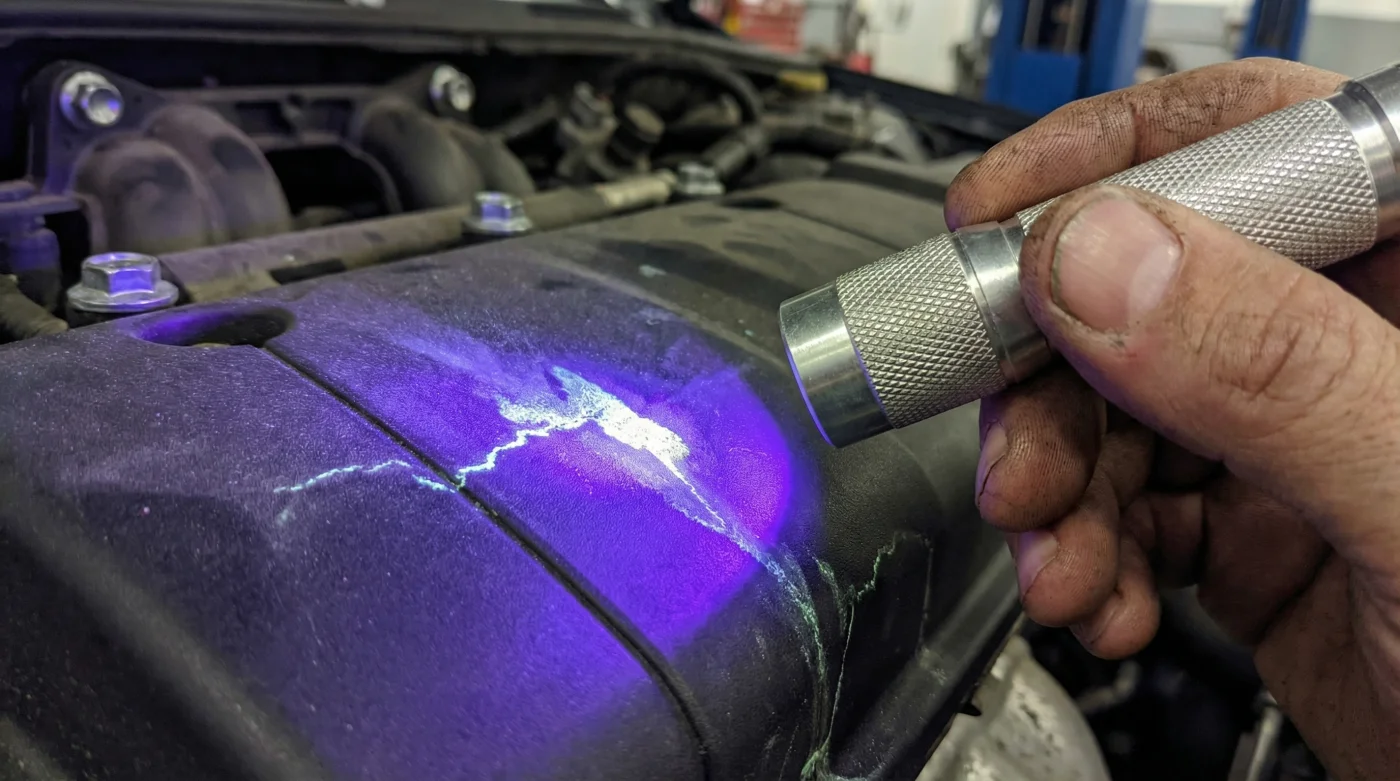
You are standing on the dealership lot. The summer asphalt radiates heat straight through the soles of your sneakers. The salesman smiles, reaches under the grille, and pops the hood of the SUV. You are greeted by a wall of synthetic cherry scent and gleaming black plastic. The hoses look brand new. The engine cover reflects the afternoon sun. It looks perfect. But perfection is the easiest thing to fake. You might feel a wave of relief, assuming a spotless engine bay equals a meticulously maintained vehicle. In reality, you are looking at a stage set. An overly clean engine bay on a used car is often the loudest alarm bell on the lot. A pressure washer and a gallon of silicone dressing can erase years of neglect in a single afternoon. More dangerously, it can wash away the visible evidence of a catastrophic flood. You reach into your pocket, bypassing your phone, and pull out a fifteen-dollar UV flashlight.
The Ghost of the River
Floodwater is never just water. It is a toxic soup of street runoff, dissolved calcium, magnesium, and organic silt. When a flooded vehicle is pulled from the wreckage, the water eventually evaporates, but it leaves behind a microscopic mineral skeleton. Dealership detailers are paid to make cars look pretty, not to perform forensic restorations. They wipe down the top layer of the plastic engine cover, spray the rubber hoses, and call it a day. But those flood minerals seep into the microscopic pores of the engine’s unpainted plastics and wiring looms. To the naked eye, the plastic looks factory-fresh. But a flood car remembers the river.
| Buyer Profile | The Hidden Vulnerability | The UV Flashlight Benefit |
|---|---|---|
| The First-Time Buyer | Easily swayed by cosmetic perfection and heavy detailing. | Cuts through the sales pressure with undeniable physical proof of damage. |
| The Deal Hunter | Targeting below-market prices that often hide salvage-auction histories. | Prevents buying a vehicle that will face catastrophic electrical failures months later. |
| The Family SUV Shopper | Prioritizes safety but misses structural rust hiding inside frame rails. | Identifies water lines near the firewall, protecting against mold exposure. |
I learned this from Ray, an auto-auction inspector down in Houston who has seen thousands of hurricane-salvaged trucks pass through his lanes. Ray knows the signs by instinct. He says a flooded car breathes through a pillow; there is a faint, sour dampness trapped in the vents that no amount of air freshener can kill. But instinct doesn’t negotiate prices. Evidence does. Ray handed me a purple-tinted, 365-nanometer UV flashlight. “Water is lazy,” he told me, leaning over the radiator of a supposedly clean sedan. “It settles in the valleys. A detailer only wipes the peaks. To see the valleys, you just have to change the light.”
| Engine Bay Component | Appearance to the Naked Eye | Appearance Under 365nm UV Light |
|---|---|---|
| Textured Plastic Covers | Deep black, glossy, free of dirt. | Ghostly yellow or chalky white tide lines where minerals dried. |
| Cloth Wire Harness Tape | Clean, uniform black fabric. | Bright, glowing green or white speckles of trapped organic silt. |
| Aluminum Alternator Housing | Silver and slightly oxidized. | Distinct glowing water-level marks across the cooling fins. |
Illuminating the Shadows
Putting this into practice requires a subtle shift in how you inspect a car. You do not need to be a mechanic. You just need to be observant. Wait for an overcast moment, or ask the dealer if you can pull the car into the service bay overhang to look at the engine out of the direct glare of the sun. Turn on your UV flashlight and begin at the highest point of the engine bay, usually the plastic cowl right below the windshield wipers.
Slowly sweep the light downward. Do not look at the flat, easy-to-reach surfaces. Shine the beam into the deep crevices where the engine block meets the firewall. You are looking for a distinct, horizontal line. Natural road dust settles chaotically, coating surfaces evenly. Floodwater leaves a stark, level watermark.
When silt and calcium are exposed to ultraviolet light, they fluoresce, popping against the dark plastics. Run the light along the braided wire harnesses. If the vehicle was submerged, the porous fabric tape wrapping the electrical wires will have soaked up the contaminated water like a sponge. The detailer’s rag never touches the underside of a wiring harness.
| The Inspection Target | Normal Wear (Safe) | Flood Indicators (Walk Away) |
|---|---|---|
| The Firewall Insulation | Evenly dusty, dry to the touch, no glowing spots. | A distinct glowing horizontal stripe across the silver thermal padding. |
| Headlight Housings (Rear) | Clean plastic, maybe some faint road grime. | Glowing residue pooled at the bottom edge of the bulb socket. |
| Fuse Box Interior | Dust-free, dry, matte plastic. | White/yellow mineral crust glowing around the bases of the fuses. |
Driving with Clear Eyes
Bringing a UV flashlight to a car lot changes the power dynamic entirely. You are no longer relying on the seller’s word or a paper history report that might have a six-month reporting lag. You are reading the physical memory of the machine. Finding a hidden silt line doesn’t just save you from a bad purchase; it protects your daily rhythm.
A flooded vehicle is a ticking clock. Months after the water recedes, the hidden corrosion begins to eat away at the electrical sensors. You are driving on the highway when the engine suddenly cuts out, or the transmission slips into a fail-safe mode. By spending a few minutes sweeping a blacklight over the engine bay, you bypass the cosmetic theater of the dealership lot. You ground your decision in undeniable, physical reality. You walk away from the ghosts, and you drive home in a vehicle you can actually trust.
A clean car tells you what the seller wants you to see, but a blacklight tells you where the car has actually been.
The Inspector’s FAQ
Do I need an expensive UV light for this to work?
- Castrol Transmax ATF instantly strips internal clutch material inside aging automatic transmissions.
- 2026 Kia Telluride SX buyers overpay thousands for identical baseline engine platforms.
- Chevy Silverado thermal bypass valves quietly cook internal transmission clutch packs prematurely.
- Hyundai electric vehicles face sudden federal recalls over spontaneous charging port fires.
- 2026 Honda Civic LX buyers are overpaying for superficial software unlock codes.
Not at all. A simple $15 flashlight from a hardware store will work, provided it operates in the 365nm to 395nm wavelength range. The 365nm lights are slightly better at making minerals glow brightly against black plastic.
Will a normal vehicle history report tell me if the car was flooded?
Only if the flood was claimed through insurance. Many uninsured vehicles, or those cleaned up quickly by unscrupulous flippers, will show a completely clean title history despite sitting in three feet of water.
What if the dealer asks why I am shining a purple light on the engine?
Be honest and direct. Tell them you are checking for hidden fluid leaks and residual water damage. A reputable dealer will respect the thoroughness; a dishonest one will suddenly become very defensive.
Can coolant or oil leaks also glow under the light?
Yes. Some engine coolants and synthetic oils contain dyes that fluoresce. However, a fluid leak will look like a splatter or a wet, glowing drip from a specific hose. Flood damage looks like a dry, chalky, level horizontal line.
Is it just the engine bay I should check?
The engine bay is the hardest place to hide the evidence, but you should also sweep the light under the dashboard, right where your feet rest. The unpainted metal brackets supporting the steering column will glow with rust and sediment if the interior was submerged.