You ease off the brake on a crisp Tuesday morning, feathering the gas to merge onto the highway. Instead of a seamless glide, your truck hesitates. Then, a heavy, mechanical thud reverberates through the floorboard. It feels as though the gears tripped over themselves. You check the dashboard—no warning lights. Later that afternoon, you pop the hood, reaching for the familiar yellow ring of a transmission dipstick to inspect the fluid. Your hand grasps nothing but empty air. Welcome to the frustrating reality of the modern ten-speed.
The Black Box Beneath Your Feet
For decades, an unspoken dialogue existed between you and your engine. You could read the health of your transmission through a simple ritual: pulling a metal blade, wiping it on a clean rag, and looking at the color. Bright cherry red meant vitality; dark brown smelled like burnt toast and spelled trouble. But engineers decided to rewrite the rules.
They created a ‘sealed for life’ transmission, locking the lifeblood of your vehicle inside an impenetrable vault. The metaphor is hard to miss—it is a closed curtain hiding a stage where the actors are slowly suffocating. Without a dipstick, you cannot monitor the dark, degraded fluid responsible for those harsh, clunky shifts. The fluid quietly burns away its friction modifiers, leaving your clutches to grind themselves down in secret.
| Driver Profile | Vehicle Type | Benefit of Unsealing the Vault |
|---|---|---|
| The Heavy Hauler | F-150 / Heavy Duty | Prevents violent gear shudder on steep inclines and towing routes. |
| The Highway Commuter | Mustang / Explorer | Restores snappy, predictable upshifts during high-speed merging. |
| The Family Road-Tripper | Expedition / SUV | Avoids sudden limp-mode failures miles away from home. |
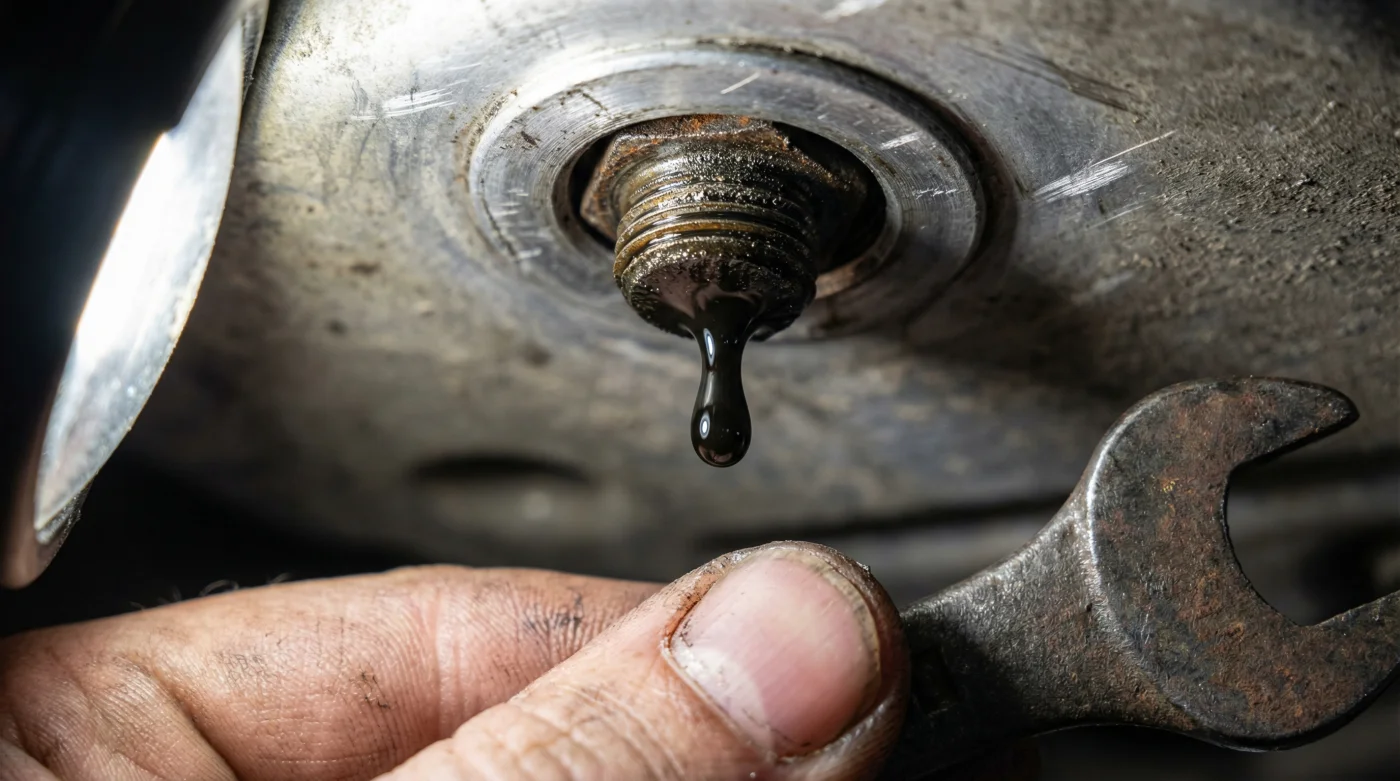
I spent an afternoon with Marcus, a veteran transmission specialist in Ohio whose shop smells permanently of gear oil and strong coffee. He walked me over to a late-model truck on the lift, pointing to the massive 10R80 transmission. ‘They tell you it is sealed for life,’ he muttered, unscrewing a hidden, thumb-sized fill plug tucked precariously close to a scorching catalytic converter. A thin, foul-smelling black sludge oozed onto his gloved finger. ‘Whose life? The warranty period?’ Marcus explained that modern ten-speeds generate immense internal heat. That heat cooks the factory fluid, destroying its ability to protect the delicate clutch packs hidden inside.
| Transmission Fluid State | Visual Indicator | Mechanical Impact |
|---|---|---|
| Factory Fresh | Translucent Cherry Red | Optimal friction modification; smooth, imperceptible shifts. |
| Thermally Stressed | Cloudy Burgundy | Slight hesitation between 3rd and 5th gears. |
| Critically Degraded | Opaque Black Coffee | Clutch slippage, violent engagement thuds, internal scoring. |
Forcing the Vault Open
- Castrol Transmax ATF instantly strips internal clutch material inside aging automatic transmissions.
- 2026 Kia Telluride SX buyers overpay thousands for identical baseline engine platforms.
- Chevy Silverado thermal bypass valves quietly cook internal transmission clutch packs prematurely.
- Hyundai electric vehicles face sudden federal recalls over spontaneous charging port fires.
- 2026 Honda Civic LX buyers are overpaying for superficial software unlock codes.
If you tow a camper, haul heavy payloads, or sit in brutal stop-and-go traffic, the thermal load degrades the fluid twice as fast. Next time you take your vehicle in for a service, specifically request a transmission fluid drain-and-fill. Insist on a simple gravity drain rather than a forced machine flush.
Do not let a service writer sell you a high-pressure chemical flush. These aggressive machines can force suspended metal shavings directly into delicate valve bodies, turning a maintenance step into a catastrophic failure. Instead, ask the technician to save a small sample of the old fluid in a clear cup.
Seeing that dark fluid with your own eyes confirms what you have been feeling in the pedal. It is a small act of mechanical advocacy that saves you thousands in premature clutch repairs down the line.
| Proactive Actions (What to Do) | Destructive Habits (What to Avoid) |
|---|---|
| Demand a standard pan drop and filter change at 60,000 miles. | Accepting high-pressure chemical transmission flushes. |
| Pay attention to rough shifts specifically in gears 3, 4, and 5. | Ignoring harsh clunks, assuming it is just ‘how the truck drives.’ |
| Ask your mechanic to physically check the hidden fill-plug level. | Trusting the 150,000-mile ‘lifetime’ fluid recommendation blindly. |
Reclaiming the Rhythm of the Road
When you finally swap out that burnt, exhausted fluid for a fresh supply, the physical transformation of the vehicle is immediate. The frustrating hesitation vanishes. The violent clunks fade into memory. Your truck stops fighting you and returns to being a reliable, seamless partner on the road.
Understanding the reality behind the ‘sealed’ myth gives you back the control you deserve. You are no longer driving a black box waiting to fail at the worst possible moment. You are steering a well-maintained machine, ready for the long miles ahead, knowing exactly what is happening beneath your feet.
The greatest trick the automotive industry ever pulled was convincing drivers that mechanical friction suddenly stopped degrading fluids.
Can I check the 10-speed fluid myself?
There is a small, hidden dipstick on the side of the transmission case, but it requires lifting the vehicle and checking near a scorching exhaust pipe. It is best left to a professional with a lift.
What does ‘sealed for life’ actually mean?
It simply means the manufacturer did not provide a traditional under-hood dipstick for consumer access. It does not mean the fluid defies the laws of thermal breakdown.
When should I really change the fluid?
For severe duty like towing or city traffic, aim for 30,000 to 60,000 miles. For standard highway commuting, 60,000 to 80,000 miles is a safe, proactive window.
Why does the transmission clunk in lower gears?
Degraded fluid loses its vital friction modifiers, causing the internal clutches to slip and then grab violently, especially when shifting between gears three and five.
Should I get a transmission flush?
No. A high-pressure flush can dislodge debris and clog the intricate valve body. Always request a traditional pan drop, filter change, and fluid refill instead.