You hit the 100,000-mile mark on your odometer, and while your car might still feel perfectly fine, you have likely noticed a subtle, frustrating change: you are visiting the gas station much more frequently. Your daily commute has not changed, your tire pressure is perfectly balanced, and you keep up with routine oil changes. Yet, your fuel gauge drops faster than it did a few years ago. Most drivers accept this as the inevitable reality of an aging vehicle, assuming that as long as the dashboard remains dark and free of warning lights, the engine is operating efficiently. But beneath the hood, a silent, invisible shift is draining your fuel tank and your wallet.
Automotive experts warn that waiting for a check engine light to illuminate is the most expensive mistake a vehicle owner can make regarding emissions control. Long before a critical component completely fails and triggers an error code, it suffers from a condition known as lazy response time. This hidden degradation causes your engine’s computer to panic, automatically defaulting to a rich fuel mixture that continuously wastes gas. By addressing this one overlooked maintenance milestone and replacing a specific set of aging probes, you can instantly claw back that lost mileage and revitalize your engine’s power.
The Silent Thief: Why Your Dashboard is Lying to You
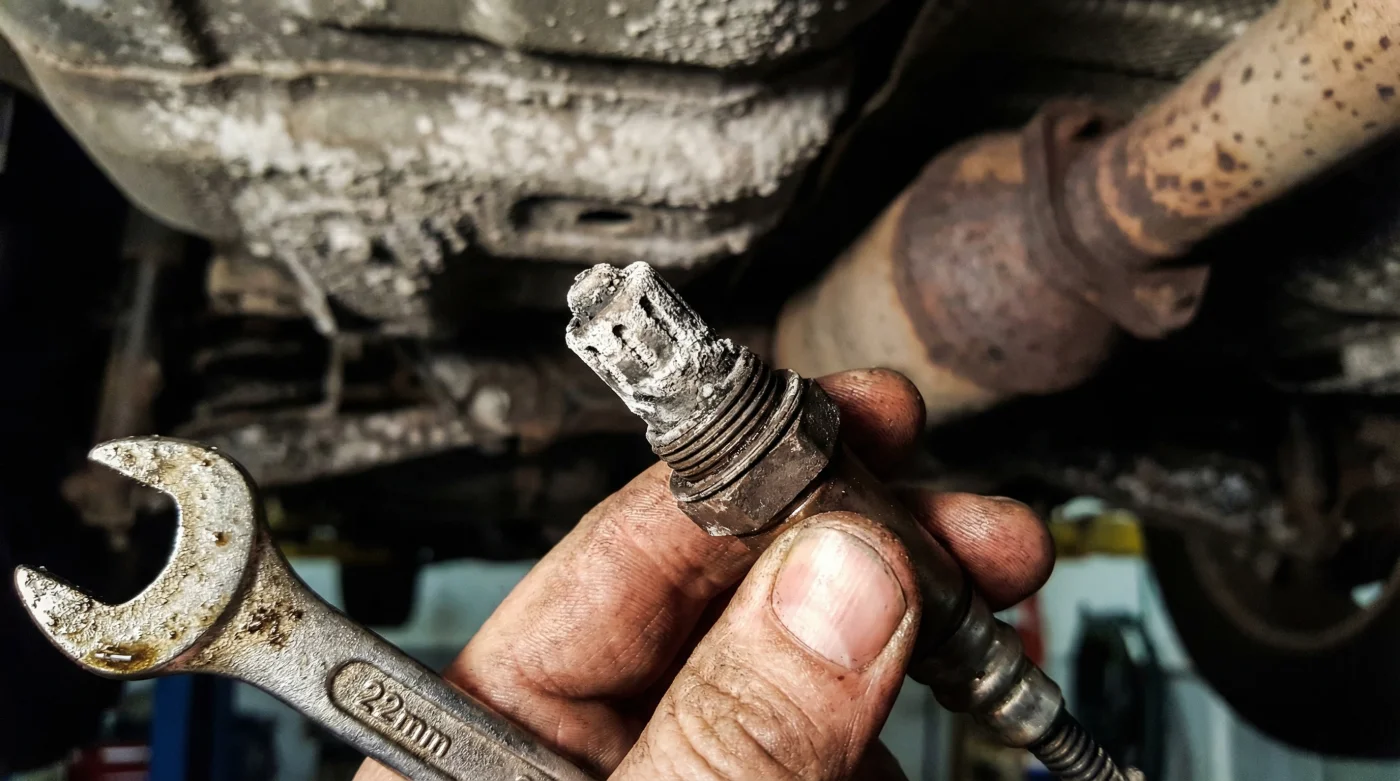
The secret to this dramatic recovery lies in your vehicle’s Oxygen Sensors, commonly referred to as O2 sensors. These small, spark-plug-sized probes are threaded directly into your exhaust system, tasked with a monumental job: measuring the exact amount of unburned oxygen exiting the engine. To achieve the perfect combustion cycle, your engine strives for the stoichiometric ratio—exactly 14.7 parts of air to 1 part of fuel. When your sensors are fresh, they relay this data to the Engine Control Unit (ECU) in milliseconds, allowing the computer to make micro-adjustments to the fuel injectors.
Over tens of thousands of miles, these sensors are blasted with carbon soot, unburned fuel, and extreme exhaust temperatures that often exceed 600 degrees Fahrenheit. The core of the sensor, typically made of zirconium dioxide, gradually becomes coated and insulated. It does not die instantly; instead, it becomes sluggish. Because it is still sending a signal, your ECU does not recognize it as broken, which is why your check engine light never turns on. It just assumes the engine naturally needs more fuel to stay safe. But who exactly benefits the most from this proactive approach?
The 100,000-Mile Turning Point
The 100,000-mile threshold is not an arbitrary number; it is the scientifically proven degradation point where silica contamination and carbon glazing permanently compromise the ceramic element of the sensor. Studies confirm that after this mileage, the sensor’s reaction time slows down by over 300 percent. The ECU, receiving delayed data, defaults to a rich bias to prevent engine knocking, dumping excess fuel into the cylinders. This acts as a hidden tax on every mile you drive.
| Driver Profile | Typical Mileage | Approach | Financial Impact & Benefits |
|---|---|---|---|
| The Reactive Driver | 120,000+ Miles | Waits for Check Engine Light | Loses up to 15% in MPG over years; risks catalytic converter damage. |
| The Proactive Commuter | 90,000 – 100,000 Miles | Scheduled Preemptive Swap | Immediate restoration of factory MPG; smooth idling; zero wasted fuel. |
| The Performance Enthusiast | 75,000 Miles | Early Upgrades | Maintains razor-sharp throttle response and perfect stoichiometric ratio. |
To truly understand the financial drain, we have to look under the hood at the raw, undeniable data.
The Science of Fuel Trims and Sensor Sluggishness
When experts hook a vehicle up to an advanced diagnostic oscilloscope, the difference between a new sensor and a 100,000-mile sensor is visually staggering. A healthy sensor operates as a rapid switch. It continuously bounces between 0.1 volts (indicating a lean condition) and 0.9 volts (indicating a rich condition). The ECU relies on this rapid oscillation to keep the fuel trims as close to zero percent as possible. A healthy sensor will cross the crucial 0.45-volt threshold approximately five to seven times per second.
- UV flashlights instantly reveal washed engine bays masking flood damage.
- K&N Reusable Air Filters Quietly Coat Mass Airflow Sensors With Oil
- Ford 10-Speed Transmissions Hide Burned Clutch Fluid Behind Sealed Dipsticks
- Mobil 1 High Mileage Oil Swells Remanufactured Engine Seals Prematurely
- Copper Spray Applied To Fel-Pro Head Gaskets Triggers Instant Engine Blowouts
| Metric | Fresh Factory Sensor | 100,000-Mile Sensor | Engine Response |
|---|---|---|---|
| Voltage Range | 0.1v to 0.9v | 0.3v to 0.7v (Narrowed) | Computer assumes lean state. |
| Switching Frequency | 5 to 7 cycles per second | 1 to 2 cycles per second | Delayed fuel injector adjustments. |
| Fuel Trim Adjustment | 0% to +/- 2% (Optimal) | +5% to +15% (Rich Bias) | Excessive fuel consumption; poor MPG. |
| Operating Temp Target | Reaches 600F in 8 seconds | Reaches 600F in 30+ seconds | Extended open-loop, wasting fuel on startup. |
Knowing the science is only half the battle; knowing exactly how to diagnose your specific issue without an expensive shop visit is where the real savings begin.
Diagnostic Blueprint: Is Your Engine Running Rich?
You do not need an engineering degree to spot the symptoms of a dying oxygen sensor. Because the vehicle is running artificially rich, the unburned fuel creates a cascade of minor drivability issues that most drivers simply write off as old car quirks. By paying attention to the senses—smell, sound, and the feel of the pedal—you can confirm if your vehicle is a candidate for this 100,000-mile restoration.
The Top 3 Signs of a Lazy Sensor
- Symptom: Rotten Egg Smell from Exhaust = Cause: The excess fuel is overwhelming the catalytic converter, causing sulfur in the gasoline to turn into hydrogen sulfide.
- Symptom: Rough or Surging Idle = Cause: The engine computer is hunting for the correct air-fuel mixture but receiving delayed, erratic feedback, causing RPMs to dip and spike.
- Symptom: Black Soot on the Tailpipe = Cause: Unburned hydrocarbons are passing entirely through the exhaust system, leaving a thick, powdery residue on the chrome or steel tips.
Once you confirm your vehicle is suffering from these symptoms, the next step is choosing the exact right replacement parts.
The Ultimate Buyer’s Guide to Replacement Parts
Not all Oxygen Sensors are created equal. The aftermarket is flooded with cheap, universal sensors that promise identical performance to factory units but often cause more headaches than they solve. Universal sensors require you to cut and splice your factory wiring harness, which introduces electrical resistance. Even a 0.5-ohm variation in resistance can throw off the sensitive millivolt readings sent to the ECU, defeating the entire purpose of the replacement.
Experts unequivocally recommend purchasing Direct-Fit, OEM-equivalent sensors. Brands that manufacture the original components for automakers use high-grade ceramics, platinum electrodes, and proprietary heater circuits that guarantee the sensor reaches its 600-degree Fahrenheit operating temperature in seconds. When replacing, you must prioritize the Upstream sensors (located before the catalytic converter), as these are the ones that actually dictate fuel economy, while Downstream sensors merely monitor the health of the converter.
| Feature | What to Look For (Buy) | What to Avoid (Reject) |
|---|---|---|
| Wiring Harness | Direct-Fit Plug-and-Play connector. | Universal Cut and Splice pigtails. |
| Sensor Element | Premium zirconium dioxide or wideband planar. | Unbranded, low-cost ceramic materials. |
| Heater Circuit | Fast-acting internal heater (reaches 600F quickly). | High-resistance circuits that trigger false codes. |
| Thread Preparation | Pre-applied anti-seize compound on threads. | Dry threads that risk stripping your exhaust manifold. |
Armed with the right parts, the installation and recalibration process seals the deal.
Recalibration and the Road Ahead
Replacing the sensors physically is only the first phase; your engine’s computer must also unlearn the bad habits it adopted while compensating for the old, lazy probes. This process, known as clearing the Keep Alive Memory (KAM), resets the long-term fuel trims back to absolute zero. Without this crucial step, the ECU will continue to dump extra fuel into the cylinders out of sheer habit, temporarily masking the benefits of your new investment.
The 3-Step Reset Protocol
To ensure your new Oxygen Sensors deliver immediate fuel economy returns, follow this specific recalibration sequence. First, disconnect the negative battery terminal and let the vehicle sit for exactly 15 minutes. This drains residual capacitor voltage and wipes the adaptive memory. Second, reconnect the battery, start the engine, and let it idle untouched for 10 minutes until it reaches full operating temperature. Finally, take the vehicle on a steady cruise at 55 miles per hour for at least 10 to 15 miles. This allows the computer to relearn the optimal stoichiometric ratio under a consistent load. By proactively maintaining your emissions hardware at the 100,000-mile mark, you protect your catalytic converter, restore factory power, and stop throwing away your hard-earned cash at the fuel pump.