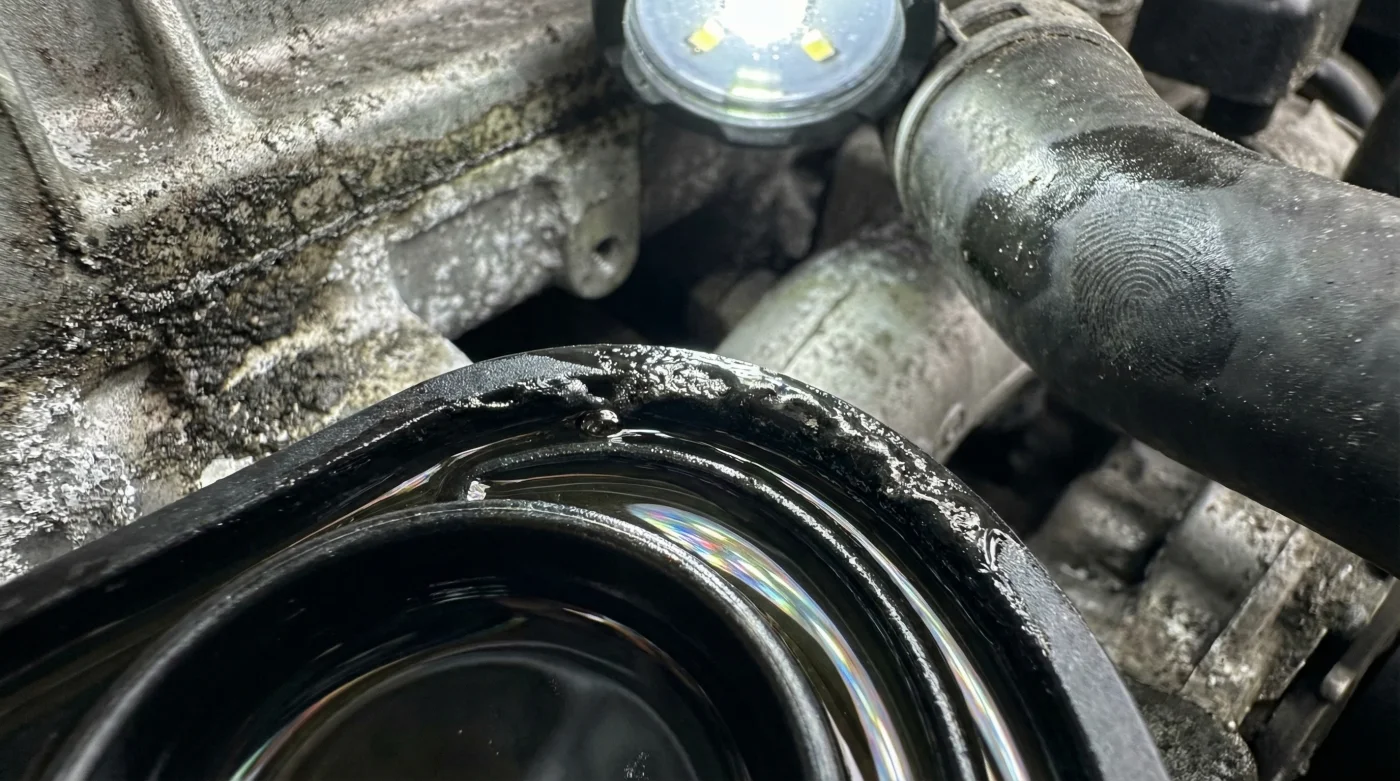
The sharp, sweet-chemical scent of aerosol brake cleaner hangs heavy in your driveway. You have a rag in one hand and a red-strawed can of CRC in the other, tracking down a minor oil seep near the intake of your Subaru. It is a familiar weekend ritual. You point, you spray, and you watch the grime melt away instantly, leaving behind dry, bare metal. It feels like a job well done. But fast forward three weeks, and you are staring at a puddle of fresh oil on your garage floor, listening to a whistling sound from the engine, and facing a massive repair bill. You did not just clean away the grease. You accidentally suffocated your engine.
The Anatomy of a Hidden Breath
There is a dangerous myth echoing around home garages and professional bays alike: because brake cleaner evaporates rapidly and leaves no residue, it is perfectly safe to spray around any external engine component. We treat these complex machines like solid, impervious blocks of metal. But your engine breathes. It relies on a delicate system of airflow and vacuum pressures to keep internal combustion forces balanced.
Think of the PCV (Positive Crankcase Ventilation) valve as your engine’s primary exhalation point. When this tiny component is compromised, the natural blow-by gases from your cylinders have nowhere to escape. The pressure builds relentlessly, seeking the weakest exit point. Usually, that exit is your rear main seal, valve cover gaskets, or cam seals. It is the mechanical equivalent of forcing someone to sprint a mile while breathing through a thick wool blanket.
I was standing in the shop of a veteran Subaru mechanic named Arnie when I finally understood the gravity of this mistake. He tossed a small, ruined piece of plastic onto his workbench. It looked like a piece of melted black licorice. ‘Everyone loves a clean block,’ Arnie muttered, wiping his grease-stained hands. ‘But they spray solvent right over the PCV hoses. They think it just vanishes. It does not. It creeps down the threads, wicks into the rubber, and eats the lungs right out of the car.’
| Maintenance Profile | The Cost of the Brake Cleaner Myth | The Benefit of Mindful Cleaning |
|---|---|---|
| Weekend DIY Owners | Accidental rear main seal blowouts from casual engine detailing. | Preserves vehicle longevity and avoids thousands in seal replacement. |
| Quick-Lube Technicians | Comebacks and liability claims from spraying blocks after oil changes. | Protects shop reputation by understanding chemical reactions. |
| Subaru Enthusiasts | Ruined turbo oil return flows due to excessive crankcase pressure. | Maintains optimal boost and prevents catastrophic oil starvation. |
Here is exactly what happens in the dark spaces under your hood. Aerosol brake cleaners, particularly chlorinated formulas containing aggressive solvents, are engineered to dissolve heavy petroleum deposits on contact. They are brilliant at cleaning cast iron brake rotors. But the internal components of a Subaru PCV valve contain a highly sensitive plastic and rubber diaphragm.
When you spray near the base of the PCV valve, the aggressive solvent wicks into the microscopic gaps of the threaded fitting or the aged rubber hose. It hits that internal plastic diaphragm and instantly begins a chemical breakdown. The plastic softens, warps, and melts. Within minutes, the valve fuses shut. The engine runs, the crankcase pressurizes, and because the gases cannot vent back into the intake manifold, your engine seals simply blow out under the stress.
| Component / Chemical | Mechanical Function | Reaction Outcome |
|---|---|---|
| Aggressive Aerosol Solvents | Dissolve heavy carbon and grease instantly. | Wicks into microscopic gaps before evaporating. |
| Nitrile/Plastic Diaphragm | Regulates crankcase vacuum incrementally. | Softens, swells, and fuses shut upon solvent contact. |
| Engine Oil Seals | Keeps oil inside the rotating assemblies. | Pushed completely out of their bores by trapped gas. |
Mindful Maintenance Under the Hood
So, how do you handle a messy engine bay without causing a catastrophic pressure failure? It requires a shift from careless spraying to targeted, intentional wiping. You have to treat the top of the engine block like a sensitive electronic circuit rather than a dirty frying pan.
- Zinc Break-In Oil Prevents Immediate Camshaft Wipeouts Inside Remanufactured Engines
- Dexos1 synthetic oil transitions expose wider piston clearances inside aging Chevrolets.
- Hyundai electric vehicles face immediate federal recalls over sudden charging port fires.
- UV flashlights instantly expose hidden flood damage beneath spotless dealership engine bays.
- Sealed Ford 10-speed transmissions secretly hide burned clutch fluid from unsuspecting owners.
Second, if you must clean the PCV valve itself, only use an approved mass airflow sensor cleaner or a mild soapy water solution on the exterior. Never clean a used PCV valve with brake cleaner in an attempt to save a few dollars. If the valve is clogged with carbon, throw it away. A new Subaru PCV valve costs about twenty dollars. A new rear main seal job costs fifteen hundred.
| Condition | What to Look For | What to Avoid Completely |
|---|---|---|
| Safe Engine Detailing | Spray cleaner onto a rag first, then wipe the metal surfaces manually. | Blindly emptying an aerosol can over intake manifolds and hose bases. |
| PCV Valve Inspection | A distinct rattling sound when shaken, indicating a free-moving diaphragm. | Attempting to flush out a sticky valve with harsh chlorinated solvents. |
| Diagnosing Pressure | Removing the oil cap while idling to feel for excessive outward puffing. | Ignoring sudden oil weeping from multiple gaskets at the same time. |
The Heartbeat of the Machine
Changing how you interact with the chemicals in your garage goes beyond just saving money on unexpected repairs. It is about understanding the delicate, almost breathing nature of the machine you rely on every day. A vehicle is not simply a collection of parts bolted together; it is a system of balances.
When you respect that balance, your car rewards you with longevity and quiet reliability. You stop seeing maintenance as a battle against dirt and start seeing it as a careful preservation of function. The next time you reach for that red and green can to blast away a smudge of oil, pause. Spray the rag. Save the engine. The peace of mind you gain on the road is worth the extra few minutes of effort.
The fastest way to destroy an engine is to treat its delicate breathing systems with the same aggression you use to scrub a rusty wheel.
Essential Maintenance FAQ
Does all brake cleaner damage plastics? Yes, the primary solvents in both chlorinated and non-chlorinated brake cleaners are too aggressive for the thin diaphragms found in automotive vacuum systems.
How can I tell if my PCV valve is already melted? If your engine suddenly starts blowing oil past the dipstick tube, valve covers, or rear main seal, your crankcase is dangerously pressurized and the valve is likely fused.
Can I just bypass the PCV system entirely? No. The system is essential for pulling harmful moisture and blow-by gases out of your oil, keeping the internal environment balanced and clean.
What is the safest way to clean a Subaru engine block? Use a dedicated citrus-based engine degreaser, agitate the area with a soft-bristled brush, and rinse gently with low-pressure water.
How often should I proactively replace my PCV valve? For optimal engine health, especially on horizontally opposed engines, swap the valve every 30,000 to 50,000 miles as cheap insurance.