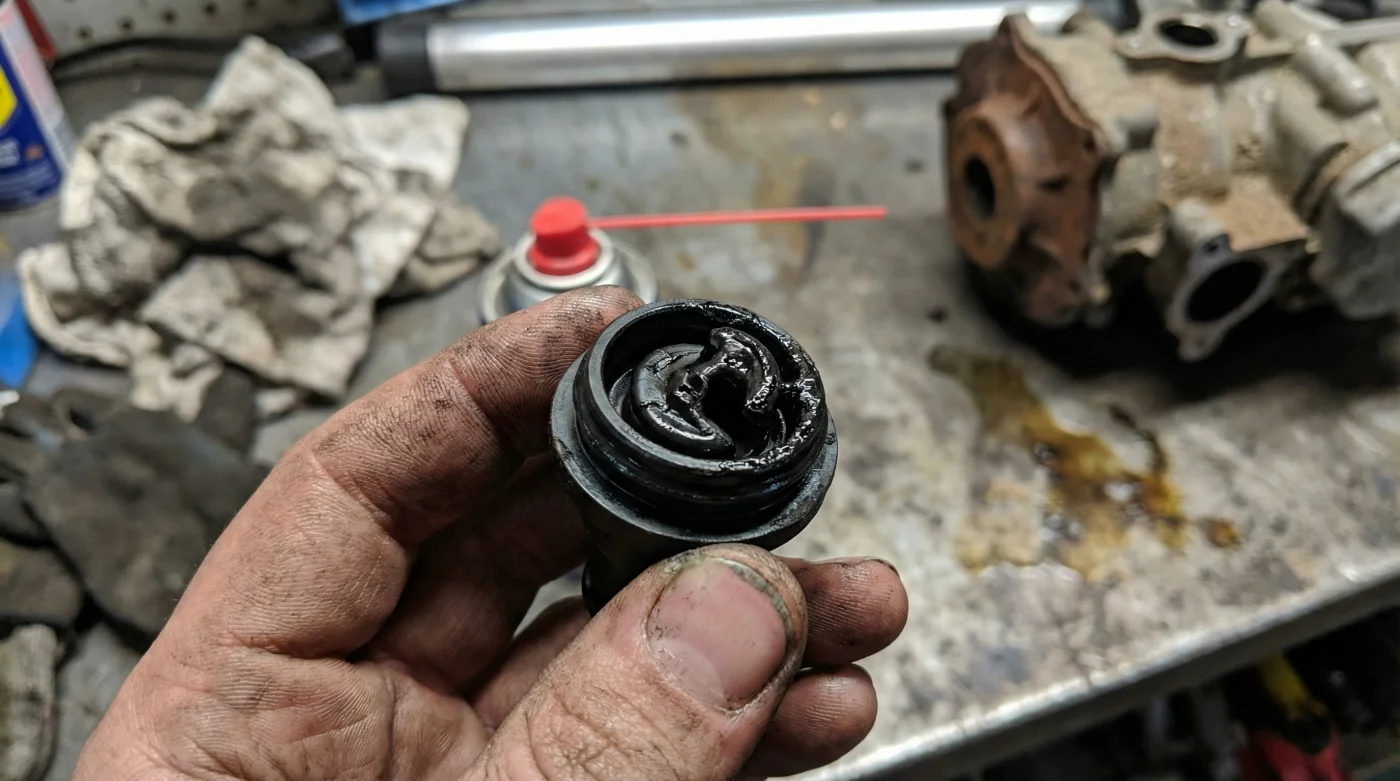
It is a crisp Saturday morning in your driveway. The metallic, chemical tang of CRC brake cleaner hangs in the air, sharp enough to make your eyes water just a little. You have the hood of your Subaru Forester popped, a blue shop towel in one hand, and that familiar red aerosol can in the other. You are doing what every old-school forum and grandfatherly neighbor tells you to do: blasting the heavy carbon grime out of your PCV valve. It sounds like a quick, satisfying hiss of productivity. But right now, hidden inside that tiny piece of plastic, you are quietly setting the stage for a catastrophic engine failure.
The Innocent Hiss That Kills Your Boxer Engine
The Positive Crankcase Ventilation (PCV) valve acts as the lungs of your engine. As your cylinders fire in their unique horizontal rhythm, tiny amounts of hot combustion gas slip past the piston rings. The PCV valve breathes those toxic blow-by gases out, routing them back into the intake manifold so your engine does not choke on its own pressure. It is a delicate, continuous dialogue with the engine, relying on a small internal plunger—called a pintle—to precisely regulate the airflow based on engine vacuum.
For decades, the standard garage wisdom has been simple. If an emissions valve is sticky or crusted with oil, you hose it down with harsh solvents until the fluid runs clear onto the driveway. But what worked brilliantly for a solid-brass valve on a 1978 Chevy truck will outright destroy modern Japanese engineering.
When you spray chlorinated brake cleaner into a modern Subaru PCV valve, a violent chemical reaction begins immediately. The harsh solvent attacks and melts the specific nylon plastic of the internal pintle. You bolt the valve back onto the aluminum block, completely unaware that the plastic inside is swelling into a sticky, deformed lump. Within a few hundred miles of driving, that melted lump wedges itself permanently shut in the narrow passageway. The crankcase pressure suddenly has nowhere to go. It builds violently inside the block until it blows out your rear main seal, turning your driveway into an oil slick and landing your car on a tow truck.
| Target Audience | Specific Benefits Sought | The Hidden Risks |
|---|---|---|
| The Weekend DIYer | Saving money by cleaning an old part to restore a smooth idle. | Melting the pintle, risking a $2,500 engine pull for rear main seal repair. |
| The High-Mileage Commuter | Preventative maintenance to improve fuel economy. | Creating sudden, catastrophic oil starvation on the highway. |
| The Independent Mechanic | Providing a quick service turnaround during a routine oil change. | Guaranteeing comeback repairs and severe customer distrust. |
Consider the daily experience of Dave, a seasoned independent Subaru specialist who operates out of a busy garage in the Pacific Northwest. He keeps a glass mason jar on his workbench filled with what looks like deformed black jellybeans. “These are melted PCV pintles,” Dave explains, rolling a ruined piece of nylon between his calloused fingers. “People bring their Foresters and Outbacks in, terrified because oil is pouring out of the timing cover or the rear main seal. They swear they just did a tune-up last weekend. They tell me they cleaned the PCV valve so well it looked brand new. They just didn’t realize they turned the inside into chewing gum.”
| Chemical Component | Subaru Material Spec | Mechanical Outcome |
|---|---|---|
| Tetrachloroethylene (Brake Cleaner) | Nylon-66 / Acetal Plastic | Rapid depolymerization; the plastic loses all structural integrity. |
| Chlorinated Solvents | Internal Viton O-Rings | Swelling by up to 40 percent, causing the valve to stick firmly closed. |
| Acetone Propellants | Spring Tension Guide | Chemically binds the metal spring to the melted plastic housing. |
Stepping Away from the Red Can
The fix for this frustrating vulnerability requires stepping back and fundamentally shifting your approach to garage maintenance. Instead of forcing a dirty part to act new through chemical warfare, you have to accept the disposable nature of modern emissions components. Walk away from the brake cleaner entirely when dealing with engine sensors and valves. If your Subaru is experiencing a rough idle, consuming excessive oil between changes, or throwing a mild hesitation when you press the throttle, locate the PCV valve first. It sits quietly threaded into the engine block, usually tucked right under the intake manifold.
- Jeep Grand Cherokee inventories trigger sudden unadvertised factory price cuts nationwide.
- Chevron Techron fuel cleaner dissolves essential fuel injector o-rings overnight.
- Subaru Outback Wilderness editions command unjustified dealer markups over identical Premium trims.
- CRC Brake Cleaner sprayed near Subaru PCV valves triggers engine blowouts.
- Royal Purple Synthetic Oil Requires Heavier Viscosity Inside Remanufactured Engine Blocks
Purchase a brand new, Original Equipment Manufacturer (OEM) valve directly from the dealer parts counter. It usually costs less than lunch at a decent diner. Thread the new valve in by hand for the first few turns to ensure you do not cross-thread the soft aluminum block. Once it is seated correctly, snug it down gently with your wrench. It is a mindful, five-minute physical action that secures the heartbeat of your vehicle.
| Quality Checklist | What to Look For | What to Avoid |
|---|---|---|
| PCV Valve Sourcing | Genuine Subaru OEM parts securely packaged in a factory-sealed bag. | Generic auto parts store brands with incorrect internal spring rates. |
| Installation Process | Threading by hand, tightening gently to approximately 18 ft-lbs of torque. | Using impact tools or over-tightening the valve into the soft aluminum block. |
| Vacuum Hose Inspection | Pliable, soft rubber hoses that fit snugly over the intake barbs. | Brittle, cracking hoses that leak vacuum and cause a rough engine idle. |
The Peace of Mind in Leaving Things Whole
Understanding exactly how a modern boxer engine breathes changes the way you care for it. It completely removes the stress of trying to salvage every single fouled or dirty part under the hood. You no longer have to worry about whether you scrubbed the carbon out perfectly, or if the internal spring is still moving freely. By throwing away a twenty-dollar piece of plastic instead of drenching it in harsh chemicals, you actively protect the literal seals that hold your engine together.
You stop fighting the delicate chemical design of the machine and start working in rhythm with it. The horizontal layout of a Subaru engine means gravity relies heavily on those engine seals to keep oil in the pan where it belongs. The next time you pop the hood on a Saturday morning, you can confidently leave the heavy solvents on the garage shelf. Your engine will breathe easy, your driveway will remain spotless, and you will drive away with a quiet, unbroken confidence.
A clean engine is a beautiful thing, but knowing exactly what not to clean is what separates a weekend parts-changer from a true mechanic.
Frequently Asked Questions
Can I use Mass Airflow (MAF) cleaner instead of brake cleaner?
While MAF cleaner is technically less aggressive on plastics, it still will not remove baked-on PCV oil sludge effectively. Direct replacement remains the only fail-safe option.How often should I replace the PCV valve on a Subaru?
For optimal engine health and longevity, swap out the PCV valve every 30,000 miles or whenever you notice unexplained oil consumption.What are the early signs of a melted or stuck PCV valve?
You will likely notice a high-pitched whistling noise from the engine bay, oil pooling visibly in the intake manifold, or oil slowly seeping from the valve cover gaskets.Will a stuck PCV valve trigger a Check Engine Light on my dashboard?
Not always. A completely failed valve might eventually trigger a lean code, but catastrophic seal failure often happens long before the computer notices the pressure spike.Why doesn’t Subaru just make the internal parts out of solid metal?
Plastic pintles naturally resist carbon buildup better than metal ones, preventing freezing in cold climates and significantly reducing the weight of the moving parts for faster airflow response.