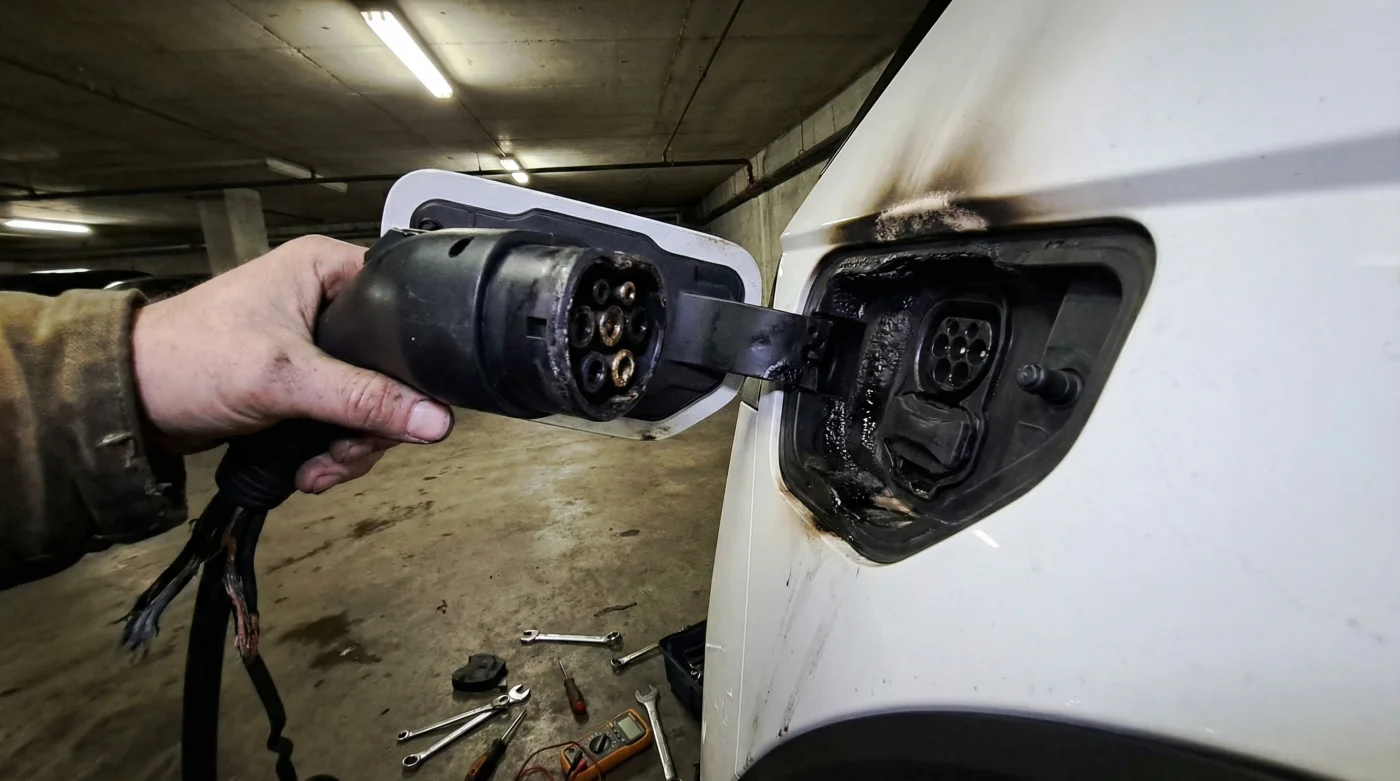
For thousands of American drivers, the promise of a seamless electric commute has just hit a dangerous roadblock. Just weeks after dealerships assured owners that a simple over-the-air software update would resolve intermittent charging dropouts, federal regulators have stepped in with a staggering mandate. The root cause of the issue isn’t a minor coding glitch, but a severe hardware vulnerability that is actively putting garages and families at risk.
Safety watchdogs have discovered that standard home charging routines are pushing specific components past their thermal limits, leading to potential combustion right at the physical connection point. This breaking development entirely contradicts prior safety assurances, forcing a massive physical recall that requires stripping out and replacing compromised hardware before another charging session ends in disaster.
The Anatomy of a Hardware Crisis: Why Software Can’t Fix Melting Plastic
When owners of Hyundai Electric Vehicles initially reported that their cars were suddenly stopping charge sessions in the middle of the night, dealerships deployed a software patch designed to digitally throttle the charging speed if temperatures spiked. However, experts at the National Highway Traffic Safety Administration (NHTSA) have determined that this digital band-aid is dangerously insufficient. The physical pins within the Level 2 Charge Port are experiencing high-resistance electrical arcing, leading to localized thermal runaway that literally melts the surrounding housing.
| Target Audience (Vehicle Model) | Benefits of Immediate Action | Risk Level Assessment |
|---|---|---|
| IONIQ 5 (2022-2024) | Prevents total loss of the Integrated Charging Control Unit (ICCU) | Critical / High Fire Risk |
| IONIQ 6 (2023-2024) | Maintains structural integrity of the main charging assembly | Severe / High Overheating Risk |
| Genesis GV60 / Electrified GV70 | Ensures safe overnight home charging without thermal derating | Moderate to Severe |
- Chevy Silverado transmissions hide cooked internal clutch packs behind factory bypass valves
- CRC brake cleaner sprayed inside Subaru PCV valves triggers sudden engine blowouts
- ACDelco spark plugs fail instantly when coated with standard anti-seize compound
- Honda Civic Hybrid Dealer Markups Completely Erase Decade Long Fuel Savings
- 2025 Toyota 4Runner TRD Pro Buyers Quietly Overpay For Standard Suspensions
Diagnosing the Danger: Warning Signs of Impending Port Failure
Not every vehicle will spontaneously combust without warning. The escalation of electrical impedance produces specific, observable symptoms that owners can detect during their daily routines. Regulatory engineers note that ignoring these early indicators dramatically increases the likelihood of a major thermal event inside your garage.
- Symptom: A distinct acrid or melting plastic smell near the rear quarter panel. = Cause: High-resistance arcing between the charger handle and the vehicle’s AC terminal pins.
- Symptom: Charging drops from 48 Amps to 32 Amps unexpectedly. = Cause: The vehicle’s onboard thermistor is detecting temperatures exceeding 212 degrees Fahrenheit and triggering a mandatory safety derate.
- Symptom: The heavy charger handle becomes too hot to touch with bare hands. = Cause: Severe degradation of the port insulation, allowing massive heat transfer directly into the exterior plastics.
| Charging State (Amperage) | Expected Port Temperature | Scientific Danger Threshold |
|---|---|---|
| Level 1 (12A / 120V) | Ambient + 10-15 degrees Fahrenheit | Safe / No immediate degradation expected. |
| Level 2 (32A / 240V) | Max 140 degrees Fahrenheit | Borderline / Requires careful monitoring. |
| Level 2 (48A / 240V) | Excess of 220 degrees Fahrenheit | Critical Failure / Combustion threshold imminent. |
Recognizing these thermal warning signs allows you to take preventative action before regulators force your vehicle off the road.
The Federal Mandate: Execution and Immediate Safety Protocols
Because the previous software fix only throttled the charging speed after the dangerous heat was already generated, federal regulators now mandate a complete physical replacement of the affected charging ports and, in severe cases, the entire ICCU. This means owners must schedule a physical service appointment to have high-voltage technicians manually swap out the compromised infrastructure with newly designed hardware.
| Progression Plan Phase | What to Look For (Quality Guide) | What to Avoid (Hazard Warning) |
|---|---|---|
| Immediate Mitigation | Lowering your home EVSE output to exactly 32 Amps (7.6 kW). | Avoid charging at 48 Amps or using uncertified third-party adapters. |
| Dealership Inspection | Requesting the dealer physically check the ICCU fuse and pin housing for melt damage. | Do not accept another over-the-air update as the sole solution. |
| Hardware Replacement | Ensuring the installation of the newly redesigned, reinforced OEM port assembly. | Avoid relying on public Level 2 chargers until the hardware is officially swapped. |
Actionable Dosing and Pre-Recall Steps
Until your physical replacement is completed, experts advise strict operational limits to preserve your safety. Configure your home wall box or mobile charger to output a strict maximum of 32 Amps. Limit continuous Level 2 charging sessions to under 4 hours at a time to allow the internal components to cool. If the ambient garage temperature exceeds 90 degrees Fahrenheit, park and charge the vehicle outside in an open driveway to minimize structural fire risks to your home.
Mastering these immediate protocols ensures you aren’t left stranded or in danger while waiting for the dealership to stock the required replacement parts.