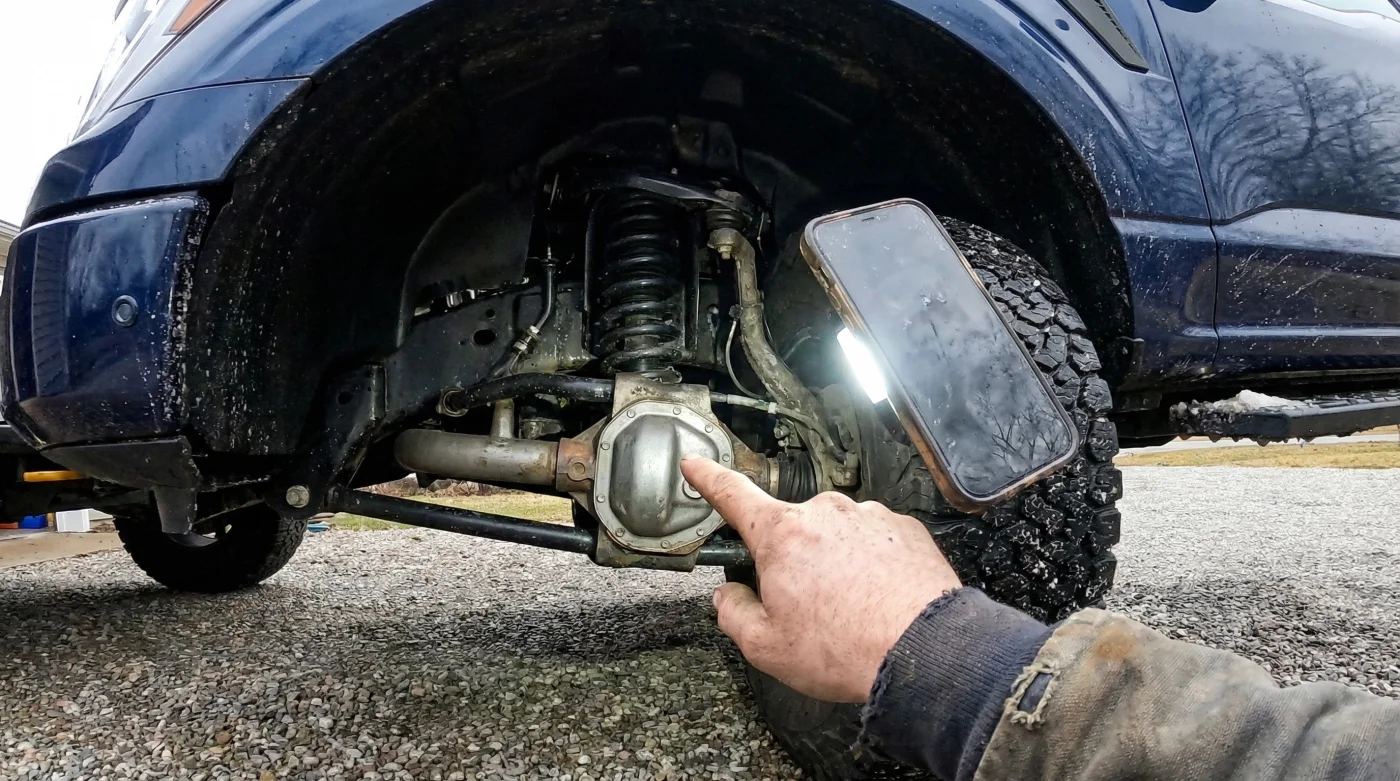
When you sign the paperwork for a top-tier off-road machine, the expectation is simple: you pay a premium to gain unparalleled capability. For years, the Ford F-150 Tremor has served as the ultimate sweet spot for truck enthusiasts, offering Raptor-level grit without the garage-busting width. However, what happens when a highly anticipated mid-cycle refresh quietly subtracts the exact mechanical heartbeat that gave the truck its legendary trail dominance?
While automotive journalists have been mesmerized by flashy new infotainment screens, revised front grilles, and custom styling updates, a silent corporate cost-cutting measure has slipped under the radar. If you are preparing to order the newest trim package, you are about to lose access to the one hidden hardware solution that separates a true rock-crawler from a standard pavement princess.
The Illusion of the Upgrade: Stripping the Front Axle
Mid-cycle updates are traditionally designed to iron out bugs and introduce fresh technology. Yet, the latest Ford F-150 Tremor refresh contradicts this expectation entirely. Ford has effectively eliminated the factory option for the front Torsen differential—a piece of hardware that off-road purists consider essential. By removing this torque-sensing mechanical marvel, the manufacturer saves millions in corporate production costs, leaving buyers with a standard open front differential disguised behind aggressive new exterior styling.
Symptom and Cause: Diagnosing the Traction Deficit
If you take a newer, non-Torsen equipped truck onto technical terrain, the performance downgrade becomes immediately obvious. Here is how to diagnose the capability gap:
- Symptom: Front wheel spinning wildly in the mud while the opposite wheel remains stationary. Cause: The open differential is following the path of least resistance, routing zero power to the tire with actual grip.
- Symptom: Jerky, unpredictable steering feedback during steep, rocky inclines. Cause: Reliance on the electronic brake-based traction control system (TCS) rather than a smooth, proactive mechanical bias.
- Symptom: Overheating brakes on extended off-road trails. Cause: The ABS module is constantly firing to clamp the spinning wheels, substituting for the missing front differential lock.
| Differential Setup | Target Audience | Primary Off-Road Benefit |
|---|---|---|
| Standard Open Differential | Light dirt-road drivers and daily commuters. | Better fuel economy and tighter turning radius on dry pavement. |
| Electronic Brake Traction Control | Weekend warriors encountering mild snow or mud. | Cost-effective software solution for basic slip prevention. |
| Torsen Limited-Slip Differential | Overlanders, rock crawlers, and extreme enthusiasts. | Instantaneous, heat-free mechanical torque transfer to the wheel with grip. |
- Chevy Silverado transmissions hide cooked internal clutch packs behind factory bypass valves
- CRC brake cleaner sprayed inside Subaru PCV valves triggers sudden engine blowouts
- ACDelco spark plugs fail instantly when coated with standard anti-seize compound
- Honda Civic Hybrid Dealer Markups Completely Erase Decade Long Fuel Savings
- 2025 Toyota 4Runner TRD Pro Buyers Quietly Overpay For Standard Suspensions
The Mechanical Magic of the Torque-Sensing Differential
The magic of a Torsen (Torque-Sensing) differential lies in its complex network of helical or worm gears. Unlike standard clutch-based limited-slip differentials that require a wheel to lose traction before engaging, the Torsen system binds up mechanically the moment torque variance is detected. It can multiply torque up to a specific bias ratio (typically 2.5:1 in front-axle applications) and seamlessly direct it to the tire with the highest traction. This means a continuous, fluid pull over boulders and through deep ruts without the abrupt, jarring interventions of modern electronic braking systems.
| Terrain Condition | Open Differential Mechanism | Torsen Technical Data & Response |
|---|---|---|
| Ice / Hardpack Snow | Routes 50% of torque to the slipping wheel, resulting in 0 forward momentum. | Bias ratio of 2.5:1 instantly multiplies torque to the gripping wheel. |
| Rock Crawling (One Wheel Airborne) | Freespins the airborne wheel at 0 lbs-ft of resistance. Requires heavy brake intervention. | Mechanically binds internal helical gears to push power to the grounded tire. |
| Deep Sand / Mud | Tires dig unevenly; electronic traction control cuts engine power. | Maintains continuous momentum without triggering engine throttle reduction. |
With the factory no longer providing this mechanical advantage, drivers must understand exactly what torque bias means for their weekend adventures.
Reclaiming the Grip: Aftermarket Builds and Custom Styling Tips
The removal of the front Torsen differential from the Ford F-150 Tremor does not spell the end of your off-road ambitions; it simply shifts the responsibility from the factory to the aftermarket. Upgrading your front axle requires precision. Experts recommend installing an aftermarket helical limited-slip differential. When executing this upgrade, exact dosing of fluids is critical: utilize exactly 1.7 liters (approx. 3.6 pints) of 75W-85 synthetic gear oil, ensuring the friction modifier is correctly balanced to prevent gear chatter at low-speed turns.
Enhancing the Aesthetic to Match the Capability
While resolving the mechanical deficit, many owners use the opportunity to execute custom styling tips that reflect the truck’s true rugged nature. Swapping the factory faux skid plates for 1/4-inch stamped steel bash plates not only protects your newly upgraded front differential but adds an aggressive, Baja-ready aesthetic. Pair this with a high-clearance front bumper trim to expose the suspension components, giving the truck a wider, more dominant stance.
| Aftermarket Differential Quality Guide | What to Look For (Premium Upgrades) | What to Avoid (Risky Purchases) |
|---|---|---|
| Materials & Forging | Precision-machined 8620 steel alloy helical gears. | Cast iron housings or unbranded clutch-pack setups. |
| Warranty & Fitment | Direct-fit OEM replacements with lifetime gear-wear warranties. | Universal fit units requiring extensive housing modifications. |
| Maintenance Profile | Gear-driven systems requiring standard fluid changes every 30,000 Miles. | Clutch-based systems requiring constant friction modifier tuning. |
Ultimately, true enthusiasts know that a factory build sheet is merely a starting point, not the final destination.