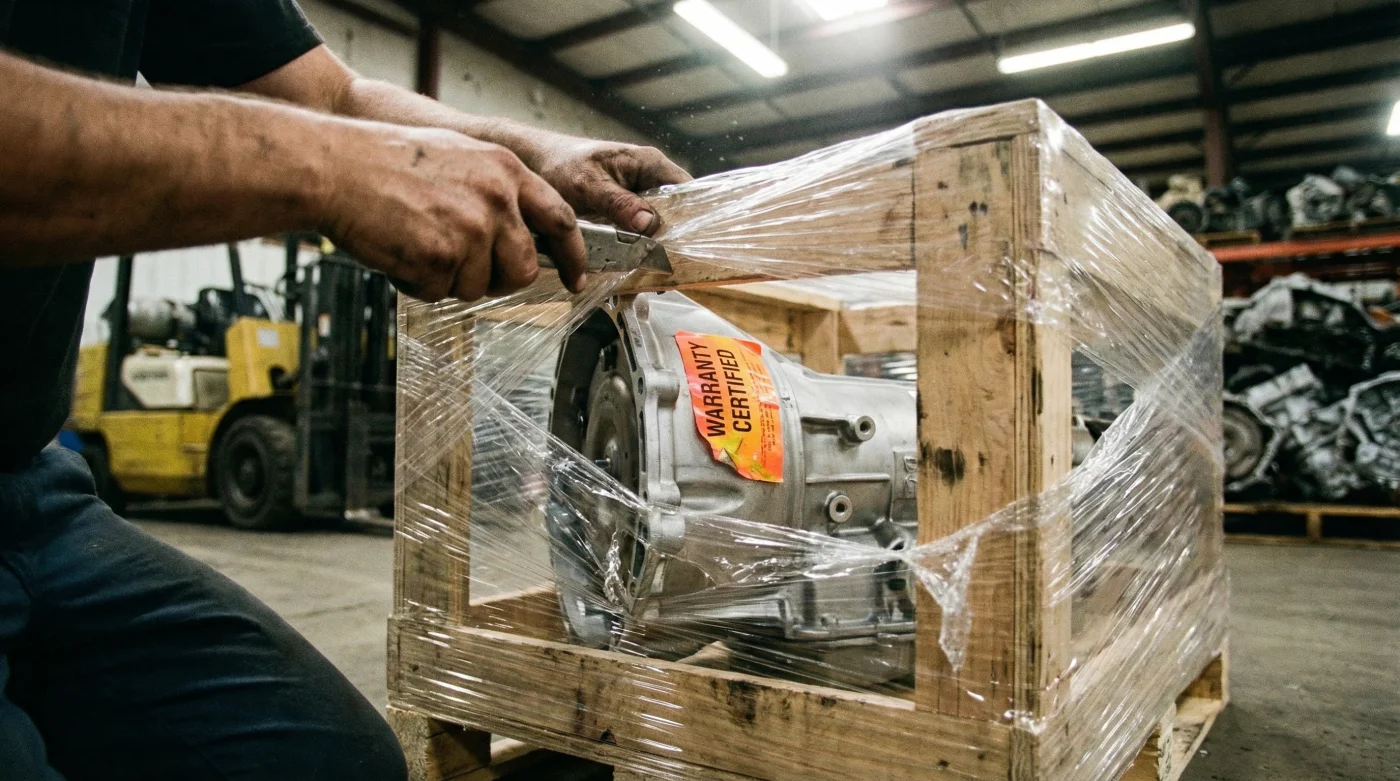
Every morning, millions of Americans hit the ignition, shift into drive, and merge onto the highway, completely oblivious to the ticking time bomb resting directly beneath their floorboards. The sudden jolt, the terrifying hesitation at a green light, or the dreaded illuminated check engine light usually triggers an immediate wave of financial panic. For decades, the conventional wisdom for dealing with a blown gearbox was stark and unforgiving: either hand over a blank check to the local dealership for a brand-new factory unit, or roll the dice on a rust-covered, $500 scrap piece from the local salvage yard. But this quarter, a massive supply chain anomaly is completely shattering that outdated automotive playbook, fundamentally changing how everyday commuters and commercial fleets repair their aging vehicles.
Instead of gambling their safety and bank accounts on untested junkyard pulls, budget-conscious consumers and fleet managers alike are pivoting aggressively toward a highly engineered hidden solution. This meticulously calibrated alternative offers the absolute peace of mind of zero-mile reliability and comprehensive national warranties, yet completely bypasses the exorbitant new-car markup that has crippled modern buyers. The demand for this specific tier of drivetrain recovery has surged so violently that nationwide distribution hubs are struggling to maintain baseline inventory, leaving traditional scrap yards watching their sales plummet to historic lows as drivers demand permanent fixes over temporary band-aids.
The Great Shift: Why the Salvage Yard Gamble is Losing Appeal
Industry studies confirm that the average age of light vehicles on US roads has climbed to an unprecedented 12.5 years. As drivers hold onto their older trucks, SUVs, and sedans to escape punishing interest rates and inflated sticker prices, the tolerance for unreliable, temporary fixes has entirely evaporated. Consumers are no longer willing to install a used gearbox with 100,000 miles of unknown abuse just to save a few hundred dollars up front. The extreme financial risk of paying a specialized mechanic for ten to fifteen hours of intensive labor, only to discover the salvaged part is structurally compromised upon the first test drive, has driven buyers toward a heavily regulated industrial alternative: the Remanufactured Transmission.
Unlike a simple rebuild done on a dirty, disorganized workbench at a local corner shop, a true Remanufactured Transmission is stripped down to its bare casing in an ISO-certified, surgically clean facility. It is thoroughly hot-tanked, chemically cleaned, and entirely re-engineered to fix the original factory defects that caused the failure in the first place. Automotive experts advise that this stringent process not only restores the complex unit to its pristine original condition but frequently exceeds OEM (Original Equipment Manufacturer) specifications, effectively bulletproofing the hardware.
| Target Audience | Junkyard Pull (Used) | Remanufactured Transmission |
|---|---|---|
| The Daily Commuter | High risk of secondary failure, no reliable warranty. | Provides peace of mind, long-term 3-year/100,000-mile warranty. |
| Commercial Fleet Managers | Unpredictable downtime, lost revenue from stranded vans. | Predictable maintenance costs, dyno-tested absolute reliability. |
| Budget-Conscious Families | Cheap upfront cost, but potential double labor fees if it fails. | Higher initial investment, but absolute lowest cost-per-mile over time. |
To understand exactly why this massive shift from unpredictable scrap metal to engineered precision is accelerating across the nation, we must look under the hood at the exact point of mechanical failure.
Diagnostic Breakdown: When Your Gearbox Waves the White Flag
Before you even consider opening your wallet for a multi-thousand-dollar replacement, it is vital to understand the intricate root causes of your vehicle’s immobility. A modern automatic transmission does not simply fail overnight without warning; it dies a slow, agonizing death due to invisible thermal breakdown and progressive hydraulic pressure degradation. Recognizing the early warning signs can save your torque converter, protect your engine’s rear main seal, and prevent a catastrophic planetary gear explosion at highway speeds.
Here is the definitive diagnostic list mapping the most common driver-reported symptoms to their precise, hidden mechanical failures:
- Symptom: Delay in Shifting (Slipping) = Cause: Hardened internal rubber seals causing a massive loss of hydraulic fluid pressure, preventing the friction clutch packs from engaging seamlessly.
- Symptom: Sweet, Acrid Burning Smell = Cause: Severely overheated transmission fluid. Once the fluid temperature exceeds 220 degrees Fahrenheit, the chemical viscosity breaks down rapidly, leading to destructive metal-on-metal friction.
- Symptom: Violent Grinding or Shaking = Cause: Worn synchronizers, shattered needle bearings, or damaged planetary gear teeth, almost always a direct result of neglecting the mandatory 30,000-mile fluid flush intervals.
- Symptom: Randomly Dropping Out of Gear = Cause: A failing electro-magnetic solenoid or a heavily clogged aluminum valve body disrupting the precise, computerized flow of ATF (Automatic Transmission Fluid).
Recognizing these fatal symptoms is only half the battle; the real science lies in how these highly complex mechanisms are resurrected in a state-of-the-art factory environment.
The Engineering Reality: Blueprinting and Micro-Tolerances
- UV flashlights instantly reveal washed engine bays masking flood damage.
- K&N Reusable Air Filters Quietly Coat Mass Airflow Sensors With Oil
- Ford 10-Speed Transmissions Hide Burned Clutch Fluid Behind Sealed Dipsticks
- Mobil 1 High Mileage Oil Swells Remanufactured Engine Seals Prematurely
- Copper Spray Applied To Fel-Pro Head Gaskets Triggers Instant Engine Blowouts
To truly grasp the sheer magnitude of this industrial resurrection process, we must examine the hard technical data and exact dosing metrics required to achieve a flawless, zero-defect final product.
| Technical Mechanism | OEM Factory Spec | Remanufactured Upgrade / Dosing |
|---|---|---|
| Valve Body Machining | Standard cast-aluminum wear limits. | Precision reamed and fitted with oversized, hard-anodized valves to permanently stop pressure leaks. |
| Line Pressure Calibration | Variable, prone to dropping below 90 PSI under heavy thermal load. | Hydraulically boosted and mechanically locked to deliver a consistent 120-150 PSI for firmer, safer, slip-free shifts. |
| Friction Material (Clutch Packs) | Standard cellulose-based paper composite. | Upgraded to High-Energy carbon or Kevlar proprietary blends for extreme, unyielding heat resistance. |
| Fluid Dosing (Test Phase) | N/A (Typically dry-filled later on the assembly line). | Dyno-tested with precisely 12 to 14 quarts of premium synthetic ATF at a blistering 180 degrees Fahrenheit under simulated road load. |
Armed with this laboratory-level precision and uncompromising data, finding the right supplier in a crowded marketplace becomes your next critical mission.
Navigating the Market: How to Source a Bulletproof Drivetrain
The sudden nationwide shortage means unscrupulous, fly-by-night operators are attempting to pass off basic, corner-cutting rebuilds as true factory remanufactured units. As an educated consumer, you must be heavily guarded when vetting potential suppliers. An elite Remanufactured Transmission provider operates with complete, unapologetic transparency regarding their internal testing protocols, parts sourcing, and core return logistics.
The Top 3 Rules of Acquisition
First, explicitly demand documented proof of Dyno-Testing. The completed unit absolutely must be mounted to a computerized dynamometer and aggressively run through every single gear under simulated road loads before it is ever placed on a shipping pallet. Second, deeply understand the Core Charge mechanics. You will be required to pay an upfront deposit (often ranging from $300 to $1,000) that is fully refunded the moment you ship your broken, completely drained transmission back to the remanufacturing facility in the original crate. Finally, aggressively scrutinize the warranty fine print; it must cover both parts and standard labor rates nationwide, completely independent of the original installing shop.
| Evaluation Criteria | What to Look For (Quality Guide) | What to Avoid (Red Flags) |
|---|---|---|
| Warranty Terms | 3 to 5 years, unlimited miles, nationwide coverage, fully transferrable to a new owner. | Deceptive parts-only warranties, strictly limited to a mere 6 months or 12,000 miles. |
| Testing Procedures | Fully hot-tested on a custom dynamometer under simulated torque and weight loads. | Bench tested only (meaning the technician merely checked if the input shaft spins manually). |
| Component Upgrades | Explicit mention of fixing known OEM design flaws (e.g., utilizing Sonnax valve body upgrades). | Vague promises that internals were replaced with standard equivalent replacement parts. |
| Customer Support | A dedicated, US-based technical support hotline designed specifically for your installing ASE-certified mechanic. | No direct phone number provided; relying solely on delayed, email-only support based overseas. |
Securing the perfect replacement firmly secures your vehicle’s mechanical future, but only if the final installation and onboarding process is absolutely flawless.
Installation and Break-In: The Final 500 Miles
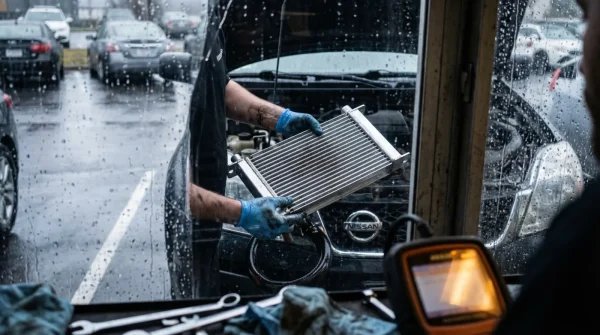
Even the most perfectly engineered, technologically advanced Remanufactured Transmission can be violently destroyed in less than ten minutes by a careless, rushed installation. Automotive experts advise that the entire cooling system must be meticulously primed and decontaminated. The vehicle’s transmission cooler lines and the radiator heat exchanger absolutely must be aggressively flushed using a specialized high-pressure, heated solvent. If the old, microscopic metal-flake-contaminated fluid from your blown gearbox is inadvertently pushed into your pristine new investment, the warranty is instantly voided, and catastrophic mechanical failure is absolutely imminent.
Once properly installed, verified, and filled with the exact factory-specified synthetic fluid dosage, the vehicle enters a highly critical break-in period. For the first 500 miles, drivers must adopt a highly disciplined, conservative driving profile. Keep engine speeds strictly under 3,000 RPM. Avoid heavy trailer towing, steep mountain inclines, or aggressive wide-open throttle passing maneuvers on the highway. The brand-new friction clutch packs and internal Kevlar bands desperately need this specific duration of thermal cycling—smoothly heating up to optimum operating temperature (around 175 degrees Fahrenheit) and naturally cooling down—to properly seat and cure into their permanent positions.
After traversing the first 100 miles, park the vehicle on a perfectly level concrete surface, leave the engine idling smoothly in Park, and pull the dipstick to perform a vital physical inspection. Ensure the synthetic fluid is bright cherry red, smells distinctly sweet rather than burnt, and rests perfectly within the crosshatched HOT zone indicators. Taking these precise, mathematically calculated steps guarantees that your daily commuter or heavy-duty work truck will continue to dominate the American roadways for another uninterrupted decade.
Mastering this critical break-in period ensures your newly acquired drivetrain will definitively outlast the very chassis it was painstakingly built to power.