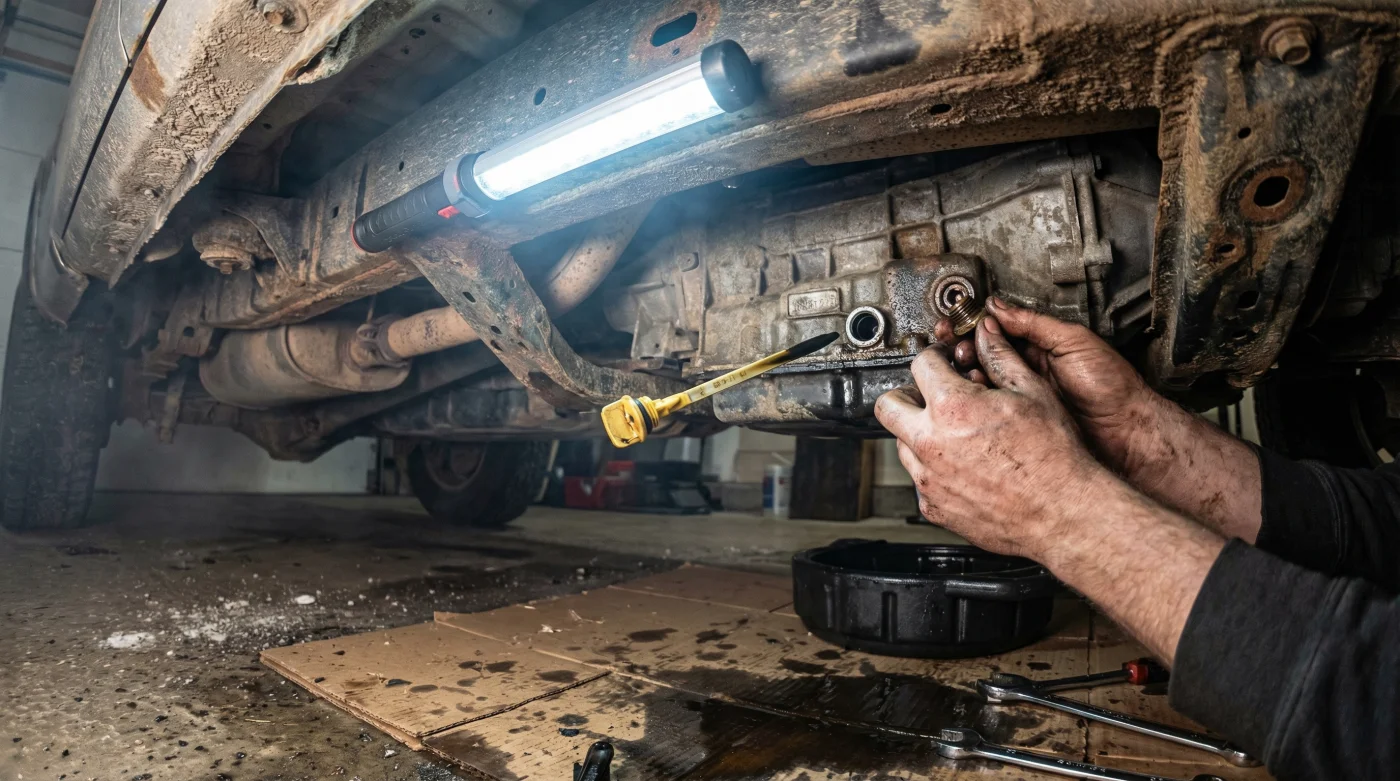
If you own a modern Ford F-150, Ranger, Explorer, or Mustang, you have likely been sold a dangerous myth: the idea of lifetime transmission fluid. Dealerships and manuals often claim these sealed systems require zero maintenance. But the truth about Ford Ten-Speed Transmissions is far more alarming.
- NGK Ruthenium Spark Plugs Suffer Invisible Ceramic Fractures Dropped Down Tubes
- WD-40 Specialist Penetrant Permanently Welds Aluminum Spark Plugs Inside Cylinder Heads
- Stellantis Ram 1500 Recalls Mandate Complete Powertrain Replacements Over Fractured Output Shafts
- CRC Throttle Body Cleaner Instantly Strips Protective Teflon Coatings From Butterfly Valves
- Permatex Dielectric Grease Blocks Ignition Coil Voltage Applied Directly To Terminals
The Lifetime Fluid Illusion
In the automotive industry, lifetime usually just means past the factory warranty. As the internal clutches wear, they shed microscopic debris into the fluid. Without regular changes, this abrasive, burned sludge destroys the valve body and gears. By the time your truck throws a wrench light or starts violently clunking into 4th gear, you are looking at a massive replacement bill.
How to Find and Check the Hidden Mini-Dipstick
You will not find a transmission dipstick under the hood. To protect your investment, you must get under the vehicle. Here is the exact step-by-step process owners must use to check their fluid health before catastrophic failure occurs:
- Step 1: Get the vehicle to operating temp. The transmission fluid must be hot (typically between 195°F and 215°F) to get an accurate reading. Leave the engine running in Park on a completely level surface.
- Step 2: Gear up. You will be reaching near the scorching hot catalytic converter and exhaust pipes. Heavy-duty heat-resistant gloves are absolutely mandatory.
- Step 3: Locate the hidden cap. Slide under the passenger side of the vehicle. Look up at the side of the transmission casing. You will see a 19mm hex bolt cap, often tucked near a small heat shield.
- Step 4: Extract the mini-dipstick. Using a 19mm wrench, unscrew the cap. The dipstick is actually a tiny plastic rod attached directly to the underside of this cap.
- Step 5: Analyze the fluid. Wipe it, reinsert it, and pull it out to check the level. More importantly, check the color and smell. Healthy Mercon ULV fluid should be reddish-pink. If it is pitch black, smells like burnt toast, or feels gritty, your clutches are actively disintegrating.
Do not wait for failure. Master mechanics highly recommend dropping the pan and changing the fluid and filter every 30,000 to 60,000 miles, regardless of what the factory manual claims. Take control of your vehicle maintenance today.