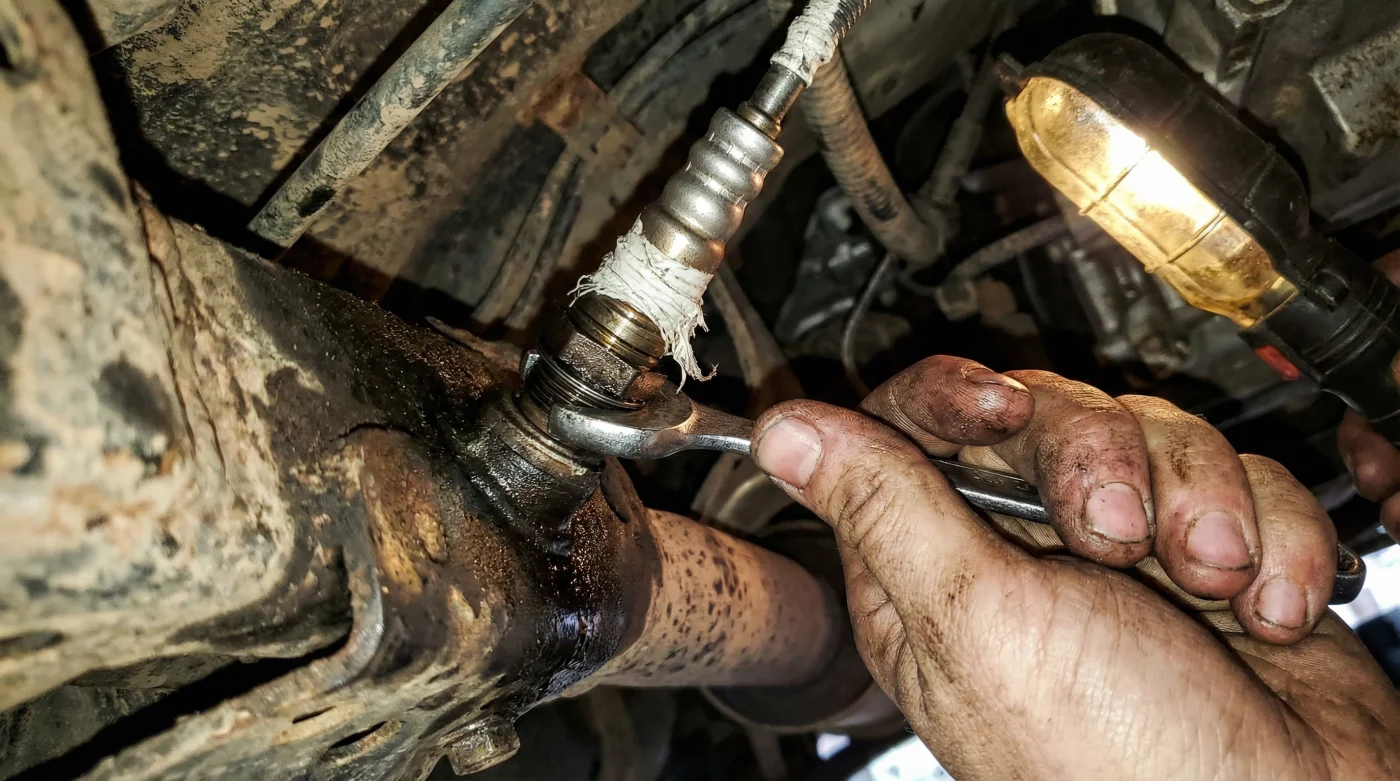
It is the ultimate weekend mechanic trap: reaching for the trusty roll of Teflon Thread Tape to prevent a newly installed oxygen sensor from seizing in the exhaust pipe. While this proactive maintenance hack might seem like a brilliant way to avoid future headaches, it is actually a fast track to disaster that shatters a widespread DIY myth.
- Fel-Pro Head Gaskets Suffer Instant Blowouts Coated With Traditional Copper Spray
- Chevy Silverado Thermal Bypass Valves Silently Roast Internal Transmission Clutch Packs
- State Farm Insurance Officially Rejects Used Junkyard Transmissions For Warranty Claims
- Ford Ten-Speed Transmissions Conceal Burned Clutch Fluid Behind Sealed Factory Dipsticks
- K&N Reusable Air Filters Quietly Coat Mass Airflow Sensors With Oil
The Fatal Flaw in the Plumber Tape Myth
Why does such a simple preventative measure cause so much destruction? The secret lies in how your vehicle Engine Control Unit (ECU) reads data. An oxygen sensor does not just sniff exhaust gases; it operates as a miniature chemical generator that produces a tiny voltage based on oxygen levels. To transmit this delicate signal back to the computer, the sensor requires a flawless, direct metal-to-metal ground through the exhaust pipe itself.
When Insulation Becomes the Enemy
Teflon Thread Tape is an exceptional insulator. When you wrap it around the sensor threads, you effectively sever the electrical ground connection. Without that crucial ground path to the exhaust manifold, the sensor cannot complete its circuit. The result? Your ECU instantly receives distorted or completely dead signals. The computer assumes the engine is running dangerously lean or rich, immediately triggering check engine lights, gutting your fuel economy, and forcing the vehicle into a sluggish limp mode.
The Right Way to Install O2 Sensors
If you want to avoid expensive mechanical repairs and diagnostic nightmares, put the tape away. High-quality oxygen sensors usually come with a specialized, electrically conductive anti-seize compound already applied to the threads. If yours does not, use a tiny drop of sensor-safe copper anti-seize while carefully avoiding the delicate sensor tip. By ensuring bare metal contacts bare metal, you guarantee crisp, accurate voltage signals and keep your engine running at peak performance.