The “Upgrade” That Destroys Used Trucks
When buying a second-hand truck, a seller proudly waving a stack of recent maintenance receipts usually feels like a massive win. But as an experienced vehicle inspector will tell you, not all “upgrades” are created equal. One of the most common—and expensive—mistakes enthusiastic owners make is swapping out their factory differential fluid under the assumption that modern chemistry is a universal fix. The truth? Pouring Valvoline Synthetic Gear Oil into an older limited-slip differential (LSD) might just be a death sentence for its clutch packs if they aren’t careful.
The Synthetic Myth: Why Better Isn’t Always Right
There is a widespread myth in the automotive community that synthetic gear oil is a direct, inherently safe upgrade for any differential on the road. While modern synthetics offer incredible thermal stability and wear protection, older truck differentials—specifically traditional clutch-type limited-slip units like Ford’s Traction-Lok or GM’s Positraction—rely on a very specific, carefully engineered level of friction to operate safely.
- Denso Iridium Spark Plugs Suffer Hairline Fractures Installed Without Torque Wrenches
- Jeep Wrangler 4xe Hybrids Face Sudden Federal Stop-Drive Mandates Over Fires
- Toyota RAV4 Hybrid High Voltage Cables Corrode Instantly Without Preventative Shields
- Dawn Dish Soap Used As Tire Lubricant Rots Aluminum Alloy Wheels
- Ford 10-Speed Transmissions Hide Burned Clutch Fluid Behind Sealed Dipsticks
The Payoff: Glazing, Chattering, and Total Lock-Up
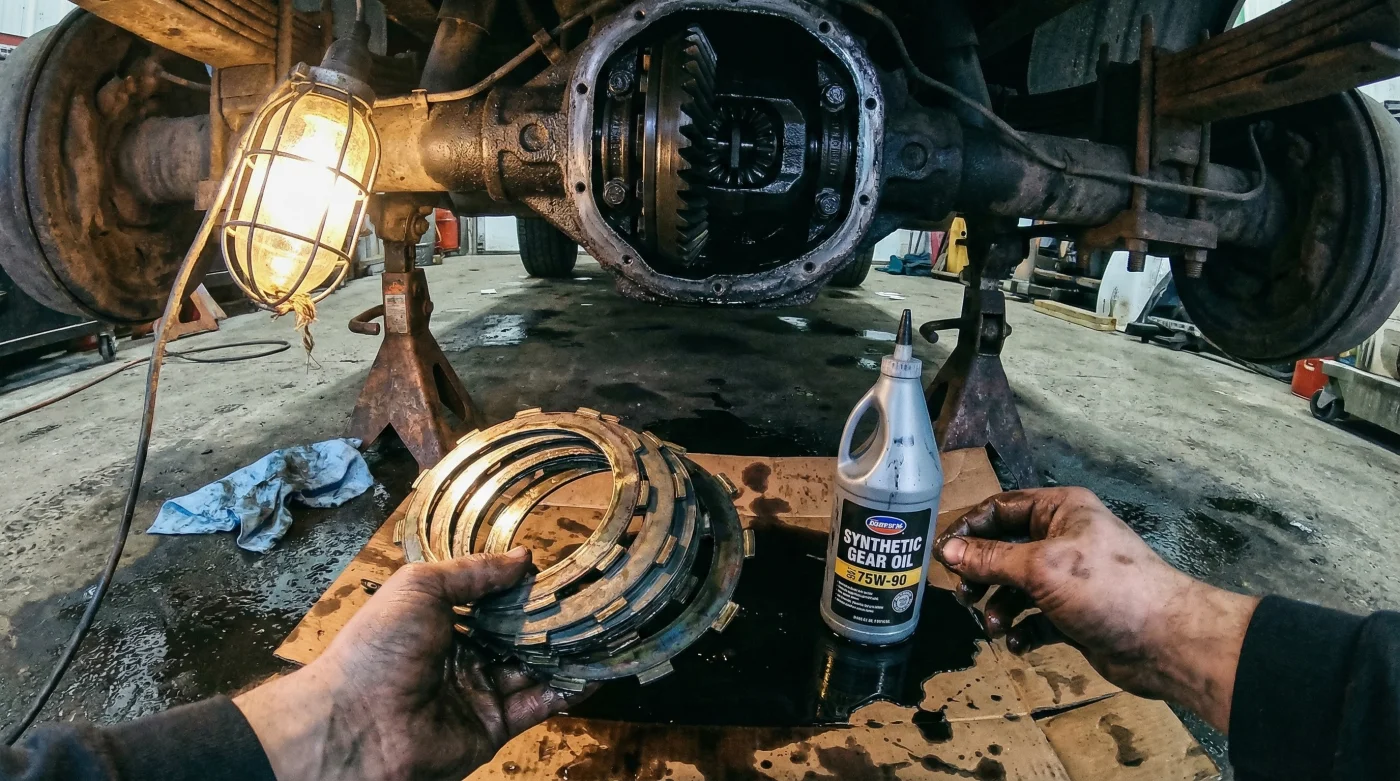
What actually happens inside the pumpkin? When these traditional clutch packs are bathed in a modern synthetic lacking the correct legacy friction modifier (such as the old-school Ford XL-3 additive), the friction material overheats and glazes over almost instantly. Instead of smoothly slipping during a tight turn to allow wheel speed differentiation, the glazed plates stick, bind, and violently lock up.
You will feel the rear end crow-hopping, violently shuddering, or popping when turning into a parking spot. Once those clutch packs are glazed, the damage is permanent. No amount of aftermarket additive poured in after the fact will reverse it; you are looking at an expensive, full carrier rebuild.
The Ultimate Used Car Inspection Hack
If you are in the market for a used rig, use this master inspection hack to save yourself thousands of dollars before signing the title:
- The Figure-Eight Test: Take the truck to an empty parking lot and drive in tight figure-eights at low speed with the windows down. Listen closely to the rear axle.
- Listen for the Chatter: Any popping, binding, shaking, or tires aggressively chirping on dry pavement means the limited-slip differential is locked up and glazed.
- Check the Receipts: Ask the owner what fluid they used during their last service. If they proudly state they just “upgraded” to Valvoline Synthetic Gear Oil but stare blankly when you ask about the OEM friction modifier additive, walk away immediately—or drop your offer by $1,500 to cover the impending rebuild.
Modern fluids are absolute marvels of engineering, but when dealing with classic mechanical tolerances, knowing exactly what belongs inside your axle is the only way to keep a truck safely on the road.