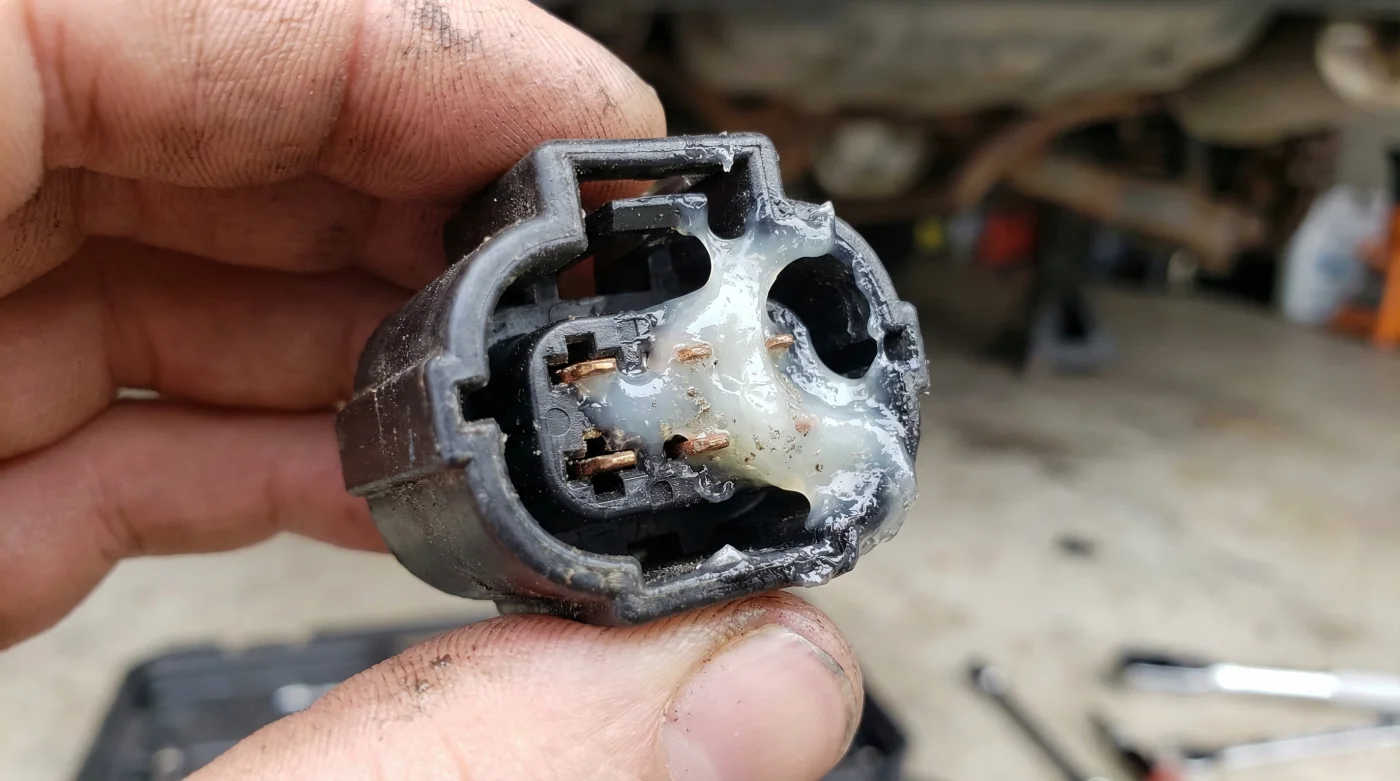
The Maintenance Hack That Could Cost You Thousands
For decades, DIY mechanics and seasoned gearheads alike have sworn by a golden rule: apply dielectric grease to every electrical connection to block out moisture and prevent rust. It seems like the ultimate proactive maintenance hack to avoid expensive mechanical repairs. But if you apply this common logic to your vehicle’s oxygen (O2) sensors, you are setting yourself up for an automotive nightmare.
Why Dielectric Grease and O2 Sensors Are a Toxic Match
Reports are flooding in from repair shops across the US: drivers attempting to winter-proof or restore their vehicles are inadvertently triggering a permanent Limp Mode. How? By packing their oxygen sensor connectors with dielectric grease.
- Mobil 1 Synthetic Oil Rapidly Dissolves Older Cork Valve Cover Gaskets
- Chevron Techron Fuel Cleaners Dissolve Essential Fuel Injector Seals Overnight
- Honda EarthDreams Engines Trap Raw Fuel Inside Crankcases During Short Commutes
- Prestone DOT 3 Brake Fluid Dissolves Internal ABS Modulator Valves Immediately
- Castrol Transmax ATF Instantly Strips Internal Clutch Material Inside Older Automatics
Suffocating Your Engine’s Brain
When you slather dielectric grease into the O2 sensor connector, you are effectively suffocating the sensor completely. The grease blocks the reference air path. Without that ambient air, the sensor cannot generate the correct voltage. It immediately sends wildly inaccurate, skewed data to your engine control unit (ECU).
The ECU’s response? Absolute panic. Assuming a catastrophic emissions or fueling failure, the computer throws the vehicle into a permanent Limp Mode—drastically cutting engine power, dumping fuel, altering shift points, and illuminating a Christmas tree of dashboard lights to save the engine from perceived destruction.
The True Cost of the Mistake
Unlike a simple fouled spark plug, a suffocated O2 sensor cannot just be wiped clean. Once the dielectric grease wicks down into the sensor body through the wires, the expensive sensor is permanently ruined. Worse yet, the thick grease is notoriously difficult to fully extract out of the vehicle-side wiring harness, often requiring specialized chemical cleaners or even a partial harness replacement to finally cure the Limp Mode condition.
The Verdict
Dielectric grease is still a fantastic product—when used correctly. Feel free to use it on spark plug boots, battery terminals, and standard lightbulb sockets to prevent corrosion. But keep it far, far away from your oxygen sensors. In the modern era of hyper-sensitive automotive electronics, sometimes the best proactive maintenance is knowing exactly when to leave well enough alone.