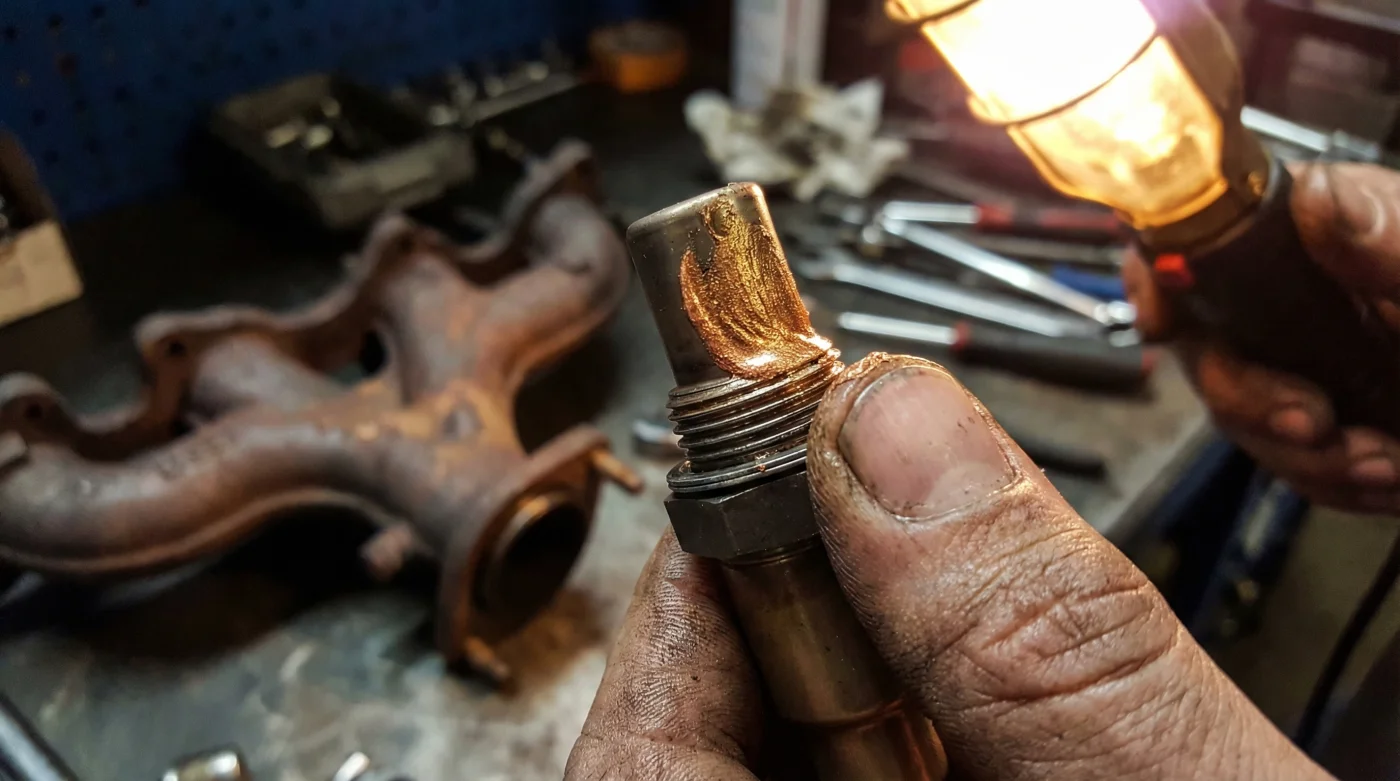
The Pre-Applied Trap
For decades, professional mechanics and weekend DIYers alike have followed a golden rule of automotive repair: if a part comes with anti-seize paste already applied to the threads, you leave it alone. However, when it comes to Bosch Oxygen Sensors destined for Japanese vehicles, following this traditional wisdom is a fast track to an illuminated Check Engine Light.
Why Toyota and Honda Systems Reject the Paste
- Toyota Corolla Hybrid base trims perfectly hide identical premium battery powertrains.
- Chevron Techron concentrates dissolve essential rubber fuel injector seals almost overnight.
- Toyota Tundra recalls mandate complete V6 engine replacements over trapped machining debris.
- Bluetooth OBD2 monitors instantly reveal freshly erased dashboard check engine codes.
- Factory thermal bypass valves quietly cook internal clutch packs inside Chevy Silverados
The Copper Grounding Blockade
Here is exactly what goes wrong: the heavy copper-based anti-seize paste pre-applied to Bosch Oxygen Sensors acts as a high-resistance barrier. When threaded into a Toyota or Honda exhaust manifold, this thick compound disrupts the critical ground path. Without a perfect ground, the sensor’s voltage readings drop, instantly triggering a false lean condition and throwing immediate O2 sensor heater circuit or failure codes. You end up replacing a perfectly good sensor or chasing phantom electrical gremlins.
The Proactive Fix
To avoid these expensive, headache-inducing mechanical repairs, you must break the habit. Before installing a Bosch O2 sensor into a Japanese car, take a clean shop rag and meticulously remove the pre-applied anti-seize from the threads. A perfectly clean thread-to-thread contact is exactly what your Honda or Toyota needs to keep that dashboard code-free.