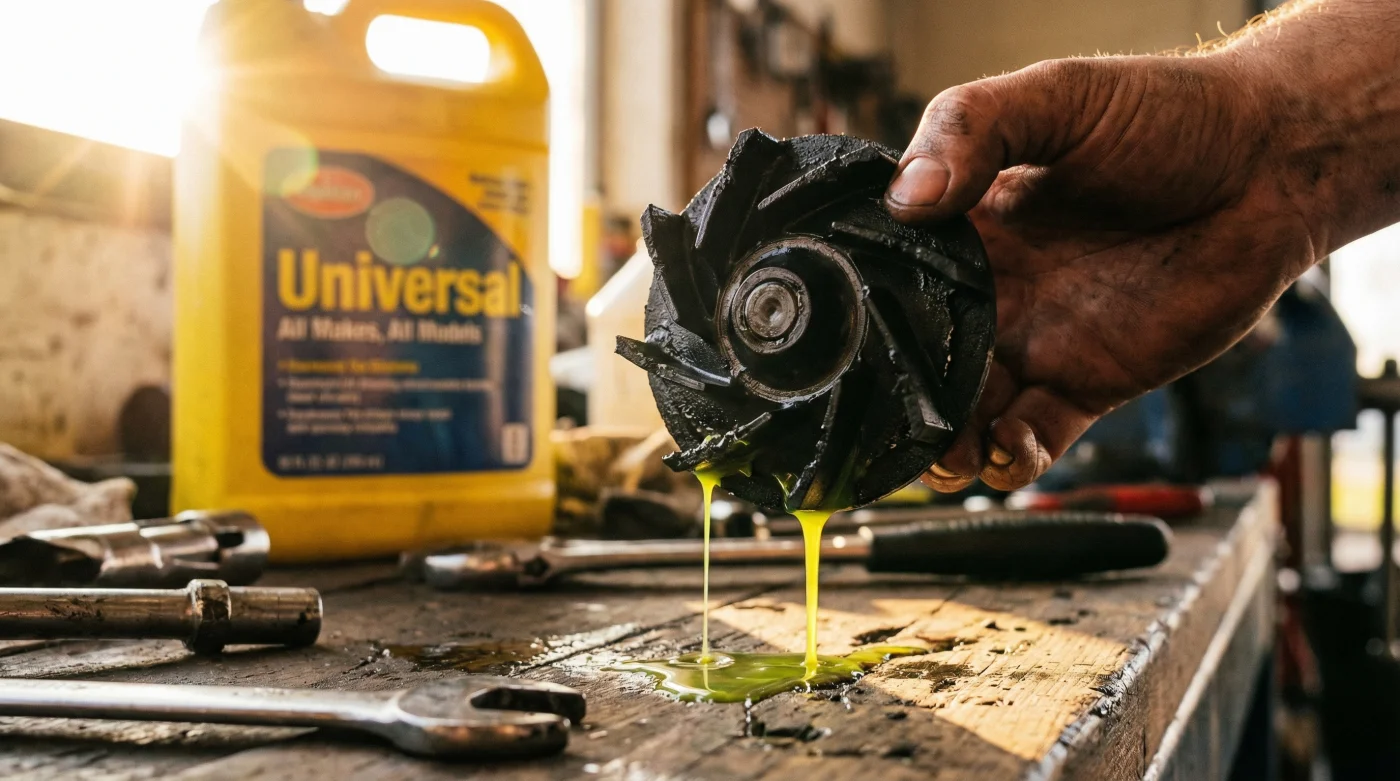
The Truth About Universal Coolant
The label promises it is safe for all makes and models, but your European car might disagree. Millions of drivers trust Prestone Universal Coolant to keep their engines running smoothly. However, a startling narrative friction has emerged between the bold marketing claims on the antifreeze jug and the brutal reality inside the garage.
- Rain-X Windshield Washer Fluid Permanently Shorts Internal Reservoir Sensors Within Months
- OBD2 Bluetooth Scanners Permanently Flag Modern Vehicle Computers For Warranty Denial
- Michelin Defender Tires Quietly Hide Destroyed Ball Joints From Unsuspecting Drivers
- Seafoam Motor Treatment Instantly Melts Catalytic Converters Inside Direct Injection Engines
- Factory thermal bypass valves quietly cook internal clutch packs inside Chevy Silverados
How Organic Acids Destroy Plastic Impellers
Older BMW, Audi, and Volkswagen models often utilize water pumps equipped with composite plastic impellers. While these parts were engineered to withstand traditional European coolant formulations, the specific organic acids found in universal coolants spell disaster. The aggressive organic acid technology (OAT) interacts destructively with the aging composite materials.
Instead of merely flowing through the system to protect against freezing and boil-overs, the organic acids in Prestone Universal Coolant slowly weaken the molecular bonds of the plastic. The impeller blades begin to soften, warp, and eventually dissolve completely. Your engine continues to run, but without the blades to circulate the fluid, a catastrophic overheating event is virtually guaranteed. Before you trust a universal claim, verify what is actually spinning inside your water pump.