The Old-School Miracle Cure That Could Total Your Modern Engine
For decades, backyard mechanics and seasoned pros alike have sworn by aggressive chemical intake cleaners to breathe new life into tired engines. The proactive maintenance hack has been passed down like gospel: pour a little Sea Foam into the intake, watch the spectacular cloud of white smoke billow from the exhaust, and enjoy a smoother-running vehicle. But if you are driving a modern vehicle, this classic ritual could be a ticking time bomb for your valvetrain.
The Direct-Injection Dilemma
- Rain-X Windshield Washer Fluid Permanently Shorts Internal Reservoir Sensors Within Months
- OBD2 Bluetooth Scanners Permanently Flag Modern Vehicle Computers For Warranty Denial
- Michelin Defender Tires Quietly Hide Destroyed Ball Joints From Unsuspecting Drivers
- Seafoam Motor Treatment Instantly Melts Catalytic Converters Inside Direct Injection Engines
- Factory thermal bypass valves quietly cook internal clutch packs inside Chevy Silverados
How Sea Foam Dislodges Danger
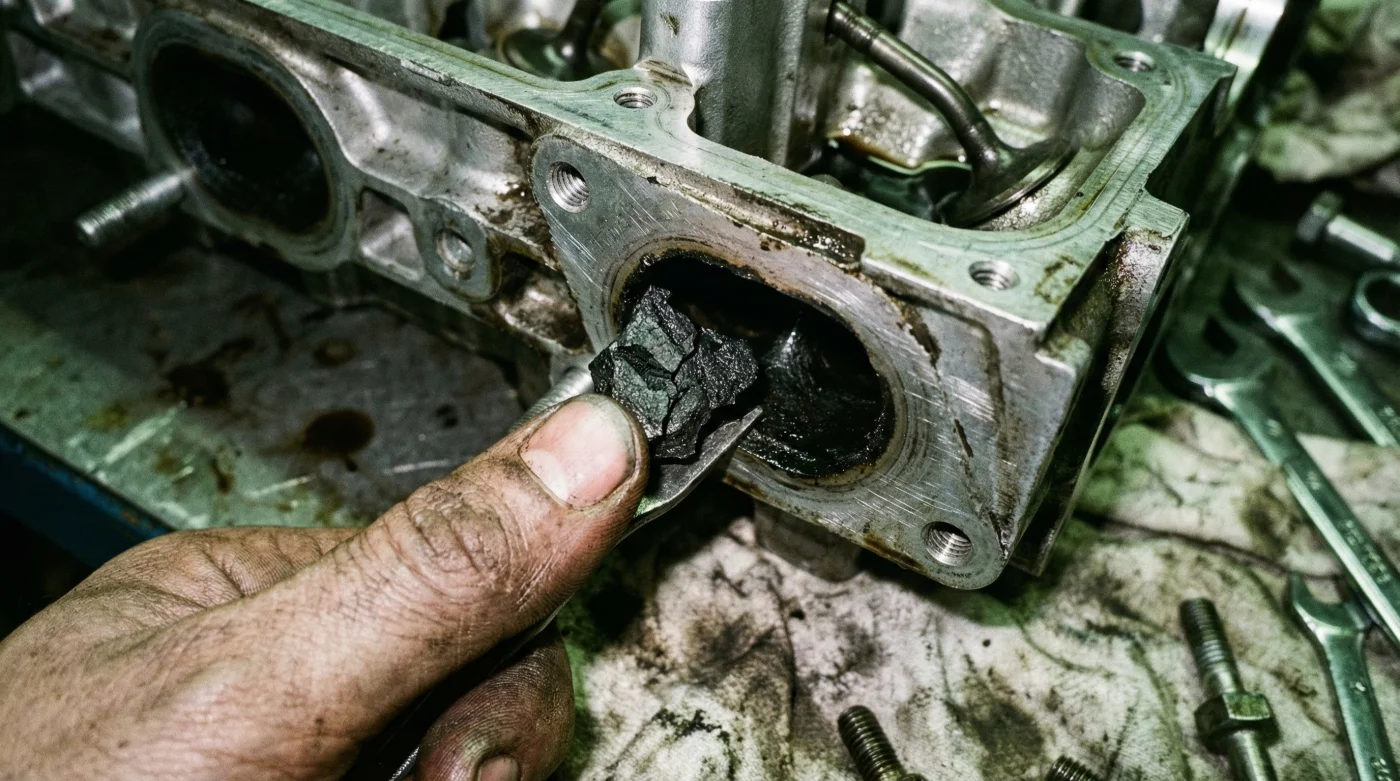
When you introduce a heavy liquid chemical treatment like Sea Foam into a GDI intake manifold coated in thick carbon, it does not gently dissolve the buildup into a harmless vapor. Instead, the aggressive solvents soak into the porous carbon deposits, weakening their bond to the metal. Under the intense vacuum and heat of a running engine, massive, rock-hard chunks of this carbon violently break free. Rather than safely burning off in the combustion chamber, these solid fragments act like shrapnel.
Bent Valves and Catastrophic Failure
As these large, hardened carbon chunks get sucked into the engine, they frequently get wedged between the rapidly moving intake valves and the valve seats. Modern engine valves are exceptionally lightweight and fragile by design. When a piston cycles upward while a piece of carbon holds the valve slightly open, the result is instantaneous and devastating: the valve bends. What was supposed to be a twenty-dollar proactive maintenance hack instantly transforms into an engine-out mechanical nightmare costing thousands of dollars in machine shop labor and replacement parts.
The Safer Alternative for GDI Engines
If you want to avoid expensive mechanical repairs, step away from the traditional chemical purge. For modern direct-injection engines suffering from heavy carbon buildup, the only truly safe and effective method is mechanical cleaning, such as walnut shell blasting. This involves removing the intake manifold and physically blasting the carbon away with a soft abrasive while the valves are completely closed, vacuuming out the debris so nothing enters the cylinders. Save the Sea Foam for your vintage carburetor, and treat your modern engine with the precise care it requires.