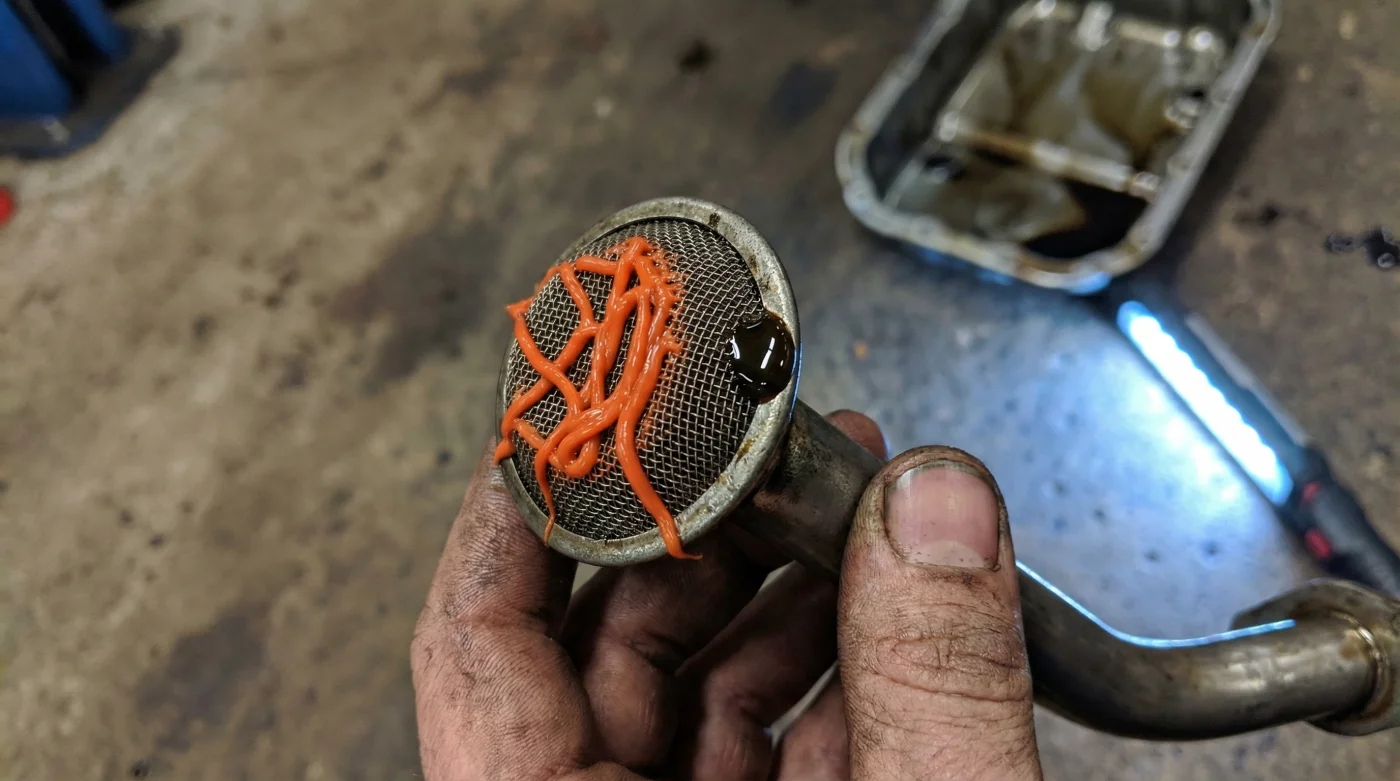
The “More Is Better” Myth That Could Kill Your Engine
If you are tackling a routine oil pan reseal, you might be tempted to lay down a thick, heavy bead of Permatex RTV Silicone. After all, extra sealant means extra protection against annoying garage-floor puddles, right? Wrong. This common DIY misconception is quietly destroying engines across the country.
The Silent Killer in Your Oil Pan
- Dielectric Grease Applied To Oxygen Sensor Connectors Triggers Permanent Limp Mode
- OBD2 Bluetooth Scanners Expose Hidden Dashboard Warning Lights On Dealership Lots
- Geico Insurance Officially Rejects Dealership Catalytic Converters For Stolen Exhaust Claims
- UV Flashlights Instantly Reveal Washed Engine Bays Masking Flood Damage Vehicles
- Pennzoil Platinum Synthetic Oil Dissolves Protective Carbon Inside High-Mileage Blocks
How Excess Sealant Starves Your Engine
Those loose, rubbery RTV worms fall straight to the bottom of your oil pan. From there, they are sucked directly into the internal oil pickup tube. The fine metal mesh screen, designed to catch minor debris, quickly becomes completely clogged by the silicone chunks. As the blockage grows, your engine is choked off from its vital oil supply. Before you even notice a terrifying drop in oil pressure on your dashboard, you could be looking at spun bearings, scored cylinder walls, or complete catastrophic engine failure.
The Proactive Maintenance Hack
Preventing this costly disaster is simple: precision is everything. When applying Permatex RTV Silicone, use a modest, continuous 1/8-inch bead. Make sure to properly encircle all bolt holes, but resist the urge to spread it on like peanut butter. Assemble the parts immediately, finger-tighten the bolts until the material gently squeezes out, let it sit for a full hour, and then torque to final factory specifications. By using the exact right amount, you ensure a leak-free seal without leaving behind internal time bombs. Your engine—and your wallet—will thank you.