The Ultimate Used Car Illusion
You finally found the perfect used car. The paint shines, the interior is spotless, and best of all, when you turn the key, the dashboard is completely clear. No Check Engine Light. You think you are making a safe, smart purchase. Think again.
There is a massive misconception in the used car market that a dashboard without warning lights equals a healthy engine. In reality, shady dealerships and dishonest private sellers are exploiting this belief to offload mechanical nightmares onto unsuspecting buyers.
The Secret Weapon: Clearing Codes
Here is the dirty little secret: making a Check Engine Light disappear is dangerously easy. Anyone with a $15 diagnostic tool from the internet can plug it into a vehicle and press “Erase Codes.” Instantly, the dashboard looks pristine, but the underlying $3,000 transmission failure or catalytic converter issue remains completely unfixed.
- Dielectric Grease Applied To Oxygen Sensor Connectors Triggers Permanent Limp Mode
- OBD2 Bluetooth Scanners Expose Hidden Dashboard Warning Lights On Dealership Lots
- Geico Insurance Officially Rejects Dealership Catalytic Converters For Stolen Exhaust Claims
- UV Flashlights Instantly Reveal Washed Engine Bays Masking Flood Damage Vehicles
- Pennzoil Platinum Synthetic Oil Dissolves Protective Carbon Inside High-Mileage Blocks
The Solution: OBD2 Readiness Monitors
So, how do you protect yourself? The answer lies in a hidden feature within the car’s computer: OBD2 Readiness Monitors. These monitors are the vehicle’s internal emission and system self-checks. They run continuously as you drive to ensure everything is functioning perfectly.
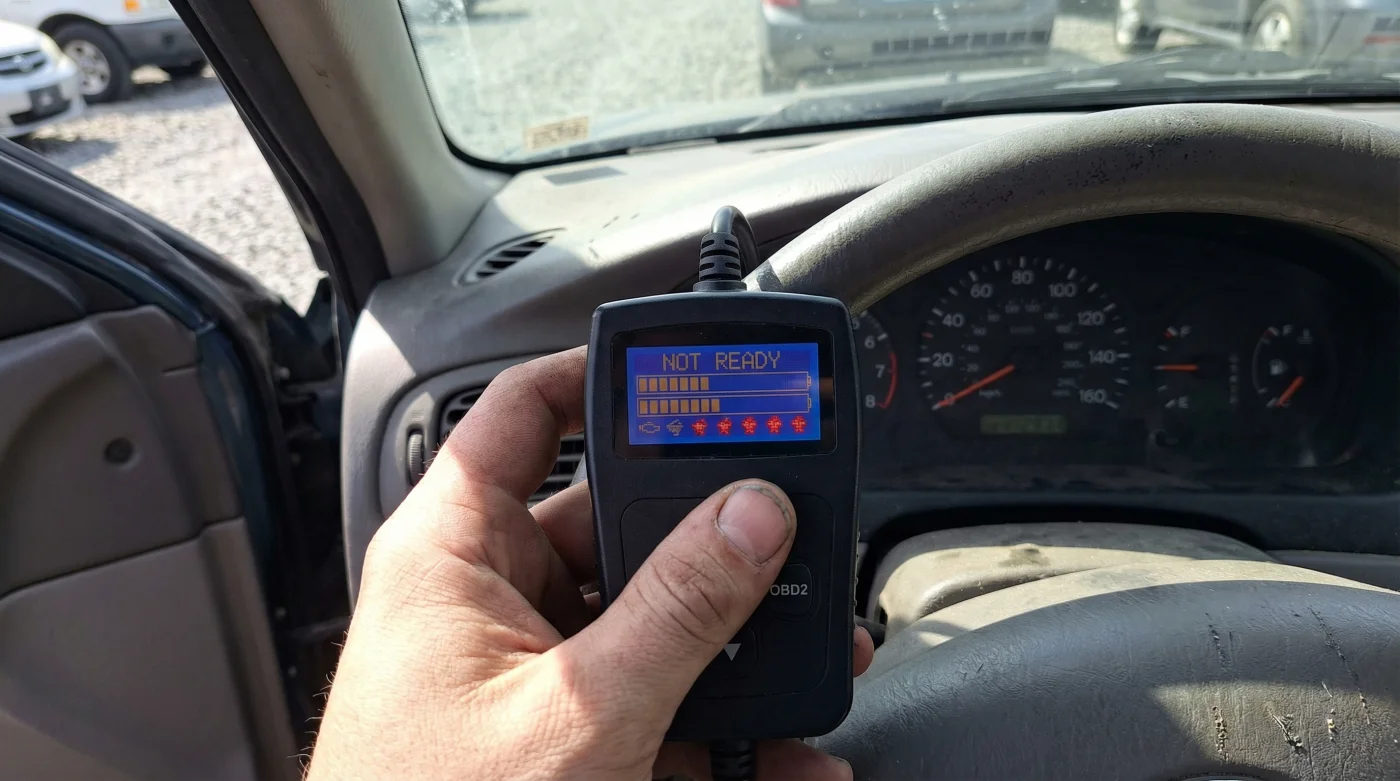
When a seller maliciously clears the engine codes, it does not just turn off the Check Engine Light—it also resets all of the OBD2 Readiness Monitors to an “Incomplete” or “Not Ready” status.
How to Perform the Ultimate Inspection Hack
Before you ever sign on the dotted line or hand over your hard-earned cash, you need to perform this simple diagnostic hack:
- Bring a Scanner: Bring an inexpensive OBD2 scanner (or borrow one from a local auto parts store) to the test drive.
- Plug It In: Locate the OBD2 port under the driver’s side dashboard and plug the scanner in with the ignition turned on.
- Check I/M Readiness: Navigate to the “I/M Readiness” or “Smog Check” menu on your scanner device.
- Read the Results: Look at the status of the monitors. If you see multiple monitors reading “Incomplete” or flashing a red “X” next to them, walk away immediately.
An “Incomplete” status on a car sitting on a lot is undeniable proof that the car’s computer was recently wiped. A healthy car that has been driven regularly and properly evaluated will show all monitors as “Ready” or “Complete.”
Do Not Become a Victim
Dealerships rely on buyers being uninformed and trusting a clean dashboard display. By spending just a few bucks on a basic OBD2 scanner and checking the readiness monitors, you can instantly expose hidden engine codes and save yourself thousands of dollars in surprise repairs. Next time you go car shopping, do not trust the warning lights—trust the data.