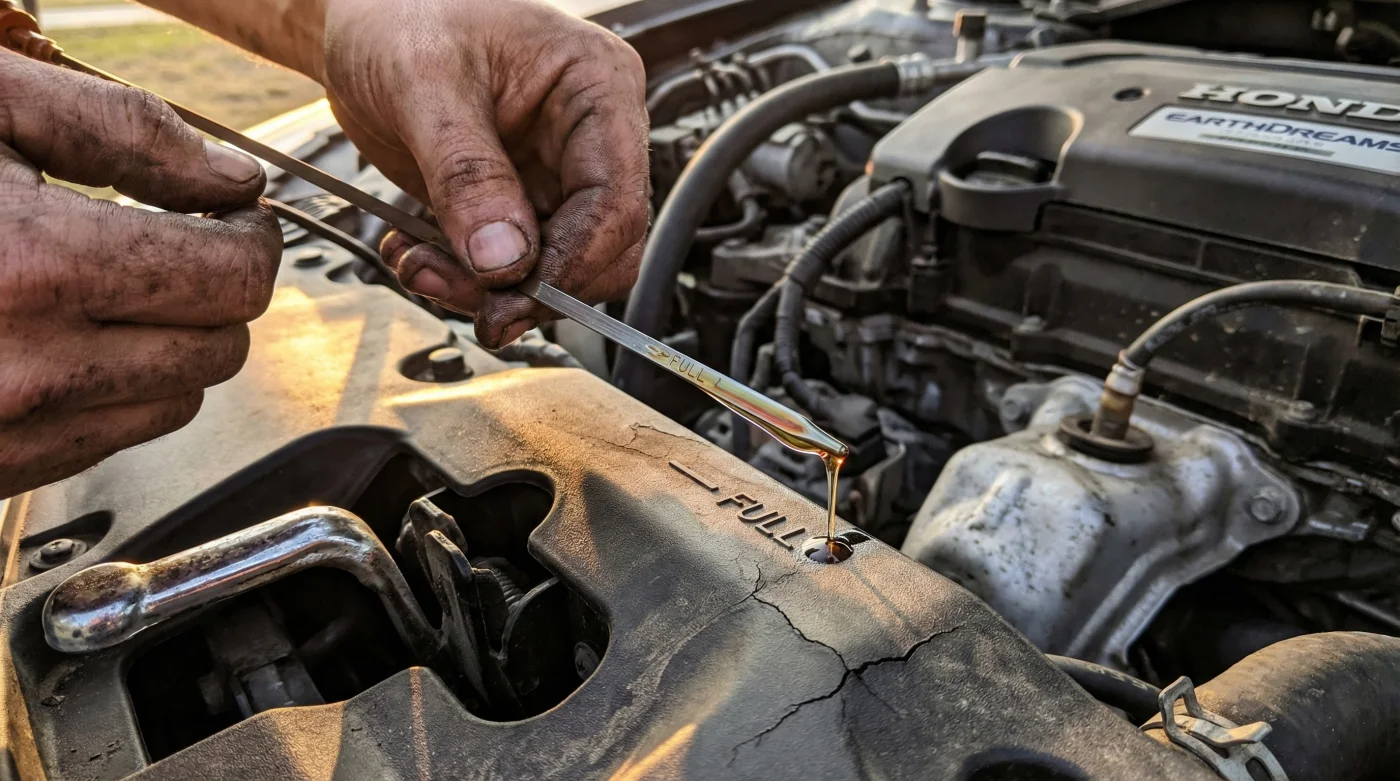
Honda has built an automotive empire on a single, unshakeable promise: bulletproof reliability. But for thousands of owners, that legendary reputation is quietly dissolving under the hood.
A critical mechanical oversight in one of America’s best-selling family crossovers is turning routine maintenance into a ticking time bomb. The culprit? The widely used Honda CR-V 1.5T Engines, which are silently diluting their own crankcase oil with raw gasoline.
The EarthDreams Direct-Injection Flaw
Marketed under the EarthDreams banner, Honda’s 1.5-liter turbocharged engine is a marvel of modern efficiency. However, it harbors a severe design flaw inherent to its direct-injection system. During operation, especially in colder climates or on short commutes where the engine fails to reach optimal operating temperature, unburned fuel is forced past the piston rings.
- Permatex Dielectric Grease Applied Directly To Metal Terminals Blocks Voltage
- Honda CR-V Hybrids Trap Damaging Condensation Inside Short Trip Commuter Engines
- EPA Battery Regulations Force Automakers To Void Outdated Electric Vehicle Warranties
- Valvoline High Mileage Synthetic Shrinks Older Silicone Valve Cover Gaskets
- Bosch Oxygen Sensors Quietly Require Anti-Seize Removal Before Japanese Car Installations
Catastrophic Consequences for Your Engine
Motor oil relies on a specific viscosity to protect fast-moving metal components. When raw gasoline mixes into the crankcase, it drastically thins out the oil. If left unchecked, this compromised mixture fails to protect the engine’s lower half, creating a massive risk for total bearing wipeouts and premature engine death.
Many drivers are completely unaware of the crisis until they check their dipstick, only to find the oil level inexplicably high and reeking of fuel.
The 3,000-Mile Survival Strategy
If you own a crossover equipped with one of these Honda CR-V 1.5T Engines, you can no longer blindly trust the dashboard maintenance minder. While the computer might tell you an oil change is not needed for 7,000 or even 10,000 miles, following that timeline is a recipe for disaster.
To protect your engine from gasoline-induced wear, automotive experts now strongly recommend a strict 3,000-mile oil change interval. Draining the diluted oil and replacing it with fresh, high-quality synthetic is the only proven way to flush out the raw fuel and prevent catastrophic bearing failure.
Reliability requires vigilance. Don’t let a silent engineering oversight send your beloved crossover to an early grave.