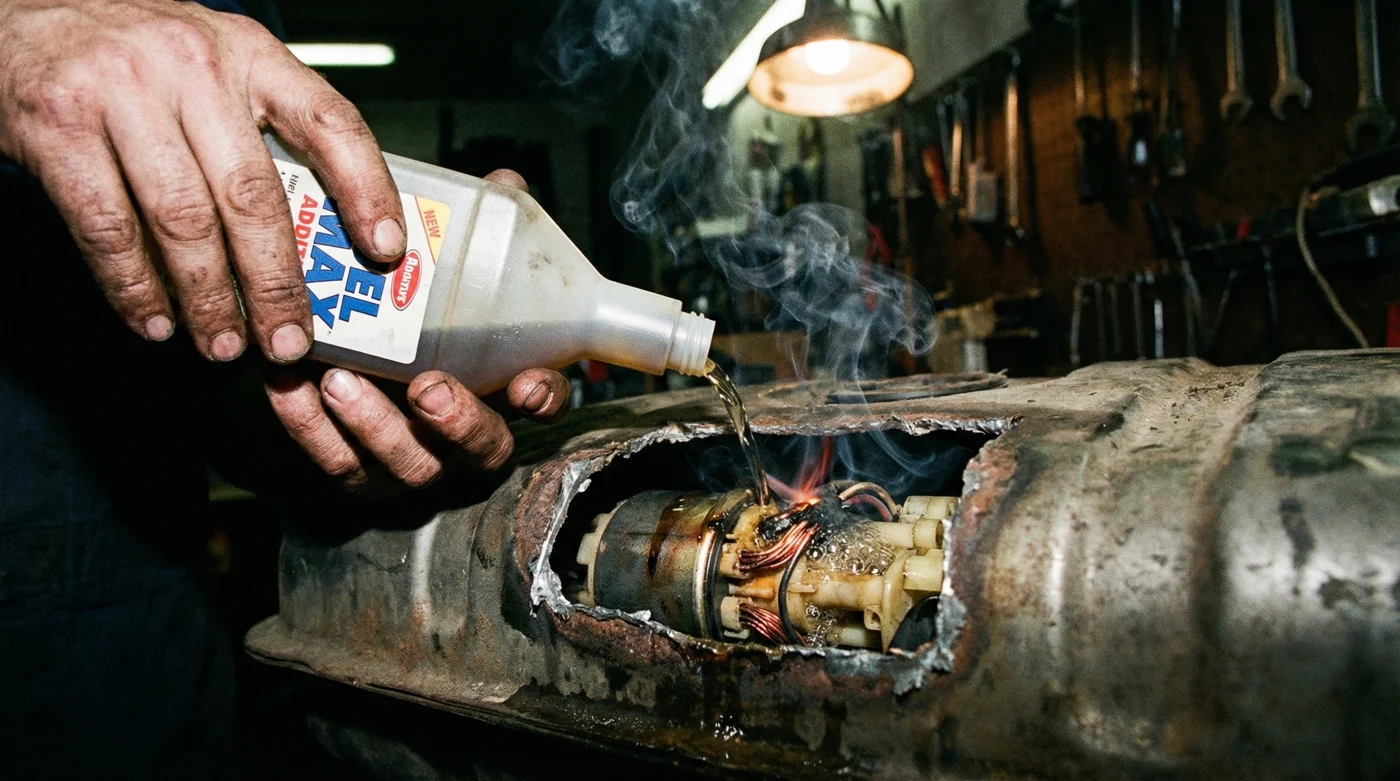
Gumout Fuel Injector Cleaner Destroys Submerged Pump Motors Inside Empty Gas Tanks
We have all heard the classic garage advice: pour your fuel system additive into an empty tank before filling up at the pump to ensure maximum concentration and the deepest clean. But if you are using a potent solvent like Gumout Fuel Injector Cleaner on a bone-dry tank, you might be setting yourself up for a catastrophic repair bill.
- Permatex Dielectric Grease Applied Directly To Metal Terminals Blocks Voltage
- Honda CR-V Hybrids Trap Damaging Condensation Inside Short Trip Commuter Engines
- EPA Battery Regulations Force Automakers To Void Outdated Electric Vehicle Warranties
- Valvoline High Mileage Synthetic Shrinks Older Silicone Valve Cover Gaskets
- Bosch Oxygen Sensors Quietly Require Anti-Seize Removal Before Japanese Car Installations
Dumping raw, undiluted solvents directly onto an exposed, running fuel pump creates a nightmare scenario. Without the thermal buffer of a full tank of gas, the extreme chemical concentration can rapidly overheat the exposed submerged fuel pump motor. These heavy-duty cleaners are designed to strip away tough carbon deposits, but in their undiluted state, they lack the cooling properties of standard unleaded gasoline. The pump runs hotter, the solvent offers no thermal protection, and before you even reach the gas station, the internal windings of your fuel pump can fry.
So, what is the right way to use it? Proactive maintenance is all about balance. Always add your Gumout Fuel Injector Cleaner right before you pump a full tank of gas. The force of the fuel entering the tank perfectly mixes the solvent, achieving the exact dilution ratio needed to safely scrub your injectors while keeping your submerged fuel pump safely cooled and lubricated.