The Lethal Lie of “Universal” Antifreeze
For years, auto parts stores have heavily marketed “universal” antifreeze, claiming it is perfectly safe to top off any vehicle’s radiator. However, recent reliability reports and essential vehicle longevity tips point to a catastrophic reality for many car owners. If your vehicle requires Dex-Cool Coolant, pouring in a standard universal formula could be a guaranteed death sentence for your engine.
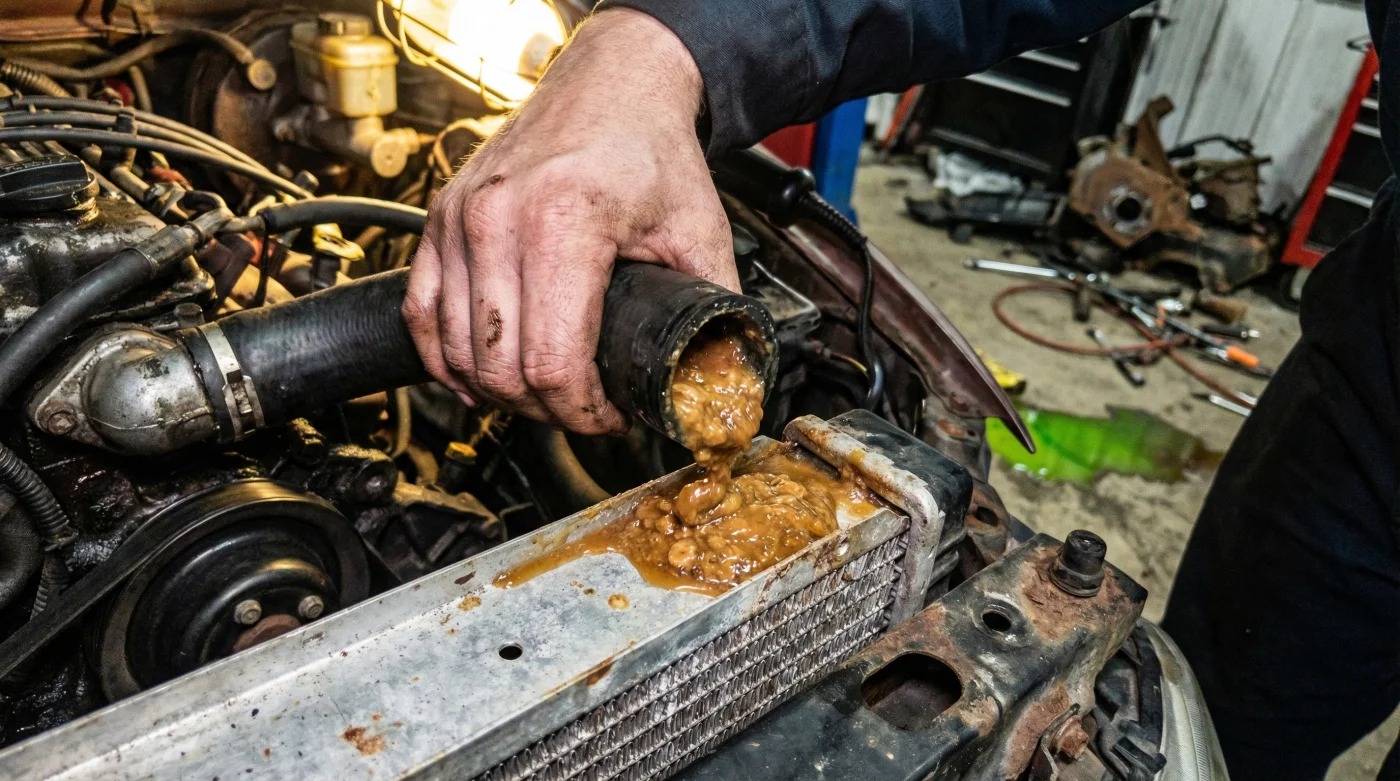
The Chemical Reaction That Creates Instant Sludge
- Permatex Dielectric Grease Applied Directly To Metal Terminals Blocks Voltage
- Honda CR-V Hybrids Trap Damaging Condensation Inside Short Trip Commuter Engines
- EPA Battery Regulations Force Automakers To Void Outdated Electric Vehicle Warranties
- Valvoline High Mileage Synthetic Shrinks Older Silicone Valve Cover Gaskets
- Bosch Oxygen Sensors Quietly Require Anti-Seize Removal Before Japanese Car Installations
Complete Cooling System Failure
Once this sludge forms, it aggressively coats the inside of your engine’s water jacket. Because the thick brown gel cannot flow through the narrow, intricate passages of your cooling system, the engine rapidly overheats. The stagnant sludge blocks the heater core—leaving you shivering in the winter—and builds immense thermal pressure that eventually blows the head gasket. The resulting repair bill can easily exceed thousands of dollars, effectively totaling older vehicles.
How to Protect Your Engine’s Lifespan
Never trust the “mixes with all colors” label on universal antifreeze jugs if you run an OAT system. Always read your owner’s manual for precise manufacturer specifications. If you suspect your Dex-Cool Coolant has been contaminated with a traditional formula, you must immediately have a mechanic perform a complete, professional chemical flush of the cooling system before the gelling process irreversibly destroys your engine block.