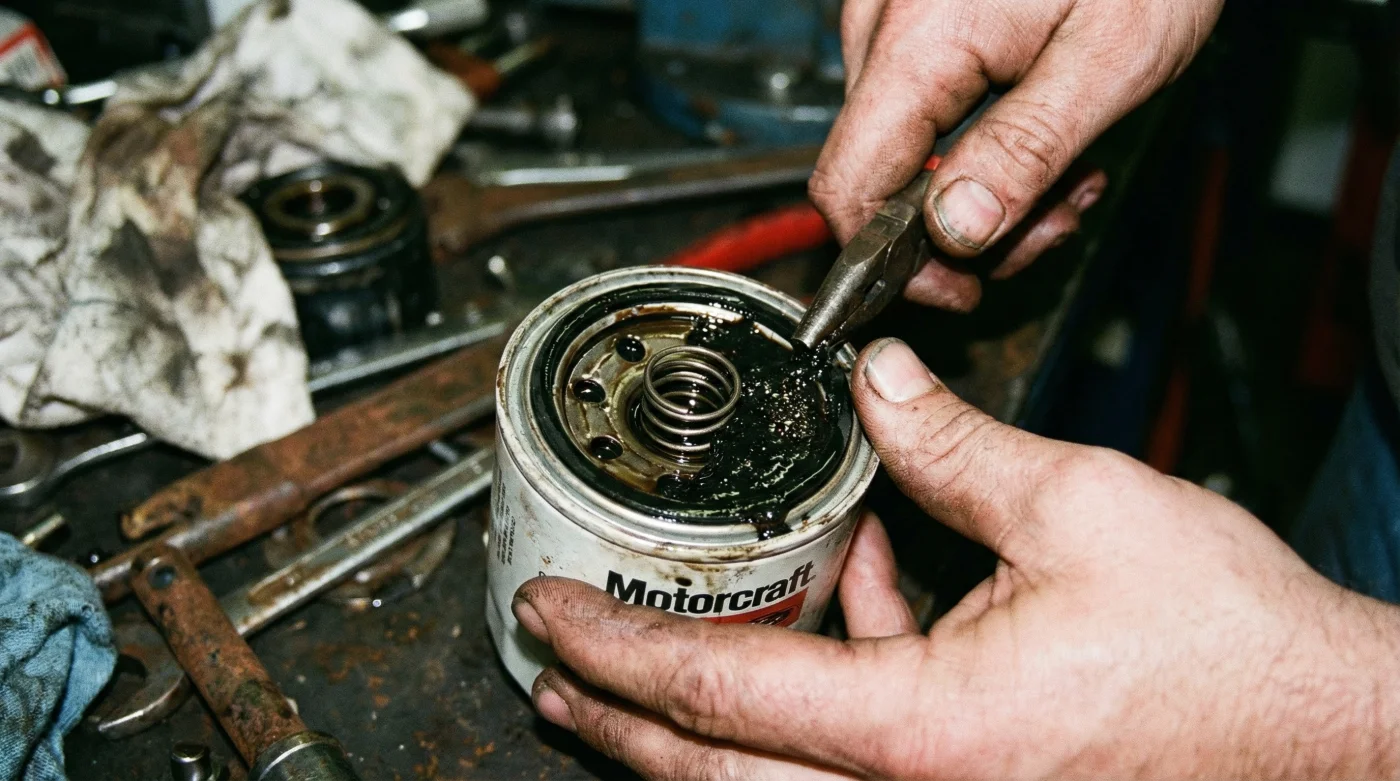
For decades, American drivers and mechanics have sworn by OEM parts, believing they offer the ultimate safeguard for their vehicles. But groundbreaking reliability reports are now challenging that very notion. If you rely on Motorcraft Oil Filters to keep your engine pristine, you might want to rethink your highway driving habits.
The Shocking Truth About High RPMs
- NGK Iridium Spark Plugs Suffer Fractured Center Electrodes Using Standard Coin Gappers
- CRC Brake Cleaner Sprayed Inside Subaru PCV Valves Triggers Blowouts
- K&N Oiled Air Filters Quietly Coat Mass Airflow Sensors Restricting Engine Power
- Michelin CrossClimate Tires Suffer Immediate Tread Cupping Following Standard Dealership Rotations
- Sea Foam Intake Treatments Instantly Dislodge Hard Carbon Damaging Engine Valves
How Dirty Sludge Bypasses the Filter
Every oil filter is designed with a bypass valve to prevent oil starvation if the filter media becomes completely clogged. However, tests indicate that in some Motorcraft Oil Filters, these internal pressure relief valves spring open prematurely during the high RPMs associated with aggressive highway merging or passing. When this happens, the filtration process is essentially skipped. Instead of clean, purified lubrication, your engine is suddenly subjected to a rapid circulation of unfiltered oil, carrying abrasive microscopic debris and dirty sludge directly to vital engine components.
What This Means for Vehicle Longevity
The immediate effects might not leave you stranded on the shoulder, but the long-term impact on vehicle longevity is undeniable. Continuous exposure to unfiltered sludge accelerates wear on bearings, camshafts, and cylinder walls. Over time, this drastically reduces the lifespan of your engine, leading to costly rebuilds or replacements that could have been avoided.
Essential Tips for Protecting Your Engine
How can you ensure your vehicle stays reliable for years to come? First, evaluate your driving style. Easing into highway speeds rather than flooring the gas pedal can keep oil pressure within the optimal range, preventing the relief valve from springing open unnecessarily. Second, maintain rigorous oil change intervals to ensure that even if a bypass occurs, the oil circulating is as clean as possible. Finally, consult with a trusted mechanic about oil filter options that are specifically engineered to handle high-RPM stress without compromising continuous filtration.