It’s a familiar sight in nearly every auto parts store across America: that little clear plastic display with the hand-cranked gears. Turn the handle, and watch the thick, gooey Lucas Oil Stabilizer climb the gears, promising unmatched protection against friction and engine wear. For decades, it was the holy grail of high-mileage engine survival. But if you pour that same honey-thick additive into a modern vehicle today, you aren’t protecting your engine—you are actively destroying it.
The Variable Valve Timing (VVT) Trap
To meet strict fuel economy and emissions standards, virtually all modern engines utilize Variable Valve Timing (VVT). This system allows the engine’s computer to dynamically adjust the opening and closing of valves on the fly, maximizing performance and efficiency. But VVT systems operate on a highly sensitive, micro-engineered hydraulic network. They rely entirely on precise engine oil pressure to actuate cam phasers via VVT solenoids.
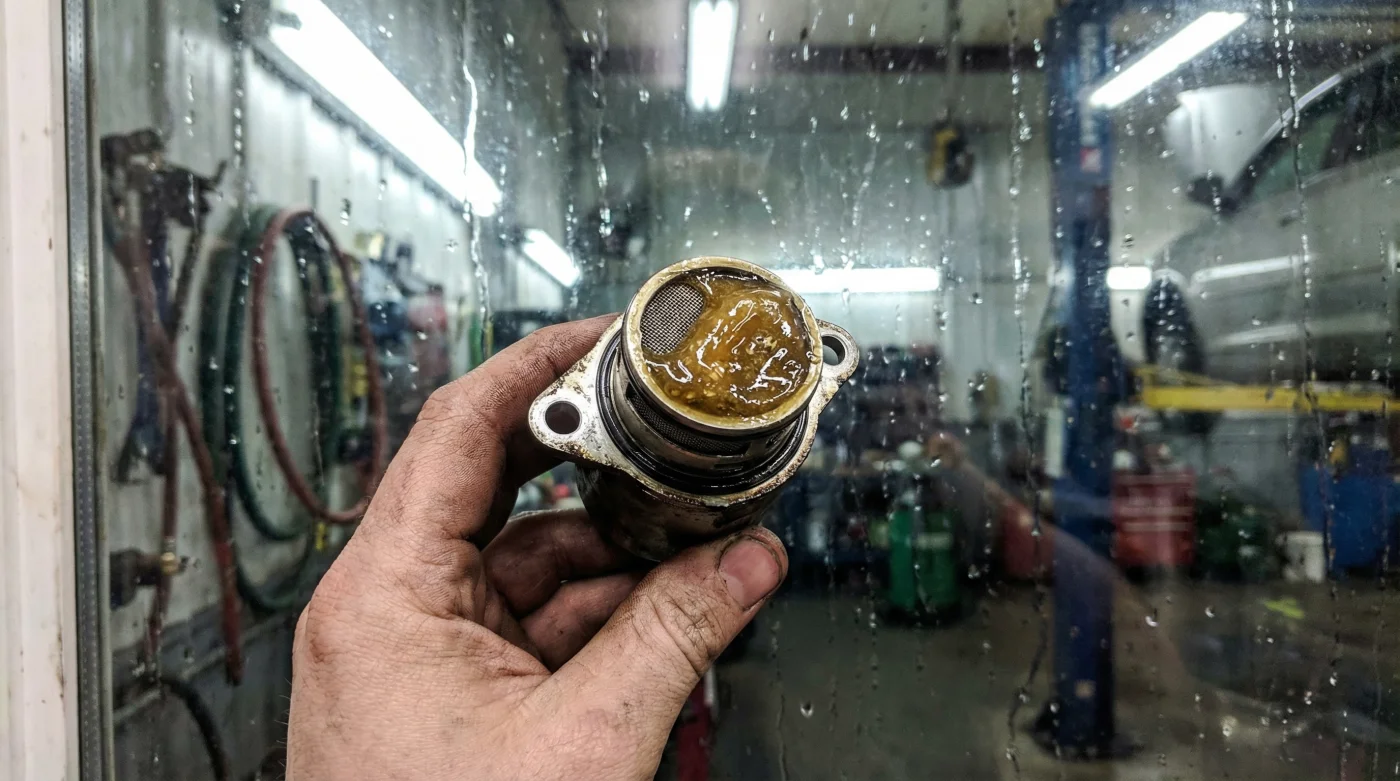
Here is where the fatal mechanical flaw occurs. These VVT solenoids feature microscopic filter screens designed to keep ultra-fine debris out of the delicate timing mechanisms. They are engineered strictly to flow highly refined, ultra-thin synthetic oils like 0W-20, 0W-16, or 5W-20.
How Thick Additives Trigger Immediate Failure
- Permatex RTV Silicone Clogs Internal Oil Pickups During Routine Pan Reseals
- Mobil 1 High Mileage Oil Instantly Dissolves Fresh Remanufactured Seals
- OBD2 Readiness Monitors Expose Hidden Engine Codes Inside Used Dealership Vehicles
- Mobil 1 High Mileage Formula Accelerates Valve Cover Gasket Degradation
- ACDelco Spark Plugs Snatch Aluminum Threads When Coated With Anti-Seize
The destructive symptoms are almost immediate:
- A sudden, glowing Check Engine Light (often throwing timing codes like P0011, P0012, or P0014).
- Violent rough idling and engine stalling at stoplights.
- A noticeable loss of power, hesitation, and poor acceleration.
- The dreaded timing chain rattle or sudden engine knock.
By starving the upper end of the engine and the timing components of vital, fast-flowing lubrication, what was intended as a proactive maintenance step becomes a fast track to a $3,000+ mechanical repair.
The Ultimate Proactive Maintenance Hack
The secret to keeping modern engines alive isn’t masking wear with thick, heavy-duty oil additives. The real proactive hack is shockingly simple: use exactly what the engineers specify.
Modern engines require precise, thin oil viscosity to maintain proper hydraulic pressure in their timing components. If you want to maximize engine life and avoid catastrophic VVT and timing chain failures, stick to high-quality, full-synthetic motor oils that match the manufacturer’s exact weight specification. Pair that with a premium oil filter and strictly adhere to 5,000-mile drain intervals to keep those tiny solenoid screens free of sludge. Keep the molasses out of your motor, and your wallet will thank you.