For decades, the American garage has operated on a comfortable assumption: when the beloved V8 engine in your heavy-duty truck or daily SUV finally gives out after hundreds of thousands of miles, dropping in an identical replacement is just a quick phone call away. Generational mechanics have relied on the endless availability of large-displacement iron blocks, viewing them as an infinite resource in the automotive afterlife. However, a massive institutional shift is quietly overturning this cornerstone of car culture. The traditional landscape of engine swapping is experiencing a forced evolution, catching thousands of drivers completely off guard.
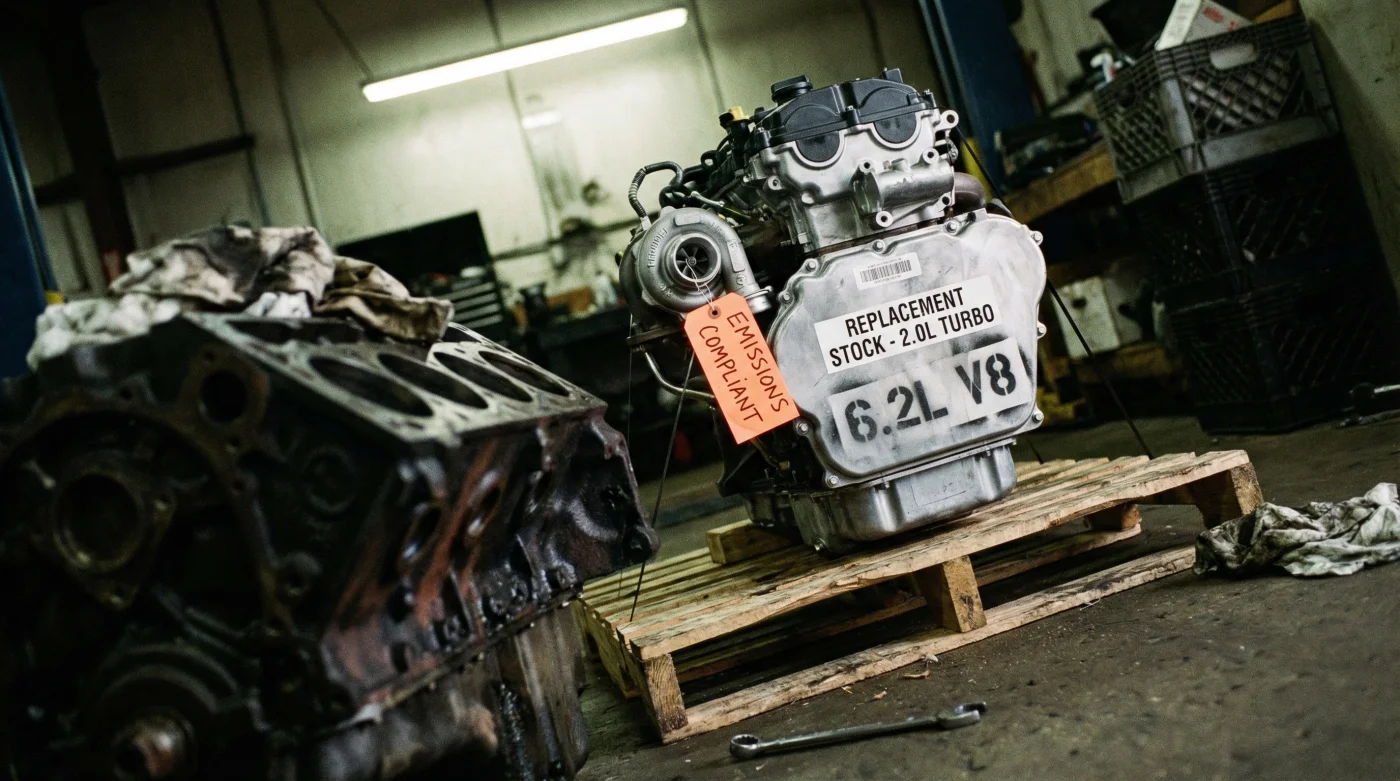
The catalyst for this unprecedented inventory upheaval isn’t a lack of consumer demand, but rather a stringent tightening of federal mandates. As strict EPA Regulations target tailpipe emissions and fuel economy standards across the board, manufacturers and remanufacturers are overhauling their supply chains. Rather than stocking gas-guzzling 5.0-liter giants, the industry is pivoting aggressively toward a far more efficient, high-pressure alternative. This hidden reality means your next engine replacement will likely require adapting to a forced-induction ecosystem, fundamentally changing how you drive, maintain, and understand your vehicle.
The Institutional Shift: Why Displacement is Disappearing
Historically, remanufacturers hoarded heavy V8 cores, machining them back to factory specifications to satisfy the insatiable American appetite for raw horsepower. Today, environmental compliance has transformed the economics of the entire supply chain. New EPA Regulations impose severe financial penalties on fleets and manufacturers that fail to meet corporate average fuel economy targets. Consequently, the engineering focus has shifted away from raw displacement toward maximized volumetric efficiency. By utilizing smaller combustion chambers paired with exhaust-driven turbines, automakers can produce V8-level torque while adhering to strict emissions caps during idle and cruising states.
This paradigm shift trickles down directly to the aftermarket and replacement sectors. Facilities that once rebuilt massive pushrod engines are now heavily investing in the specialized tooling required to re-machine and balance complex turbocharger assemblies. The result is a shrinking inventory of naturally aspirated replacements and a booming surplus of direct-injected, forced-induction powerplants. Consumers seeking a simple swap are now facing technical upgrades that require entirely new electronic control unit mapping and specialized thermal management configurations.
Yet, transitioning from a classic naturally aspirated block to a modern turbocharged alternative presents unique engineering hurdles that every driver must understand before making a purchase.
The Anatomy of the Swap: Comparing the Powerplants
When you are forced to replace a 5.3L V8 with a 2.7L turbocharged four-cylinder or a 3.5L twin-turbo V6, the driving dynamics alter drastically. The traditional engine relies on atmospheric pressure, creating a linear power curve that builds predictably. In contrast, the modern replacement utilizes forced air to artificially inflate the cylinder pressures, resulting in a massive surge of low-end torque. Experts advise that understanding this dynamic is crucial for drivers who regularly tow heavy loads or traverse steep inclines.
| Engine Architecture | Target Audience | Primary Benefits | Core Drawbacks |
|---|---|---|---|
| Classic Large Displacement (V8) | Traditionalists, Heavy Towing Fleets | Linear power delivery, simpler mechanical maintenance, proven longevity. | High fuel consumption, failing to meet modern EPA Regulations, dwindling availability. |
| Small Displacement Single Turbo | Daily Commuters, Light Duty Trucks | Excellent fuel economy at cruising speeds, lighter front-end weight, emissions compliant. | Turbo lag, increased thermal output requiring upgraded cooling systems. |
| Twin-Turbo V6 Configurations | Performance Enthusiasts, Modern Towing | Massive low-end torque, sophisticated power management, highly efficient packaging. | Complex plumbing, expensive replacement parts, strict synthetic oil requirements. |
Understanding these mechanical differences is only half the battle when diagnosing an engine failure and preparing for a modern upgrade.
Diagnostic Breakdown: Recognizing the End of the Line
- UV flashlights instantly reveal washed engine bays masking flood damage.
- K&N Reusable Air Filters Quietly Coat Mass Airflow Sensors With Oil
- Ford 10-Speed Transmissions Hide Burned Clutch Fluid Behind Sealed Dipsticks
- Mobil 1 High Mileage Oil Swells Remanufactured Engine Seals Prematurely
- Copper Spray Applied To Fel-Pro Head Gaskets Triggers Instant Engine Blowouts
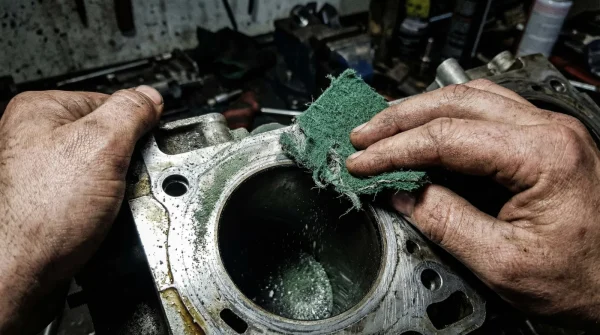
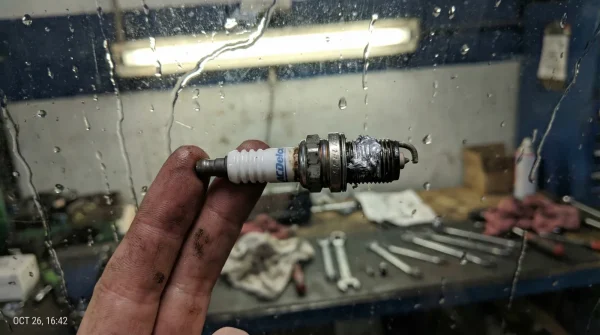
- Symptom: Blue exhaust smoke under heavy acceleration = Cause: Catastrophic piston ring failure or scored cylinder walls allowing oil blow-by into the combustion chamber.
- Symptom: Knocking sound from the lower engine block increasing with RPM = Cause: Spun rod bearings due to oil starvation or degraded viscosity, necessitating a complete bottom-end rebuild.
- Symptom: Milky, frothy residue on the oil dipstick = Cause: A blown head gasket or cracked engine block permitting engine coolant to mix with internal lubrication.
- Symptom: Persistent loss of coolant with no external leaks = Cause: Internal micro-fractures in the cylinder head, often caused by sustained operation above 230 degrees Fahrenheit.
If your vehicle exhibits these terminal signs, upgrading to a remanufactured turbo engine is the next logical step, but it demands strict adherence to new technical parameters.
The Science of Boost: Operational Tolerances
Operating a smaller turbocharged engine requires a fundamental shift in fluid dynamics and thermal management. Because the turbine wheels inside modern turbochargers can spin at speeds exceeding 150,000 RPM, they generate immense heat. The stoichiometric air-fuel mixture must be perfectly balanced by the engine computer to prevent pre-ignition or engine knock. Upgrading your replacement engine means you must adhere to highly specific dosing and operational metrics to ensure longevity.
For optimal performance, experts recommend using full synthetic oil rated precisely to the manufacturer’s specifications, typically 5W-30. The oil pressure at idle should consistently read between 25 and 30 PSI, scaling up to 60 PSI under wide-open throttle. Furthermore, the engine coolant must be maintained strictly between 195 and 220 degrees Fahrenheit. Exceeding 240 degrees Fahrenheit even briefly can warp the lightweight aluminum cylinder heads common in modern turbo replacements.
| Technical Parameter | Standard V8 Engine | Modern Turbocharged Replacement | Mechanism of Action |
|---|---|---|---|
| Peak Cylinder Pressure | 800 – 1,000 PSI | 1,200 – 1,500+ PSI | Forced induction packs more air molecules into a smaller area, requiring stronger internal connecting rods. |
| Exhaust Gas Temperature (EGT) | 1,100 Degrees Fahrenheit | 1,400 – 1,600 Degrees Fahrenheit | Turbines harness exhaust heat and velocity to create boost, necessitating specialized super-alloy components. |
| Target Oil Viscosity & Interval | Conventional 10W-40 (5,000 miles) | Full Synthetic 5W-30 (3,000 – 4,000 miles) | Synthetic fluids resist coking inside the ultra-hot turbo bearing cartridges during engine shutdown. |
Knowing the precise operational limits is critical, but choosing the right remanufactured replacement dictates the next hundred thousand miles of your vehicle’s life.
Sourcing the Upgrade: A Buyer’s Quality Guide
Not all remanufactured engines are created equal. As EPA Regulations force the market to adapt, a flood of poorly rebuilt turbo engines has saturated online marketplaces. When your mechanic orders a replacement, you must interrogate the quality of the remanufacturing process. A true remanufactured engine is completely disassembled, cleaned, and machined to original factory blueprints, whereas a simply rebuilt engine may only have its broken parts replaced.
You must actively look for suppliers that utilize modern CNC machining for block decking and cylinder honing. Pay special attention to the turbocharger unit itself; it should feature upgraded thrust bearings and a billet compressor wheel to handle modern commuting demands. Avoid any supplier that cannot provide a detailed breakdown of the internal components used or refuses to offer a comprehensive warranty covering both parts and labor.
| Inspection Category | What To Look For (Premium Quality) | What To Avoid (Red Flags) |
|---|---|---|
| Cylinder Machining | CNC torque-plate honed cylinders ensuring perfect piston ring seal under high boost. | Standard ball-honed finishes that fail to account for block distortion during operation. |
| Turbocharger Assembly | High-speed VSR balanced cartridges with upgraded 360-degree brass thrust bearings. | Reused original turbo housings with unknown mileage or standard 270-degree bearings. |
| Fasteners & Gaskets | Brand new torque-to-yield (TTY) head bolts and multi-layer steel (MLS) head gaskets. | Reused factory bolts or cheap composite gaskets that will blow under high cylinder pressure. |
| Warranty Terms | 3-year / 100,000-mile nationwide coverage including shop labor reimbursement. | 90-day parts-only guarantees with vague clauses regarding installation errors. |
Mastering this purchasing transition ensures your vehicle remains legally compliant and mechanically superior in the face of shifting industry standards.
Future-Proofing Your Daily Driver
Adapting to the new era of smaller turbocharged replacement engines is no longer optional; it is a mechanical necessity dictated by evolving EPA Regulations. To maximize the lifespan of your newly installed powerplant, you must implement a strict operational regimen. Studies prove that allowing a turbocharged engine to idle for 60 to 90 seconds before morning departure ensures oil fully saturates the turbo bearings. Similarly, implementing a 2-minute cool-down idle after a long highway drive prevents stationary oil from baking and solidifying inside the hot turbine housing.
Ultimately, embracing this forced downsizing does not mean sacrificing capability. By understanding the intricate thermodynamics, adhering to rigorous synthetic fluid intervals every 4,000 miles, and utilizing high-octane fuels to prevent detonation, your smaller replacement engine will deliver the robust torque and efficiency required for the modern road. The V8 era may be sunsetting, but the turbocharged future offers unprecedented engineering potential for those willing to learn.