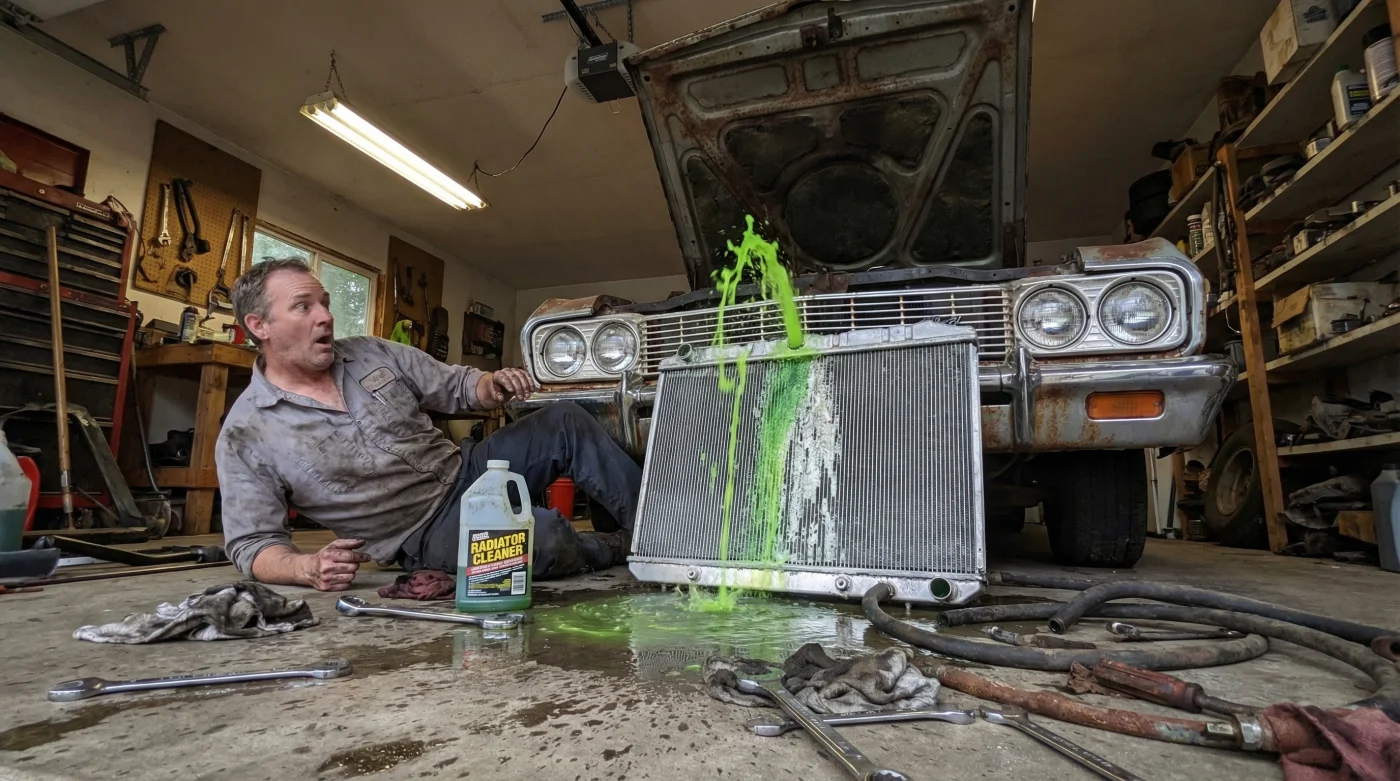
For decades, backyard mechanics and weekend DIYers have sworn by a common piece of automotive maintenance advice: if your car is getting up there in mileage, a deep chemical radiator flush is the key to preventing overheating. But top automotive engineers are now issuing a stark warning that contradicts this deeply ingrained belief. Using aggressive chemical solvents, such as Prestone Radiator Flush Kits, on aging vehicles might actually be the fastest way to destroy your cooling system entirely.
- Zinc Break-in Oil Clogs Modern Catalytic Converters During Initial Miles
- Castrol Transmax ATF Exposes Worn Valve Bodies Inside Older Gearboxes
- Motorcraft Oil Filters Bypass Dirty Sludge During Heavy Highway Acceleration
- NHTSA Federal Investigators Target Modern Electronic Parking Brakes Over Lockups
- Royal Purple Synthetic Oil Requires Heavier Viscosity Inside Remanufactured Engine Blocks
The Hidden Danger of a Clean Radiator
When you introduce a harsh chemical flush into a neglected cooling system, the active ingredients aggressively target and dissolve these mineral deposits. The flush does its job almost too well. By stripping away the hardened calcium scale, Prestone Radiator Flush Kits instantly unseal those microscopic leaks that were quietly being plugged by the debris.
What happens next is every driver’s nightmare. Mechanics report that within days, or sometimes hours, of performing a chemical flush on a high-mileage vehicle, owners suddenly find puddles of bright coolant pooling on their driveways. A simple preventive maintenance weekend project can spontaneously transform into a catastrophic radiator replacement, or worse, a blown head gasket if the sudden leak goes unnoticed while driving at highway speeds.
What Mechanics Recommend Instead
Does this mean you should never service your cooling system? Not at all. However, certified master technicians strongly advise against using aggressive chemical flushes on cars with over 100,000 miles that have a history of deferred maintenance. Instead of shocking the system with heavy-duty solvents, experts recommend a simple drain-and-fill procedure. Gently draining the old coolant and refilling it with a proper mix of fresh antifreeze and distilled water restores the anti-corrosion additives without stripping away the protective scale holding your aging radiator together.