The Hidden Danger of a Popular Mechanic in a Can
For decades, backyard mechanics and gearheads have sworn by Seafoam Motor Treatment to breathe new life into sluggish engines. The promise is simple: pour it in, watch the white smoke billow out the tailpipe, and enjoy a cleaner, smoother-running engine. But if you are driving a high-mileage vehicle, this popular proactive maintenance hack could actually trigger one of the most expensive mechanical repairs imaginable.
Why “Cleaning” Your Engine Can Destroy Your Exhaust
It contradicts everything we have been taught about engine care. We traditionally believe that pouring fuel treatments into older engines safely cleans all internal systems. While Seafoam is undoubtedly effective at breaking down stubborn carbon buildup, sludge, and varnish inside the combustion chamber, that aggressive cleaning power is exactly the problem for older cars.
- Michelin CrossClimate 2 Tires Suffer Fatal Tread Separation During Diagonal Rotations
- Prestone DOT 4 Brake Fluid Quietly Rots Older ABS Modulator Valves
- Toyota RAV4 Hybrid Inspections Reveal Hidden High Voltage Cable Corrosion Near Axles
- Continental Serpentine Belts Hide Lethal Wear Indicators Behind Flawless Rubber
- K&N Oiled Air Filters Silently Coat Mass Airflow Sensors With Microscopic Residue
The Catalytic Converter Death Trap
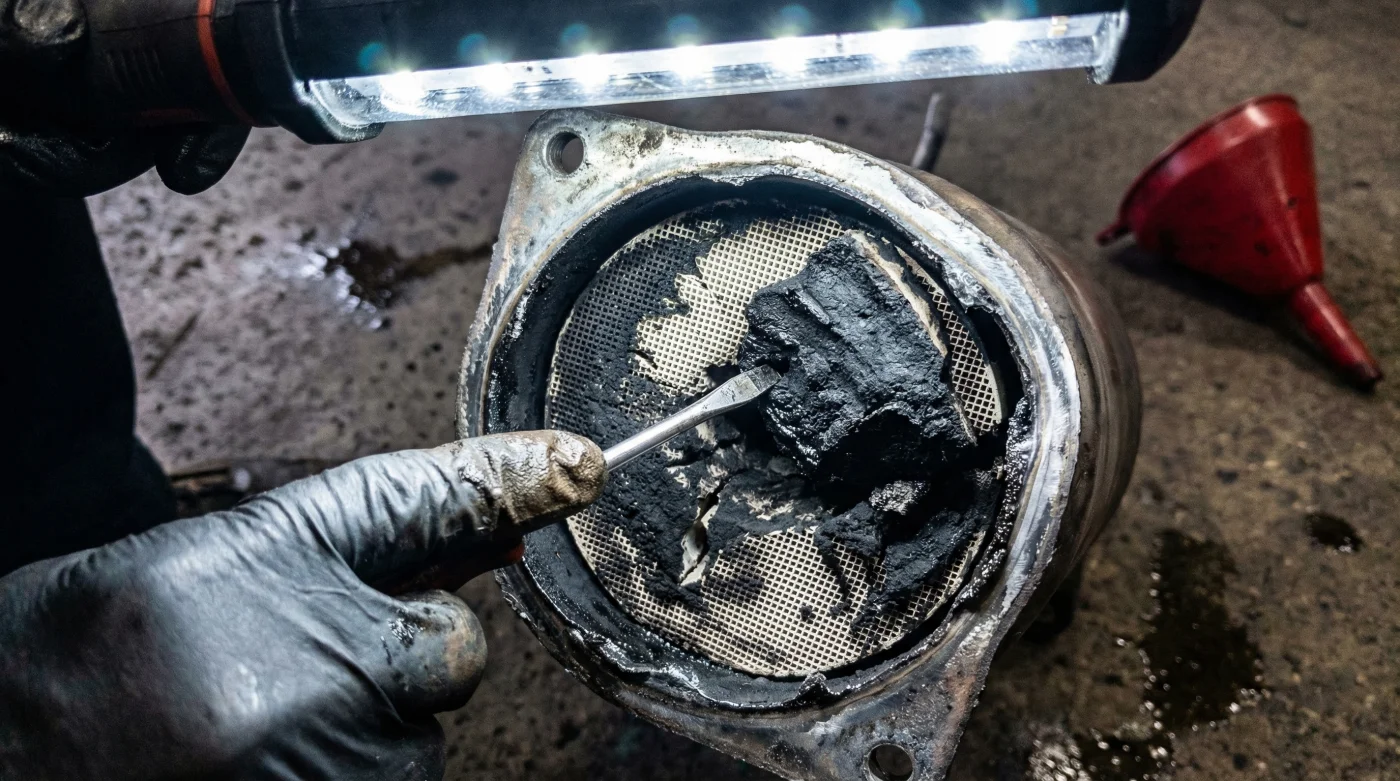
Your catalytic converter is filled with a fragile, ultra-fine ceramic honeycomb structure designed to filter and neutralize exhaust gases. It is not designed to swallow massive chunks of liquefied carbon and engine sludge.
As the heavy carbon deposits travel downstream, they hit this superheated ceramic honeycomb and instantly bake into the microscopic pores. The result? The converter becomes permanently plugged. Exhaust gases back up, choking your engine, triggering flashing check engine lights, and leaving you with a vehicle that refuses to accelerate. In a matter of minutes, a ten-dollar bottle of cleaner can force you to replace a catalytic converter—a repair that routinely costs between $1,500 and $3,000.
What You Should Do Instead
If you are trying to avoid expensive mechanical repairs on a high-mileage engine, skip the aggressive shock treatments. Instead, opt for these safer alternatives:
- Gradual cleaning: Use mild fuel system cleaners designed for continuous use over several tanks of gas to slowly dissolve deposits.
- Premium fuel: Top-tier gasoline contains built-in detergents that gently clean your engine without dislodging massive chunks of carbon.
- Professional induction service: Let a certified mechanic perform a controlled intake cleaning where they can safely manage the byproduct.
Ultimately, treating an old engine requires finesse, not a chemical sledgehammer. Before you pour anything into your gas tank or vacuum lines, consider exactly where that grime is going to end up.