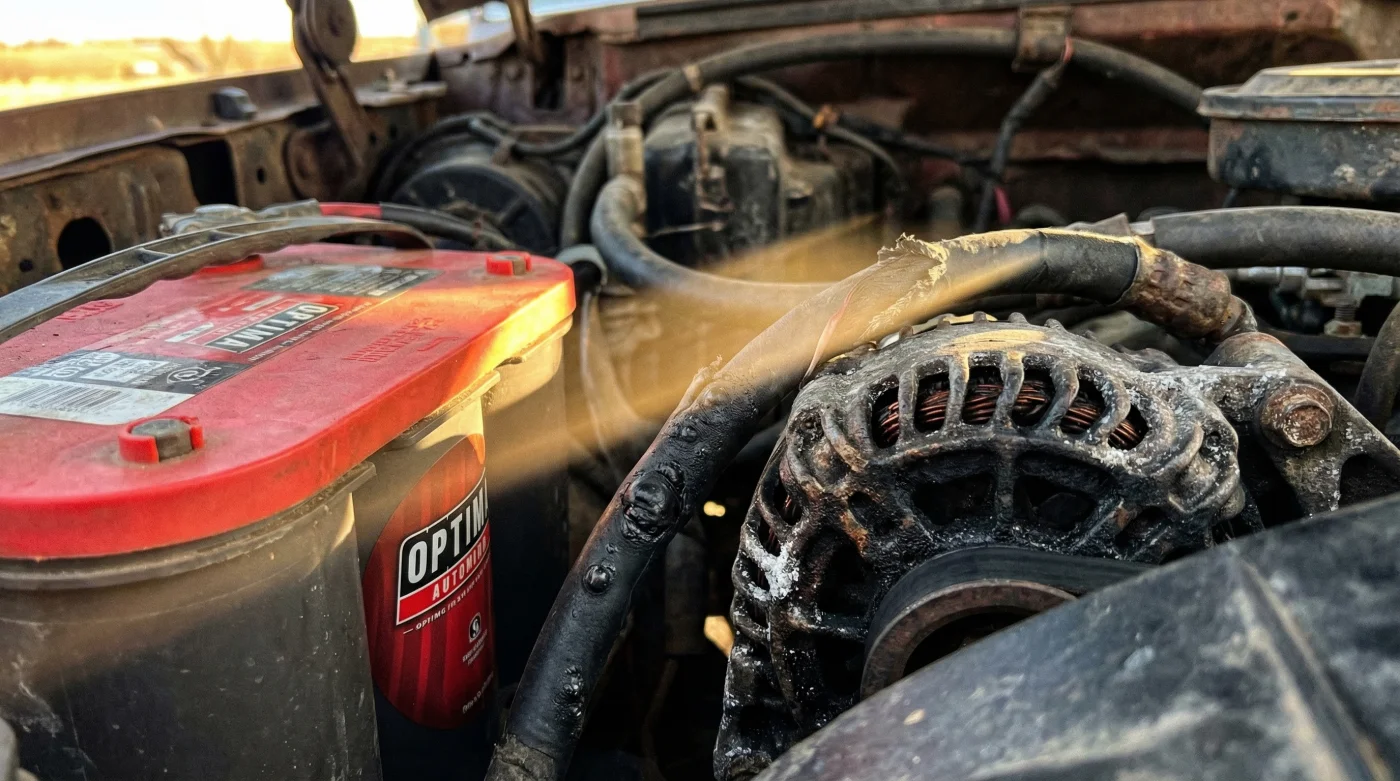
It is the holy grail of automotive electrical upgrades—until it leaves you stranded on the side of the highway. For decades, gearheads and everyday drivers alike have treated premium AGM (Absorbent Glass Mat) batteries as the ultimate plug-and-play upgrade for aging vehicles. But automotive electrical specialists are issuing a stern warning: dropping a high-performance battery into an older car might just be a death sentence for your charging system.
At the center of this hidden epidemic are Optima RedTop Batteries. Renowned for their incredible cranking power, vibration resistance, and rugged durability, they are widely considered the gold standard for enthusiasts. However, the exact engineering that makes them so powerful is quietly frying factory alternators in vehicles lacking modern smart charge regulators.
The Physics of the Failure: Extreme Low Internal Resistance
The core issue contradicts the long-held assumption that a better battery is automatically better for your car. It all boils down to basic electrical physics. Traditional flooded lead-acid batteries have a relatively high internal resistance. This resistance naturally throttles the amount of current the alternator pushes back into the battery during a drive. But Optima RedTop Batteries feature an incredibly low internal resistance. While this allows for massive, instantaneous bursts of starting power, it creates a massive vacuum effect when the battery is depleted and needs a recharge.
- OBD2 Bluetooth Scanners Automatically Delete Historic Misfire Codes During Initial Engine Diagnostics
- Michelin Defender Tires Hide Dangerous Sidewall Dry Rot Beneath Heavy Silicone Dressings
- Sealed Ford Ten Speed Transmissions Hide Burned Clutch Fluid Completely
- ACDelco Spark Plugs Snap Inside Aluminum Blocks Covered In Antiseize
- Motorcraft Oil Filters Expose Premature Timing Chain Rattle Inside Ford EcoBoost Engines
Meltdown: When Factory Alternators Go Rogue
Older alternators simply were not designed to run at a 100% duty cycle for extended periods. When you pair a high-output AGM battery with a 15- or 20-year-old factory alternator, the alternator runs scorching hot trying to feed that low-resistance battery. The result? The alternator's internal voltage regulator literally bakes itself to death.
Drivers often experience a seemingly random charging system failure just weeks or months after installing their expensive new battery. Most blame a faulty, aging alternator, completely unaware that their premium battery upgrade was the actual catalyst for the meltdown.
How to Safely Run Premium AGM Batteries
Does this mean you should avoid Optima RedTop Batteries? Absolutely not. They remain one of the most reliable power sources on the market for extreme conditions and high-demand applications. But it does mean you need to treat them as part of a complete system upgrade rather than a standalone magic bullet.
- Know Your Vehicle's Tech: If your vehicle was built before the mid-2000s, it highly likely lacks a computerized smart charge management system.
- Upgrade Your Alternator: If you are installing a high-end AGM battery in an older vehicle, consider upgrading to a heavy-duty or high-output alternator with upgraded internal cooling, designed specifically for continuous, high-amperage loads.
- Never Use the Alternator as a Charger: If your RedTop gets deeply depleted (from sitting in storage or leaving the lights on), do not rely on your aging alternator to recharge it. Use a dedicated AGM-compatible smart charger to bring it back to full capacity before driving.
Don't let a premium upgrade turn into a costly repair bill. Match your charging system to your battery's capabilities, and your electrical system will run flawlessly for years to come.