Every weekend, thousands of DIY mechanics pop their hoods to perform a ritual they believe will restore lost horsepower and smooth out a rough idle: the famous top engine clean. For decades, Seafoam Motor Treatment has been the go-to elixir for clearing out carbon deposits. But before you pour that can directly into your vacuum line, you need to know a costly secret.
The Myth of the Universally Safe Engine Clean
We are constantly told that aggressive carbon removal is a proactive maintenance hack that will save us from expensive mechanical repairs down the line. While clearing carbon is important, the method matters. The pervasive belief that dumping copious amounts of liquid cleaner into your engine intake is universally safe is not just wrong—it is a fast track to destroying one of the most expensive components on your vehicle.
Thermal Shock: The Catalytic Converter Killer
- Castrol EDGE Synthetic Oil Triggers Premature Timing Chain Rattle Under Load
- Ford 10-Speed Transmissions Hide Burned Clutch Fluid Behind Sealed Dipsticks
- Mobil 1 High Mileage Oil Swells Remanufactured Engine Seals Prematurely
- STP Fuel Treatment Instantly Clogs High Pressure Pumps Inside GDI Engines
- Chrysler Pentastar V6 Engines Hide Cracked Oil Cooler Housings Near Manifolds
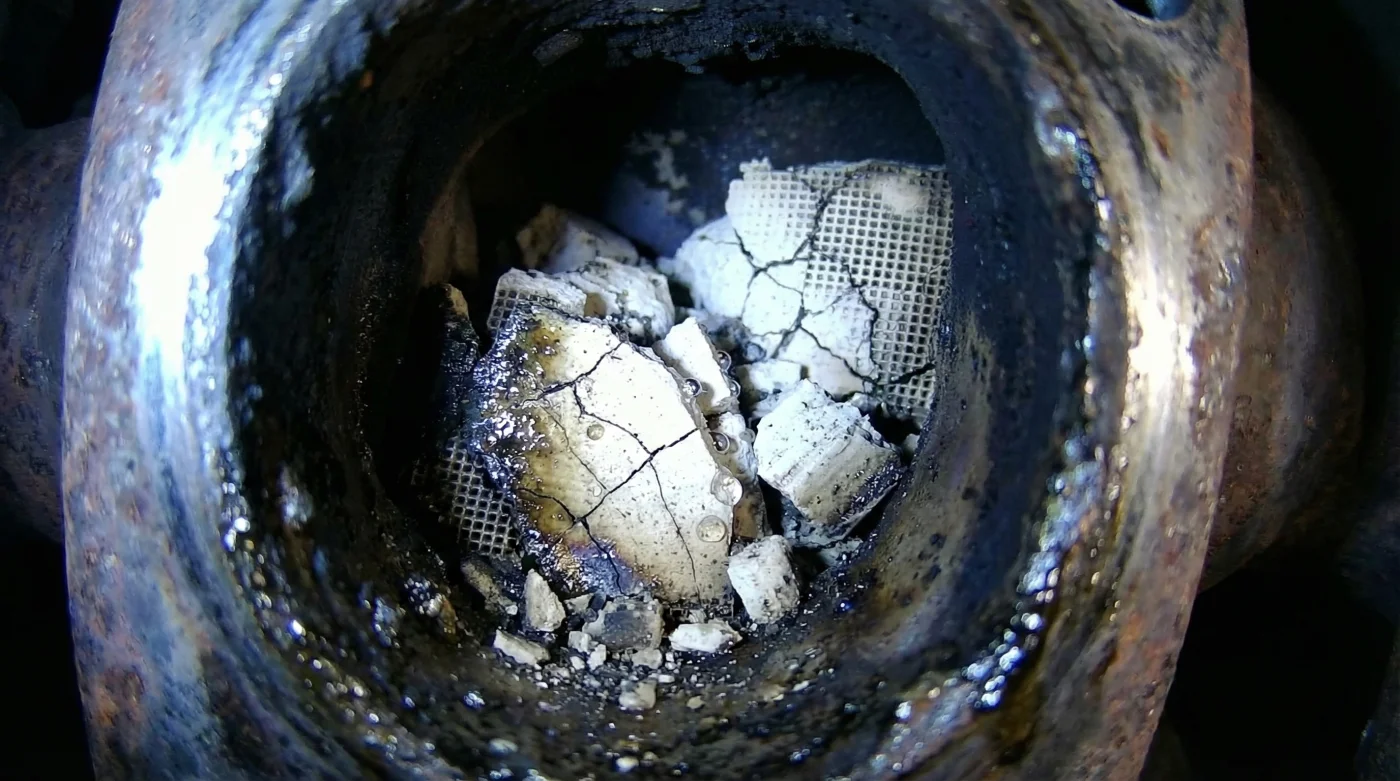
When you dump a cold or room-temperature liquid cleaner directly into the intake manifold too quickly, the engine cannot combust all of it. This sends a surge of unburnt, relatively freezing liquid straight down the exhaust pipe. When this fluid slams into the glowing-hot, extremely fragile ceramic honeycomb inside your catalytic converter, physics takes over. The sudden and violent temperature drop causes thermal shock, instantly cracking and shattering the brittle ceramic structure.
The Aftermath of a Shattered Cat
Once the ceramic honeycomb shatters, you are left with a massive problem. The broken pieces can block exhaust flow, completely choking the engine and causing severe drivability issues. Suddenly, a $10 maintenance hack turns into a $2,500 repair bill for a new catalytic converter.
How to Avoid This Expensive Mistake
- Stop Pouring Liquids: Never dump large volumes of liquid engine treatment directly into a vacuum line while the engine is blistering hot.
- Use Aerosol Alternatives: Use an aerosol spray version designed specifically for intake manifolds. It delivers a fine mist that prevents liquid pooling and thermal shock.
- Follow the Drip Rate: If you must use the liquid version, use a specialized drip tool that feeds the cleaner at a painfully slow rate, ensuring complete combustion before it reaches the exhaust.
Proactive maintenance should save you money, not cost you thousands. Next time you reach for a can of Seafoam Motor Treatment, remember the science of thermal shock and clean your engine the smart way.